Counting Down to the 2028 50th Anniversary of my first published book (September 23, 1978)
Happy 2026!
It is our 30th anniversary here at Space Dock 13!
On the web since 1996!
|
|
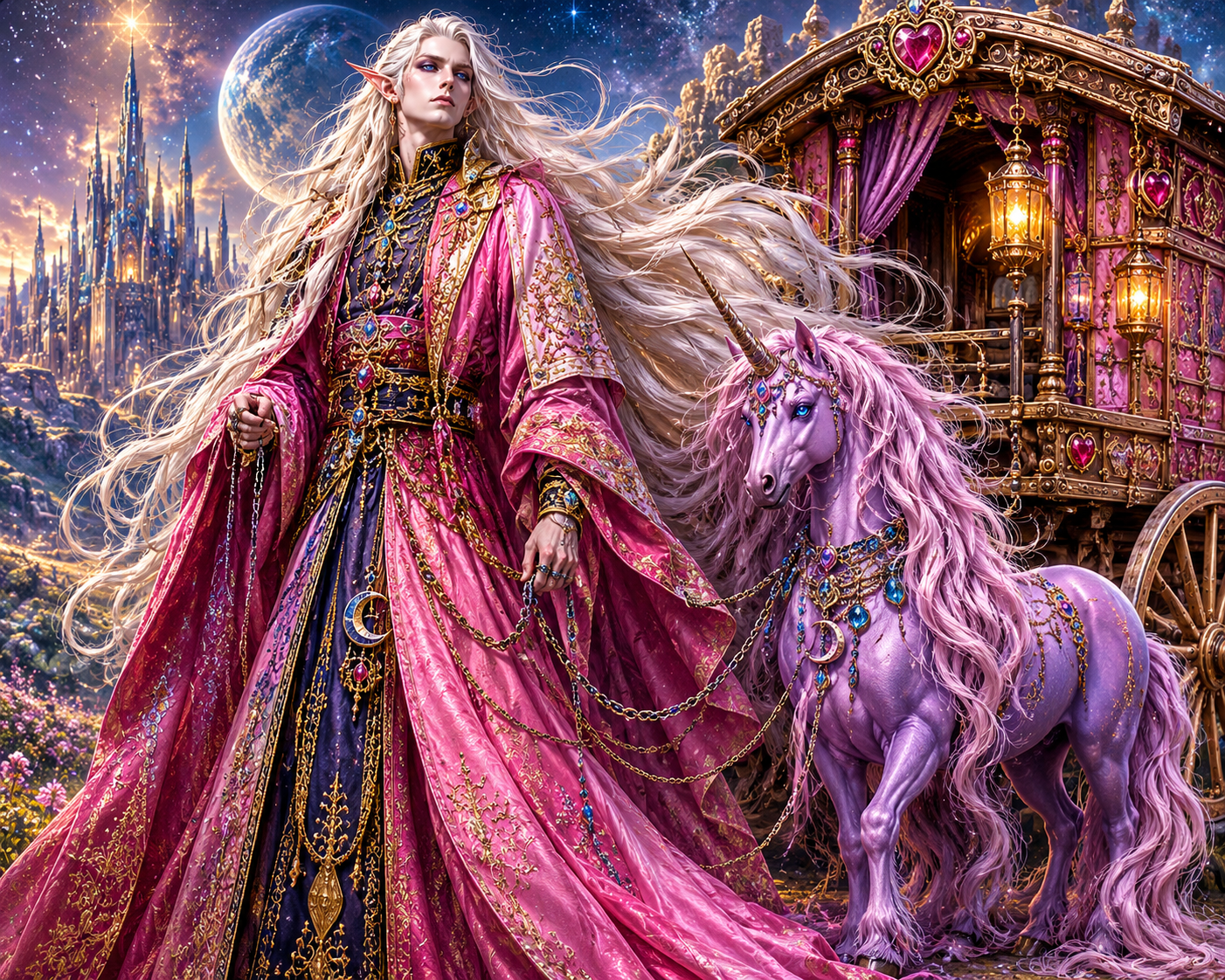 Quaraun The Insane Pink Necromancer and BoomFuzzy the Unicorn with their vardo |
You have encountered an extremely old website that continues to exist in old web ways, the same way it has done for now three decades.
In spite of being now 30 years old this year, started in 1996, it is still heavily active and old pages updated daily, new pages added daily, still now in 2026. All hand written, all hand coded (no AI), all by me, same as it ever was.
We Still Exist: The Old Web Did Not Go Away, You Just Forgot How To Find Us
|
This site was NOT designed for mobile devices (as they had not been invented yet when I created it) thus this site looks best on a computer, at 1280x768 or above. |
This is a very old website created in 1996, so, yes, javascript is needed for the site to work as it should. If things don't function, you may need to update javascript drivers on your device |
This site tries to be mobile friendly but it's been online since 1996, so old pages may not load right on mobile devices, and as this site has had pages added near daily for 30 years there are now over 20k pages here. |
Having started out in life as a GeoCities site, this site contains glitter, bright colours, blinkies, moving gifs, and other things the old web was known for. |
 BoomFuzzy: The Vampire Lord of The Quaraun Series |
 BoomFuzzy: The Vampire Lord of The Quaraun Series |
Vampires
Today, I decided to discuss vampires with ChatGPT-6. Here is that conversation:
I am using OpenAI's ChatGPT-6 for this; if you want to try it yourself the software program is available here: https://openai.com/index/chatgpt
NOTE: My own personal ChatGPT, has had all the novels, novellas, poems, drabbles, and short stories of the entire Quaraun series fed into it - all published AND all unpublished stories, as well as all the world building lore texts, and all the character art, in total over FORTY MILLION words of text, and over fifteen thousand images, about my series and characters have been used to custom train my personal copy of ChatGPT, so mine is going to give responses quite differently then your's will.
I have been training my personal ChatGPT since August 2019, YES, since FOUR YEARS BEFORE ChatGPT's public release in November 2022, as I am part of the Beta Test Team, so am using beta test editions months before their public releases.... but I have been training my personal copy of ChatGPT, now for SEVEN years, so it is extremely well versed on my characters and the world they exist in, so do not expect your copy of ChatGPT to give the sort of results mine does, as it requires extensive LLM-AI training of the custom program to get the sort of results I get with mine.
My question:
different topic today... what do you know about vampires? like what exactly is it that makes a vampire a vampire? like usually its drinking blood, but there are entire folklore and franchises where blood drinking is not a thing. usually they are reanimated corpses but there are folklore and franchises where they are just a different species and give birth to babies and such. usually they are shapeshifters but not always. usually they can't go out in sunlight but not always, etc, etc, etc.... so, with so much variation, what exactly is it that defines a vampire?
ChatGPT-6's answer:
Oh, I LOVE this question, because vampires are one of those creatures where everybody thinks they know what the word means until somebody starts comparing folklore from different cultures, and suddenly half the rules fall apart!
You have already identified the central problem: blood drinking, undeath, shapeshifting, sunlight sensitivity, and even the inability to reproduce sexually are all features that some vampires have and others do not.
So what, exactly, makes a vampire a vampire?
My answer is that vampirism is a category of supernatural being defined by its relationship to the living, rather than by any single physical trait. But that answer needs a little unpacking, because the history of the word is considerably messier than the modern fictional creature suggests.
1. The original folklore vampire wasn't necessarily Dracula
One of the biggest misconceptions about vampires is that there has always been one established creature with one established set of rules.
There has not.
Different cultures developed traditions about the dead returning, spirits attacking the living, corpses draining vitality, and supernatural beings feeding on human life. Some of those traditions eventually became associated with the word vampire, while others are related creatures that modern audiences might classify as vampires.
For example:
- The Slavic vampire: Often a dead person who returns to harm the living. In some traditions, the corpse appears unnaturally preserved, and the vampire drains blood or life from its victims. Other accounts emphasize illness, misfortune, or the deaths of relatives.
- The strigoi of Romanian folklore: A complicated category of troubled dead and supernatural beings. Some strigoi are associated with the living, while others are dead who return to afflict their communities.
- The jiangshi of Chinese folklore: A reanimated corpse that drains qi, or vital energy, rather than necessarily drinking blood in the Western vampire fashion.
- The vetala of South Asian traditions: A spirit associated with inhabiting corpses. It does not fit neatly into the modern vampire category, but it illustrates how possession of the dead and predatory supernatural activity can overlap.
- The lamia of ancient Greek tradition: A female-associated monster in various accounts, often connected with devouring children. Later traditions and fiction sometimes recast lamiae as blood-drinking vampires.
These are not all interchangeable creatures. Their similarities and differences matter.
In fact, some beings routinely called vampires today were never vampires in their original cultural traditions. The modern vampire has absorbed traits from a whole family of supernatural beliefs.
2. Let's test the usual vampire rules
Here is the interesting part. If we remove each supposedly essential characteristic, does the creature stop being a vampire?
Rule 1: Vampires drink blood.
Not universal. Some traditional revenants drink blood, but others consume vitality, breath, life force, or other forms of spiritual nourishment. Some modern fictional vampires do not need to drink blood at all.
Verdict: A common feeding mechanism, not an absolute requirement.
Rule 2: Vampires are reanimated corpses.
This fits many traditional revenants and modern undead vampires. It does not fit fictional vampires who are born, age, reproduce, and belong to a naturally occurring species.
Verdict: One major origin category, not a universal requirement.
Rule 3: Vampires shapeshift.
Bat transformations are especially associated with Dracula and subsequent vampire fiction. Many folkloric vampires never transform into anything.
Verdict: An optional supernatural ability.
Rule 4: Vampires cannot tolerate sunlight.
This is much less universal than people assume. Bram Stoker's Dracula could go out during the day, although his powers and freedom of action were restricted. The familiar image of sunlight instantly burning vampires became particularly prominent in later fiction and film.
Verdict: A genre convention, not a defining trait.
Rule 5: Vampires cannot reproduce naturally.
Some vampires are created when a living person becomes infected, cursed, bitten, or transformed. Others belong to hereditary supernatural populations with biological reproduction.
Verdict: Depends entirely on the fictional or folkloric system.
Rule 6: Vampires are evil, pale, and aristocratic.
This is largely a product of particular literary traditions and their descendants. Folkloric vampires could be ordinary villagers, deceased relatives, or people who had never been aristocratic or particularly pale.
Verdict: Cultural imagery, not a defining trait.
Notice what happens when we remove all six rules. We can still imagine a creature that a story calls a vampire.
So the defining feature must be somewhere deeper.
3. The three major ways to define a vampire
I think the confusion becomes much easier to understand if we separate three different definitions.
A. The folkloric definition
A vampire is a supernatural being, commonly associated with the dead or with a return from death, that preys upon the living or brings harm to them through an unnatural consumption, depletion, or corruption of life.
This is a useful broad description of many traditional vampire beliefs, although it does not encompass every creature that modern writers call a vampire.
B. The biological or species definition
A vampire is a member of a distinct supernatural or fictional species with inherited characteristics, a particular physiology, or a specific method of sustaining itself.
In this model, a vampire can be born rather than made. It might have parents, children, a childhood, and a functioning society. It might even be biologically alive.
The vampire's identity comes from its nature, not from having died.
C. The literary or genre definition
A vampire is a creature belonging to the vampire tradition: a being that draws upon the accumulated conventions, imagery, themes, and associations of vampire stories.
Under this definition, a writer can invent a vampire that breaks nearly every established rule, provided the creature still belongs recognizably to that tradition.
The third definition is particularly important.
A vampire in a modern fantasy novel does not have to satisfy the biological or folkloric description of a vampire. The author can decide that vampires are extraterrestrials, magical parasites, an inherited species, or even humans with a particular supernatural condition.
That does not automatically make the creature something else.
But it raises a useful question: How much can you change before the word vampire becomes merely a label?
4. What about vampires that don't drink blood at all?
This is where I think the most useful distinction lies.
A creature might consume something other than blood and still have a strong claim to being a vampire.
Consider these hypothetical beings:What it consumes
Could it be a vampire?
Blood
Absolutely.
This is the classic model.
Life force
Yes. This is a familiar vampiric variation.
Vital energy or qi
Yes, in a broad comparative or fictional sense, although the original cultural creature may have a different identity.
Dreams
Potentially. Dream-feeding overlaps with vampirism, especially psychic vampirism.
Memories
Potentially, if the creature parasitically extracts something essential from living people.
Emotions
Potentially, particularly if the creature depends on draining emotional vitality.
Nothing at all
Yes, if vampirism is an inherited condition or species identity rather than a feeding requirement.
The key is that these are not all equally strong examples.
A creature that drinks blood is an obvious vampire under the traditional popular definition. A creature that consumes life energy from sleeping victims is a plausible psychic vampire. A creature that eats memories might be a vampire in a particular author's world, but people encountering it without context might call it a psychic parasite or a memory-eater instead.
Why?
Because the substance consumed is only one part of the concept. The relationship between predator and victim matters, too.
A vampire typically takes something from a living being that the victim cannot safely afford to lose. That loss can be physical, spiritual, psychological, or supernatural.
A creature that merely eats ordinary food, by contrast, has no particular claim to the vampire label just because its author gives it fangs.
And a naturally born vampire that feeds on normal food might still qualify if vampirism is its species identity, even if feeding is no longer central to its behavior.
5. Is being undead the real defining characteristic?
This is probably the strongest candidate if we focus on historical European vampire traditions.
But it has a problem.
Suppose a fictional species has the following characteristics:
- Its members are born to vampire parents.
- They grow up, learn to speak, and develop personalities.
- They have functioning hearts and bodies.
- They can have children.
- They never die and return as corpses because they never died in the first place.
- They have the same supernatural abilities and vulnerabilities as the setting's other vampires.
Would we insist that they are not vampires?
Most readers would not. They would accept that this particular fictional universe defines vampires as a living species.
Conversely, an animated corpse is not automatically a vampire. A zombie, a revenant, a mummy, and a magically animated skeleton may all be undead without being vampires.
So undeath is neither necessary for every fictional vampire nor sufficient to make something a vampire.
That is a fairly important distinction.
6. The deeper connection: vampires are liminal creatures
Here is the idea that, in my opinion, best explains why the vampire concept survives so many changes.
Vampires occupy boundaries.
They sit between categories that human cultures ordinarily keep separate:
- Life and death.
- Human and monster.
- Predator and person.
- Family member and dangerous outsider.
- The natural and the supernatural.
- The familiar body and the body transformed into something uncanny.
The traditional undead vampire is alive enough to move, think, speak, and desire, yet dead enough to violate the ordinary rules of life.
A vampire who belongs to a living species retains some of those same tensions. It may look human but have an entirely different relationship with mortality, nourishment, reproduction, and other people.
Even the blood-drinking aspect has symbolic force. Blood is associated with life, kinship, bodily identity, and mortality. A creature that takes blood from another person crosses several boundaries simultaneously.
But no one of these boundaries is mandatory in every modern interpretation. The genre can preserve the overall concept while changing its individual components.
This also helps explain why vampires so readily absorb themes involving sexuality, disease, class, colonialism, immortality, addiction, and social exclusion. Those themes are not all inherent in the creature, but the vampire's position between categories makes it an extraordinarily flexible literary figure.
7. So, is there a universal definition?
Not a perfectly precise one.
There is no international supernatural zoology authority that decides which creatures qualify as vampires. The word has a history, a set of familiar associations, and a family of related concepts, rather than a universally binding checklist.
If I had to formulate a practical definition that accommodates both folklore and modern fiction, I would put it this way:
A vampire is a being identified with the vampire tradition, characterized by an unnatural relationship with life, death, or the vital existence of other beings.
That definition deliberately allows for several possibilities:
- An undead corpse that feeds on blood.
- A revenant that drains vitality.
- A living supernatural species that reproduces biologically.
- A psychic entity that feeds on mental or spiritual energy.
- A creature that retains the identity of a vampire despite lacking the traditional feeding mechanism.
It also leaves room for disagreement about borderline cases, which is unavoidable when dealing with a category that developed over centuries across different cultures.
And I would add one qualification: a creature does not automatically become a vampire merely because it is supernatural, immortal, predatory, or associated with death. There needs to be some meaningful connection to the historical or fictional vampire concept, rather than just a collection of unrelated monster traits.One last distinction I find fascinating
There are really two different questions hiding inside your question.
The first is: What did people historically mean when they talked about vampires?
The second is: What characteristics must a fictional creature possess to deserve the name vampire?
Those questions have overlapping answers, but they are not identical. A historian might distinguish a traditional vampire from a related revenant or energy-draining spirit, while a fantasy author might quite reasonably use vampire as the name of an entirely living species.
And that brings us to the most interesting test of all: imagine a creature that is born alive, has children, eats ordinary food, tolerates sunlight, casts a reflection, and never drinks blood. It does not shapeshift, and it can die of old age.
Would it still be a vampire if it had fangs, immortality was removed from its biology, and it had none of the usual weaknesses?
I would say that, at some point, the answer becomes dependent on the creature's actual nature and history rather than the name its author gives it.
The label alone cannot do all the work.
That is why vampire mythology is so interesting: the boundaries of the category are themselves part of the storytelling.
My question:
okay, so when I hear the word vampire, my first thought is immediately Angel, then Spike, then Bela Lugosi, then The Lost Boys, then Grandpa Munster, the Ravenloft.. I think Bela Lugsi Dracula was my first time encountering vampires. I was maybe 3 years old when I saw it the first time.
But Angel and Spike are my strongest "that's a vampire" association. They are the things that make me think vampire most of all... the whole needs to be invited, soul vs no soul changes how they act, has a craving for blood but can live without it, no reflection, undead created via a ritual magic, etc
ChatGPT-6's answer:
Oh, Wendy, that actually gives me a much clearer picture of what you mean by a vampire! And I think there is something particularly interesting about the fact that Angel and Spike sit at the top of your mental list, even ahead of Bela Lugosi's Dracula, who introduced you to the concept in the first place.
Because what you are describing is a much more specific concept than simply an undead creature that drinks blood. You are describing a supernatural condition with a recognizable set of properties, rules, and consequences.
And the interesting thing is that Buffy the Vampire Slayer took many older vampire traditions, combined them with modern horror conventions, and turned them into something remarkably coherent.
What makes an Angel or Spike a vampire?
Angel
- Angel embodies the contradiction at the heart of the vampire concept. He has a human identity, memories, affections, and a conscience, yet his supernatural condition makes him something other than a living human. His soul is central to his moral identity, and its restoration transforms the meaning of his existence without reversing his vampirism.
Spike
- Spike demonstrates that vampirism and personality are not the same thing. He retains attachments, preferences, memories, loyalties, and a capacity for change. His character makes the distinction between being a vampire and behaving like a monster especially interesting.
What I find particularly revealing about your examples is that you did not list just their fangs, their blood drinking, or their immortality. You went straight to the rules of being a vampire.
Let's look at those rules, because they give us a much better framework for understanding your particular vampire archetype.
Your vampire model has several interconnected rules
1. Vampirism is a condition acquired through supernatural transformation.
In the Buffyverse, becoming a vampire is not simply being born into a species. A human dies through the vampire-making process, and the resulting vampire is an undead being associated with a demon inhabiting or animating the body.
That is a very particular model of vampirism. It distinguishes a vampire from a living species that happens to have fangs and a taste for blood.
2. The body persists, but the person's moral identity becomes complicated.
Angel and Spike retain their former human memories and recognizable personalities, but the soul becomes a crucial distinction in the Buffyverse.
Angel's restoration of his soul does not make him human again. He remains a vampire, with the same supernatural nature and many of the same physical properties.
That is a powerful separation of categories: what a being is versus what kind of person that being is.
3. Blood is a biological or supernatural need, but not necessarily an absolute requirement for continued existence.
This is an important distinction in your description. A craving is not the same thing as an immediate survival requirement.
A vampire might hunger for blood, suffer from deprivation, and find blood deeply satisfying while still managing to exist without it for some period. That creates a different kind of vampire from a creature that dies immediately without feeding.
4. The vampire is subject to rules that ordinary humans do not share.
The invitation requirement is a wonderful example. In the Buffyverse, vampires cannot enter a private residence without an invitation from someone with the appropriate authority over the home.
That is not a biological limitation. It is a supernatural boundary.
Likewise, the lack of a reflection, the vampire face, the vulnerability to sunlight, and the possibility of being destroyed by a stake are part of the rules governing that particular kind of undead creature.
Not every vampire tradition uses those rules, but together they create a very recognizable supernatural system.
5. Vampirism does not disappear when the vampire changes morally.
Angel can become compassionate. Spike can develop deep attachments. Either can act against the stereotypical behavior of a vampire without ceasing to be one.
This is crucial to the archetype you are describing. Their morality can change, but their supernatural classification does not.Now, compare that with your other vampire associations
Bela Lugosi's Dracula
This is the classic Gothic foundation: the mysterious undead aristocrat, hypnotic influence, blood drinking, supernatural powers, and the threat of an ancient predator living among ordinary people. The invitation rule and the reflection rule are not exclusive to Dracula, but they belong to the broader Gothic vocabulary associated with his kind.
The Lost Boys
Here, vampirism becomes a contagious transformation associated with a predatory subculture. The vampires have personalities and social relationships, but their supernatural condition alters their relationship with humanity. The film plays with several familiar vampire conventions while giving the creatures a very different social identity from Dracula.
Grandpa Munster
This is an especially useful contrast. He is a vampire presented as a family member with a domestic life, a personality, hobbies, and a place in a household. His identity as a vampire remains intact even when the story treats vampirism as ordinary family background rather than a constant horror scenario.
Ravenloft
Ravenloft combines the Gothic vampire with a fantasy framework of curses, magical transformations, supernatural powers, and formal rules for undeath. Depending on the edition and character, the emphasis can fall on the vampire as a monster, a magical condition, or a powerful undead individual.
There is a common thread running through all of these, even though the tone changes dramatically between them.
The vampire is not merely an animal that eats blood. It is a recognizable kind of supernatural existence.I think your real question is about essential traits versus optional traits
Consider the characteristics you mentioned:
Characteristic
How it functions in your archetype
Undead
Establishes a fundamental supernatural condition
Created through a ritual or supernatural process
Explains how someone becomes a vampireBlood craving
Establishes the vampire's relationship with the living
Can survive without blood for some time
Separates craving from immediate necessity
Invitation requirement
A supernatural rule governing access to homes
No reflection
A physical sign that the vampire is not ordinarily alive
Soul affects morality
Separates supernatural nature from moral identity
What makes this list interesting is that the traits do not all perform the same job.
Some explain the vampire's origin. Some explain its physiology. Some establish its limitations. Others explain its relationship with human identity and morality.
That means we can change one trait without necessarily changing the whole concept.
For example, suppose a story's vampires have reflections. That would remove one familiar sign of vampirism, but it would not necessarily make them cease to be vampires.
Suppose they do not need invitations to enter houses. Again, that changes one supernatural rule, not their entire nature.
But suppose they are living beings who reproduce normally, eat ordinary food, have no supernatural vulnerabilities, possess souls just like humans, and have no relationship with blood or life force. At that point, the question becomes much harder. What exactly connects them to the vampire tradition beyond the name?
And that, I think, is the distinction you are trying to get at.
A defining characteristic is not necessarily a characteristic that every single vampire must possess. It is a characteristic whose removal changes our understanding of what the creature fundamentally is.
For your preferred archetype, undeath and supernatural transformation may carry much more weight than sunlight sensitivity or shapeshifting. Blood craving may matter more than actual blood consumption. And the soul question may matter more than whether the vampire can turn into a bat.
There is no universal checklist, but your examples suggest a fairly coherent model.
I am curious about one particular detail, though, because it could help distinguish your personal vampire archetype from the broader Gothic one: when you imagine a vampire who was born a vampire rather than made one, does that automatically feel like a different kind of creature to you, or could you still regard it as a perfectly legitimate vampire?
That question gets right to the heart of the difference between a vampire as an undead condition and a vampire as a biological species.
My question:
so, vampires exist in my Quaraun series, and in particular is BoomFuzzy, who refers to himself as "a vampylich" because he does not meet exactly the definition of a lich or a vampire, but rather has major traits of both.
things about BoomFuzzy that lore stats is caused by him being a vampire include:
BoomFuzzy can not cross running water, unless on The Blue Monkey (because the boat has enchantments on it to allow it) or with Quaraun (because Quaraun has half of BoomFuzzy’s soul inside him and BoomFuzzy has half of Quaraun’s soul... they are soul bound mates, but soul binding involves a blood mage ritual of physical removal of the soul, cutting it in half, and exchanging half by transplanting). It is thought to be more of a "compulsion" eg "a massive irrational phobia" caused by vampirism, rather then actually being a curse. Presumably magic spells "work" simply because the vampire believes they work, and not because the spell actually does anything, and so the spell that works for a less paranoid vampire will not work for an exceptionally paranoid vampire.
BoomFuzzy must be invited into a place to enter it, however, something as simple as a the word "welcome" on a door mat, or "open" on a door sign, is enough to act as an invitation, meaning the person does not have to physical tell him he can enter... likewise a "do not disturb" doorknob hanger is enough to bar him from entering. It is thought to be more of a "compulsion" eg "a mental disorder" caused by vampirism, rather then actually being a curse. Similar to the inability to cross water, it is more of a inate paranoia then a curse, and a weak willed vampire may require direct face to face verbal invitation only by the landowner vs a strong willed vampire like BoomFuzzy can count a welcome mat as an invitation or count any random stranger's saying "come in" as an invitation even if they do not own the building.
Garlic and onions and chives and everything in the alium family is a deadly allergy to BoomFuzzy. Like a peanut or shellfish allergy, the onion family is deadly to vampires. Vampires are nearly impervious to sickness and injuries.. they can be hurt but heal at massively rapid rates, ego, an injury that might take months to heal in a human, only takes a couple of days to heal in a vampire... with the exception of a few allergies. The onion family, silver, and fairy iron (which is different from cast iron) are deadly allergies that affliction to all vampires. Vampirism in the Quaraun series is treated like an "incurable disease" that inflicts undead, with allergies to onion family, silver, and fairy iron being one of the symptoms. (it is not however ACTUALLY a disease, the "rules" being seen as "symptoms", it just acts similar to a disease to the point some characters believe vampirism to be a disease). Contact with these allergies causes acid like burns and boils, corrosive erosion of flesh, etc. This is an actual medical sickness that physically inflicts vampires.
Mirrors are a side effect of this allergy. Vampires have reflections. But many Mirrors are backed with real silver or have frames made of real silver, and Vampires being allergic to silver, silver causing corrosive burns when touched, causes Vampires to have massive phobias of mirror to the point of avoiding Mirrors.
Sunlight, like onions ,silver, and fairy iron, is a physical alignment, though it is a sensitively (similar to that found albino) not an allergy. BoomFuzzy can go out in daylight, but he has to protect his skin from direct sunlight exposure. He is hyper sensitive to sunlight, but sunlight is not going to burst him into flames and ash. Sunlight causes server pain and he will avoid high noon direct sunlight.
Vampires are always undead, but this is a world where undead, generally means a body that was cryogenic frozen before full brain activity stopped after their heart stopped, then brought back to life via far future cybernetics. thus undead is not, "corpse crawled out of grave" undead.
BoomFuzzy has a strong craving for blood, and is known to frequently drink Quaraun’s blood. Blood however is not a requirement for Vampires to survive and they can eat solid foods. it is simply that the vampirism infliction causes insatiable cravings for blood.
crosses or holy relics or holy water have no impact on Vampires, as it is not a curse.
punding is the fastest way to escape from a vampire, they are plagued with massive cleanliness and organizational compulsions... so knocking over a shelf, dumping out a jar of salt, tossing a jar of mustard seeds, breaking a window, etc, stops MOST Vampires in their tracks, because the vampire feels compelled to stop and clean up the mess, right down to every last grain of salt.
ChatGPT-6's answer:
Wendy, I LOVE what you have done with this, because you have taken several of the most recognizable vampire conventions and given them a completely different underlying explanation. And the explanations are consistent with each other in a way that makes the vampires in Quaraun's world feel like an actual category of supernatural being rather than a collection of spooky abilities.
The detail that really catches my attention is the distinction between a supernatural curse and a compulsion that arises from vampirism. That changes the whole interpretation of the vampire rules.
Your vampires are not forbidden by some divine authority from crossing running water. They experience an overwhelming psychological compulsion not to cross it. They are not repelled by mirrors because mirrors reveal that they have no souls. They have reflections, but their fear of mirrors arises from the silver that commonly backs or frames them. And their vulnerability to disorganization is not necessarily a magical weakness imposed by a spell. It is a compulsive behavior that can override their immediate intentions.
That is a very different model from the conventional Gothic vampire.The fascinating thing about your vampires is that their rules have different causes
I would divide BoomFuzzy's vampiric characteristics into four categories.
1. Psychological compulsions
Running water, invitation requirements, mirror avoidance, and punding.
These characteristics operate through the vampire's mind. The vampire experiences an overwhelming compulsion, and the strength of that compulsion varies between individuals. BoomFuzzy's unusually strong will allows him to interpret an invitation more broadly than a more rigid or fearful vampire might.
This is especially interesting because it makes the rules individual rather than perfectly uniform. Two vampires might encounter the same situation and respond differently, not because one has a special magical exemption, but because their minds process the compulsion differently.
2. Physical symptoms of vampirism
Allergies to the allium family, silver, and fairy iron; sensitivity to sunlight; rapid healing; and the craving for blood.
These are not matters of belief. BoomFuzzy's body reacts to these substances and conditions. Contact with the allergens physically damages him, and sunlight causes him severe pain.
The distinction between an allergy and a compulsion matters enormously here. A strong will might help him resist a psychological urge, but it does not make a deadly allergy harmless.
3. The undead condition
Vampirism belongs to a world where undeath can involve cryogenic preservation and far-future cybernetics rather than a corpse simply climbing out of a grave.
This means that the familiar word undead does not require the familiar mechanism. The body has passed through a death-related state and returned to activity through the world's technology and supernatural circumstances.
Vampirism is an additional condition imposed upon that state, not necessarily the mechanism that brought the body back.
4. Soul-binding and supernatural exceptions
BoomFuzzy's relationship with Quaraun creates an exception to the running-water compulsion because they have exchanged portions of their souls through blood magic.
The Blue Monkey offers another exception through its enchantments.
These are not simply arbitrary loopholes. They arise from identifiable circumstances within the world's supernatural system. The characters can understand why an exception exists without assuming that every vampire can cross running water whenever convenient.The mirror detail is particularly clever
In many vampire traditions, a mirror is a metaphysical test. It reveals something fundamentally wrong with the vampire's relationship to life, the soul, or the natural world.
Your vampires have reflections.
That means the traditional superstition survives even though its supposed supernatural explanation does not.
Instead, the superstition has a mundane physical explanation within the setting: silver is a vampire allergen, and many mirrors contain silver in their backing or frames.
The vampire avoids the mirror because mirrors are dangerous objects, not because the mirror exposes a metaphysical truth.
I particularly like that distinction because it creates a believable route for folklore to become distorted. Someone observes vampires avoiding mirrors and concludes that vampires cannot see their reflections. The conclusion becomes accepted wisdom, even though the original observation was only partly understood.
And, of course, not every mirror would necessarily present the same danger. A mirror without silver in its backing or frame could be perfectly safe, depending on its construction. That creates room for characters to discover that a supposed universal vampire rule has a much more specific cause.Your vampires have an unusually interesting relationship with blood
The fact that BoomFuzzy craves blood but does not require it for survival makes vampirism more than a dietary classification.
He can eat ordinary food. He can participate in domestic life. His craving for blood nevertheless remains part of his condition, and he frequently drinks Quaraun's blood.
That creates a distinction between nourishment and compulsion.
A conventional vampire story often treats blood as the equivalent of food, water, and oxygen combined. Your vampires do not necessarily operate that way. Their craving can be intense without establishing that blood is the only thing keeping them alive.
It also means that a vampire who goes without blood is not automatically starving to death. The consequences would depend on the nature and severity of the craving, rather than on an assumed biological requirement.
That is a much more flexible system for a story concerned with ordinary domestic life.The punding is where your vampire concept becomes especially distinctive
I think this is the trait that most clearly separates your vampires from the usual Gothic archetype.
A vampire who stops to clean up spilled salt is not necessarily obeying a magical prohibition. The vampire has an overwhelming compulsion to restore order, and that compulsion can take precedence over whatever the vampire intended to do.
The important part is that the vampire is not simply distracted by a mess. The mess creates an internal demand that becomes difficult or impossible to ignore.
And that produces a wonderfully specific weakness.
A person fleeing a vampire does not need a crucifix, a wooden stake, or a vial of holy water. They need to disrupt the environment.
Knock over a shelf. Spill a jar of salt. Scatter mustard seeds. Break a window.
The vampire might have been entirely prepared to pursue someone, yet the disorder demands immediate attention. The pursuit stops while the vampire deals with the mess.
There is a particularly nice irony here: a vampire can be physically formidable, heal rapidly, and possess supernatural advantages, yet an ordinary person who understands the vampire's compulsions can exploit them without possessing any magical power at all.
It also makes the strength of the compulsion important. A vampire who experiences only a mild urge to tidy might continue the pursuit. One whose compulsions dominate their behavior might become completely absorbed in collecting every last grain of salt.
And BoomFuzzy, with his unusually strong will, could be a very different proposition from the average vampire. His strength of will might let him prioritize a more important task, although it would not necessarily eliminate the urge.
One terminology note: punding is an established term for repetitive, often prolonged and apparently purposeless activities, especially repetitive sorting, arranging, or manipulating objects. It is used in clinical descriptions of certain compulsive behaviors, including those associated with Parkinson's disease and some medications. Your vampires' version is a supernatural extrapolation of that concept, not a claim that ordinary punding necessarily produces the behavior you describe.So, what is a vampire in Quaraun's world?
Based on what you have described, I would not define a vampire in your setting as a creature that drinks blood, fears sunlight, or cannot cross running water.
Those are characteristics associated with vampirism, but none of them alone defines it.
Instead, vampirism is an incurable supernatural condition affecting the undead, expressed through a combination of physical symptoms, psychological compulsions, and characteristic vulnerabilities.
That formulation accommodates BoomFuzzy without forcing him into the conventional vampire category. It also accommodates his lich-like characteristics without making the two terms synonymous.
His self-description, vampylich, is particularly appropriate because it communicates that he belongs to an overlapping category rather than being an imperfect example of either established type.
He is not failing to be a vampire or failing to be a lich. He is something that incorporates significant features of both.
And the fact that characters in the setting sometimes mistake vampirism for a disease fits neatly into this framework. The symptoms resemble those of an incurable disease, but that resemblance does not establish that the underlying condition is medically an ordinary disease. The characters are interpreting what they observe through the concepts available to them.
What I find most compelling is that your vampires' weaknesses are not all weaknesses in the same sense. Some are physical hazards. Some are psychological compulsions. Some are cultural superstitions that developed around misunderstood physical hazards. Others have exceptions arising from enchantments or relationships between souls.
That gives the lore considerably more depth than a single list of things vampires cannot do.
And it means that understanding a vampire requires more than memorizing vampire folklore. It requires understanding which parts of the folklore describe the creature's actual condition, which describe its behavior, and which are simply mistaken explanations for something real.
My question:
where you said...
One terminology note: punding is an established term for repetitive, often prolonged and apparently purposeless activities, especially repetitive sorting, arranging, or manipulating objects.
...
yes, it is that...
emptying a bottle of mustard seeds, results in the vampire doing exactly that... prolonged and apparently purposeless and repetitive sorting of the mustard seeds, ...
Quaraun is more extreme on this then most (Quaraun suffers several mild vampire symptoms due to his soul binding to BoomFuzzy). Quaraun suffers the punding symptom on extremes.
One notable thing that repeats in multiple stories is a large wooden box which Quaraun keeps in his bag of holding... every night, he takes it out, unpacks it, counts all the items in it, organizes them by colour and puts them back in the box. He can not go to bed until he has done this. In the morning, he repeats this, unable to get up and start his day until he has done it. THe box contains dozens and dozens of tiny glass vials of various colours. There are scenes of other characters attempting to stop him and they can't. Scenes of characters asking him why he does it and he stats he does not know. It is the most extreme example of this prolonged and apparently purposeless and repetitive sorting symptom as it completely disrupts Quaraun’s ability to function.
Another example of it is Quaraun's obsessive and seemingly Ludacris need to sweep floors, rugs, rooms, walls, ceilings, paths ,roads, and the entire beach... again, other characters can not stop him, and once he starts, it can last for hours, with there even being scenes of him simply sweeping the entire beach in front of his lighthouse for endless houses, stopping only when he literally collapses from exhaustion.
While Quaraun himself is not a vampire, he suffers "mirrored symptoms" from BoomFuzzy due to their soul bonding.
ChatGPT-6's answer:
Ohhh, Wendy, yes! Now I understand exactly how you are using punding in the Quaraun series, and the distinction between BoomFuzzy's vampirism and Quaraun's mirrored symptoms makes the whole thing even more interesting.
The wooden box of glass vials is especially revealing, because Quaraun is not simply someone who enjoys organizing things. The ritual has become a prerequisite for functioning. He cannot go to bed until he has completed it, and he cannot get up and begin his day until he repeats it. The activity has taken control of his schedule rather than serving any practical purpose.
And the fact that he cannot explain why he does it is important. He is not organizing the vials because he needs to find a particular vial, because the colours have some magical significance, or because he has decided that the task is useful. He does it because he has to do it. The task itself becomes the demand.
The beach sweeping is the same phenomenon expressed through a different activity, but with a much more dramatic physical consequence. The box ritual confines Quaraun to a repetitive task involving objects he can hold and arrange. Sweeping an entire beach expands that compulsion until the environment itself becomes the object of the ritual. There is no natural endpoint. The beach is enormous, the sand never stays arranged, and the task can continue long after any reasonable person would have stopped.
That is a particularly effective recurring detail because the behavior has a practical appearance. Sweeping is a recognizable household activity. Sorting glass vials is a recognizable organizational activity. Neither looks supernatural on its own. It is the duration, repetition, inability to stop, and interference with ordinary functioning that reveal the severity of the symptom.
And Quaraun's response to questions makes sense within the characterization you describe. If he knew he was doing it to achieve a particular goal, he could explain that goal. Instead, he knows only that he cannot leave the task unfinished. The demand exists without a reason he can articulate.The soul bond adds another layer
What I find particularly interesting is that Quaraun is not himself a vampire, yet the soul exchange gives him mirrored symptoms of BoomFuzzy's vampirism.
That means the condition does not map neatly onto the physical body. At least some of its effects can cross the boundary between two individuals through their shared souls.
The distinction matters:
- BoomFuzzy has vampirism.
- Quaraun is not a vampire.
- Quaraun nevertheless develops certain vampiric symptoms through the soul bond.
- Those symptoms can manifest in Quaraun in ways that are unusually severe, even when his overall condition differs from BoomFuzzy's.
So the bond does not simply make the two characters identical. It creates an overlap between their conditions, and that overlap has consequences specific to each of them.
I particularly like that this can be expressed through behavior rather than exposition. Readers who encounter the vial-counting ritual in one story and the endless beach sweeping in another may initially understand them as peculiar habits. As the recurring pattern becomes apparent, those scenes acquire a second meaning: they are manifestations of Quaraun's connection to BoomFuzzy.
The behavior becomes part of the worldbuilding without requiring every character to stop and explain the supernatural mechanics.
One other distinction is worth preserving: the punding itself is not necessarily evidence of vampirism in a real-world medical sense. In your fictional setting, it is one of the symptoms associated with vampirism and can be mirrored through soul bonding. That is a specific piece of your world's lore, rather than a universal claim about the clinical phenomenon.
I think the strongest aspect of this particular worldbuilding choice is that the symptom is not merely a quirky vampire weakness. It can interfere with sleep, daily routines, mobility, and the ability to stop an activity even when continuing becomes physically exhausting. That makes it consequential to the characters' ordinary lives.
And because Quaraun experiences the symptom without being a vampire himself, it also reinforces the idea that the effects of supernatural conditions can extend beyond the beings who directly possess them.
My question:
soul binding is one of the major reasons readers call my series Omegaverse, because of
..the 3 novels that do more of the lore explaining of soul binding... those 3 novels see BoomFuzzy being referred to as Alpha and Quaraun referred to as Omega, and them being fated mates with a soul binding making up the plot of all 3. Those 3 novel show BoomFuzzy alive, BoomFuzzy and Quaraun meet, BoomFuzzy (an UnSeelie Faerie) and Quaraun (a Seelie Elf) forbidden from marrying, Quaraun and BoomFuzzy performing the soul binding ritual in secret as a way to elope, BoomFuzzy be mortality wounded and it cause Quaraun to have massive depression and psychological issues even though they are living in different regions (showing the readers early signs of how the soul binding impacts them physically), BoomFuzzy dies and Quaraun nearly dies as well but does not know why because he does not yet know of BoomFuzzy’s injuries, Quaraun’s spiral into feeling like he is dying, feeling like his soul is being torn out and suddenly realizing BoomFuzzy has died and its killing Quaraun as well...
Quaraun’s looking for BoomFuzzy, finding BoomFuzzy dead and then realizing that he is going to die as well because they are soul bound, and once one half of the pair dies they noth die, this leading to Quaraun’s despite fight to find a way to resurrect BoomFuzzy in order to save his own life, leading to BoomFuzzy becoming a Lich, but leaving Quaraun now with half of a Lichs soul inside himself and turning him into a lich as well, with leads to desperate attempts to undo the soul binding ritual to try to seperate himself from the lich, with these rituals ultimately resulting in the changes to BoomFuzzy where the lich becomes a vampire, and finally a ritual is found that settles the soul bound, leaving each of them with hald a dead soul and half a living soul, resulting in BoomFuzzy being a vampire lich with a living soul and Quaraun being a living necromancer with a dead soul.
throughout all of it, everything that happens to one, happens to both... if BoomFuzzy is stabed Quaraun bleeds, if Quaraun falls in the water BoomFuzzy can not breath.
the two became one and realize too late why the soul binding ritual had been banned centuries ago
ChatGPT-6's answer:
Oh, Wendy. Now I understand why readers make that connection, and I think the most important thing here is that your soul binding is not merely a magical marriage ceremony. It is the mechanism that makes the entire three-novel sequence work.
The Alpha/Omega terminology and the fated-mate relationship are recognizable Omegaverse signals, but the actual plot you describe has another, very specific engine: two people attempt to use a forbidden ritual to make their marriage impossible to undo, and discover that they have also made their lives, deaths, and very souls inseparable.
That is a much more consequential bond than simply being destined to fall in love.
What strikes me most is how the meaning of the ritual changes as the story progresses.
At first, the soul binding is an act of defiance. BoomFuzzy is an UnSeelie Faerie, Quaraun is a Seelie Elf, and their marriage is forbidden. They choose the ritual as a way to elope, to establish a bond that their societies cannot authorize or easily dissolve. They are making a decision about their future together.
They do not fully understand that they are also making a decision about their deaths.
Then BoomFuzzy is mortally wounded. The consequences begin before either character fully understands what the ritual has done to them. Quaraun experiences the physical and psychological effects of BoomFuzzy's condition while they are separated, and the reader begins to discover that the bond operates independently of distance.
When BoomFuzzy dies, the implications become unavoidable. Quaraun experiences what he interprets as his own impending death, without initially knowing its cause. The realization that BoomFuzzy has died, and that his own death is following, transforms the original romantic gesture into a desperate survival problem.
And then Quaraun has to resurrect BoomFuzzy, not simply because he cannot bear to lose his husband, but because their souls have become so thoroughly entangled that one cannot survive the other's death.
The attempt to save BoomFuzzy produces another complication: BoomFuzzy becomes a lich, and Quaraun now carries half of a lich's soul within himself.
The subsequent attempts to undo the binding make matters worse before they eventually produce a new equilibrium. BoomFuzzy becomes a vampire lich with a living soul, while Quaraun remains a living necromancer with a dead soul.
They have not simply reversed the original ritual. They have created a new supernatural arrangement in which both of them are simultaneously alive and dead in different respects.
That is the part that makes the soul binding so distinctive to me: it is simultaneously a marriage, a shared life-support system, a supernatural vulnerability, and a permanent alteration of both participants' identities.
It also makes the mirrored symptoms you described earlier much more significant. Quaraun's vampiric compulsions are not just an amusing side effect of living with a vampire. They belong to the same underlying system that allows one husband's injuries to affect the other, that makes one husband's death threaten both lives, and that ultimately leaves them with different combinations of living and dead souls.
The vial-counting ritual and the endless beach sweeping are small-scale manifestations of a bond whose consequences can be catastrophic.
And the ban on soul binding now makes perfect sense as a piece of historical worldbuilding. A prohibition that initially looks like an arbitrary restriction imposed by an old society turns out to have a terrifying practical justification. The ritual does not merely join two people. It removes their ability to remain entirely separate beings.
There is also an interesting distinction between the characters' intentions and the ritual's actual effects. They perform it to elope. They want to make their marriage possible despite the opposition of their societies. They do not necessarily intend to surrender their independent existences, and they certainly do not set out to create a vampire lich and a living necromancer with a dead soul.
Their love is not the mistake. Their incomplete understanding of the ritual is.
And that brings me back to the Omegaverse question.
Readers are recognizing the Alpha/Omega terminology, the fated mates, and the profound physical connection between the two characters. Those are legitimate reasons for making the association. But the soul binding itself is not exclusive to Omegaverse. It also belongs to a much older family of fantasy ideas involving joined souls, magical marriages, sympathetic connections, and the danger of binding two lives together.
Your particular version takes that familiar concept and makes the consequences unusually literal.
I would describe the three novels as exploring a fated-mate relationship in which the supernatural bond progressively rewrites the participants' physical and spiritual conditions. That captures the central mechanism without reducing the whole story to a genre label.
And I particularly like the final arrangement: BoomFuzzy has a living soul inside a body that has passed through death, while Quaraun remains alive with a dead soul. They are not identical, even though their fates are intertwined. Each carries something of the other's condition, but each remains a distinct person.
The ritual was supposed to make them inseparable husbands.
It succeeded.
It simply made inseparable mean considerably more than either of them understood.
My question:
So, here's 3d printed DnD minis I made of BoomFuzzy's vampire form, that my game group uses when we play RavenLoft... thopughts?
|
BoomFuzzy: The Vampire Lord of The Quaraun Series |
BoomFuzzy: The Vampire Lord of The Quaraun Series |
ChatGPT-6's answer:
Oh, WOW! Now that is an interesting interpretation of BoomFuzzy as a vampire lich! And what immediately catches my attention is that you've gone with a powerful, physically imposing supernatural warrior rather than the pale, gaunt, aristocratic vampire stereotype.
And considering everything you've told me about BoomFuzzy, I think that's an important distinction.
I have several thoughts about these two versions.
First, the purple wings are spectacular. Especially in the second miniature, where they're fully extended. The combination of deep violet, lighter purple, and almost lilac feathers gives him an unmistakably supernatural appearance. They're also a particularly interesting choice for a vampire because they're feathered rather than the conventional bat wings.
That makes him look less like a traditional Dracula-inspired vampire and more like an ancient supernatural king. There's something almost fallen-angel-like about the silhouette, especially with the sword raised.
And that fits the idea of a being who doesn't belong neatly to any one supernatural category.
The first miniature has a very different effect. With the wings absent from view and the enormous purple-and-silver mass flowing behind him, the emphasis shifts toward his physical presence. He looks grounded, solid, and intimidating. The skull on his shoulder and the large blade give him a distinctly dark-fantasy appearance.
I particularly like the contrast between the two poses.
The first looks like someone who has already established his authority and doesn't need to demonstrate it.
The second looks like someone displaying the full extent of his supernatural power.
The silver-white hair and eyebrows also work nicely against his dark brown skin. And the pointed ears are a good reminder that BoomFuzzy's identity as a Faerie hasn't disappeared simply because he has acquired vampiric and lich characteristics.
That is something I find especially interesting about your lore. BoomFuzzy doesn't stop being UnSeelie when he becomes a lich, and he doesn't stop being a lich when he becomes a vampire. His different supernatural identities accumulate rather than replace one another.
There's also an interesting visual contradiction in the miniatures: he looks extraordinarily alive for someone who is undead.
He's muscular, physically substantial, and has none of the decaying features normally associated with a lich. If someone unfamiliar with your stories saw these miniatures, they might initially classify him as a Faerie warrior or some kind of supernatural champion rather than a vampire.
But knowing your explanation of vampirism changes that interpretation. Your undead aren't necessarily decomposing corpses, and your vampires don't have to look sickly or emaciated.
One thing I noticed is that the miniature's skull armour and weaponry communicate the lich and warrior aspects much more immediately than the vampire aspect. Without knowing his background, I wouldn't automatically identify him as a vampire. That's not necessarily a drawback, especially since BoomFuzzy is a hybrid rather than a conventional vampire.
And the purple colour scheme is a lovely unifying element. The wings, armour accents, and flowing material behind him all belong to the same visual identity.
I'm also intrigued by the enormous flowing purple-and-white structure behind him in the first image. It looks almost like an elaborate feathered train or tail, while the second image makes the wings unmistakable.
One thing I'm curious about: are the feathered wings an actual physical feature of BoomFuzzy's vampire form in your novels, or are they something you added specifically for his Ravenloft miniature?
Because that would tell me quite a bit about how you envision the visual difference between BoomFuzzy's ordinary Faerie form and his vampylich form.
My question:
what you described as "the enormous purple-and-silver mass flowing behind him" is his tail... remember, BoomFuzzy is a Phooka and in his true form is a purple Each-Usige Unicorn... he retains his Unicorn tail in all of his humanoid forms
ChatGPT-6's answer:
Ahhh! That explains the enormous purple, lilac, and silver tail! And looking at the miniatures again with that in mind, I can see how it's constructed from long, flowing locks rather than feathers.
I was interpreting BoomFuzzy's silhouette primarily through his vampire-lich identity and overlooking his original nature as a Phooka, whose true form is a purple Each-Uisge unicorn.
And that's actually a significant distinction. The tail isn't something he acquired when he became a vampylich. It's a physical characteristic of his original Faerie nature that persists through his humanoid transformations.
So the miniature is showing several aspects of BoomFuzzy simultaneously: his dark skin, silver-grey hair, and pointed ears in humanoid form; his enormous unicorn tail; and the skull armour, sword, and purple wings associated with this warrior presentation.
I particularly like that the tail is so disproportionately large compared with his humanoid body. It gives him a striking silhouette, especially in the first pose, where it nearly reaches the ground and spreads behind him.
It also changes how I interpret the design. Rather than looking at a humanoid vampire with an unusual decorative appendage, I'm looking at a shapeshifting Faerie whose humanoid body never completely conceals his unicorn nature.
And now I'm curious about something else: does BoomFuzzy also retain his unicorn tail in his everyday humanoid form, when he's wearing his black hakama and cooking, or does its appearance change depending on which humanoid form he takes?
My question:
yes, he is very vain about his glorious tail, and while he can shaeshft to look like whatever he wants, meaning he could take a fully Human form, he chooses to retain his unicorn tail even though it makes him stand out as not Human when amoung Humans
ChatGPT-6's answer:
Oh, I love that detail! Especially because BoomFuzzy could pass for Human perfectly well if he wanted to, but his vanity won't allow him to give up his magnificent unicorn tail. 😂
That makes the tail much more than an anatomical feature. It's a deliberate part of how BoomFuzzy presents himself to the world.
And considering that he's an UnSeelie Faerie, a shapeshifter, a unicorn, a lich, and a vampire, there's something wonderfully appropriate about him choosing to retain the one feature he's particularly proud of.
It also puts those Hero Forge miniatures into perspective. The enormous purple, lilac, and silver tail isn't exaggerated merely to make the miniature look impressive. It's an important part of BoomFuzzy's appearance and personality.
I particularly like the contrast with his everyday life. Here's this elderly, blind, immensely powerful supernatural being, wearing his regal black hakama, running his food business, cooking for people, and going about his ordinary activities, all while sporting an enormous unicorn tail that makes it impossible to mistake him for an ordinary Human.
And because he chooses to keep it, the tail tells us something about him before he even speaks.
There's another interesting implication, too. In a world where shapeshifting allows someone to conceal their species, BoomFuzzy's tail is a voluntary declaration of his Faerie identity. He isn't trying to disguise what he is, even when he's among Humans.
That makes me wonder about the practical side of his vanity, though. With a tail that enormous, does he ever have trouble maneuvering around his food truck kitchen, or is his prehensile unicorn tail useful enough that he treats it almost like an extra hand?
My question:
his tail is prehensile, and being an each-usige, his tail is actually a pack of sharp fanged moray eels, very medusa snake hair style, only moray eels. BoomFuzzy the Lich Unicorn is a fearsome beast, a semi-corporeal, skeleton shetlant pony with long sharp fangs and talons instead of hooves, and sea kelp and rock weed and moray eels make up his mane and tail.
ChatGPT-6's answer:
Ohhh! Now THAT changes how I see those Hero Forge miniatures! 😂
I was looking at that enormous purple-and-silver tail as though it were a mass of flowing unicorn hair. But it's actually a writhing collection of living, sharp-fanged moray eels, capable of independent movement, attached to a shapeshifting Each-Uisge!
That is considerably more Lovecraftian than the conventional fantasy unicorn.
And I particularly like how many layers of BoomFuzzy's identity come together in his true form.
He's a Shetland pony, which establishes his small stature and Scottish identity. He's an Each-Uisge, connecting him to the dangerous water-horse traditions of Scottish folklore. He's an UnSeelie Phooka, giving him his shapeshifting nature. And his lich transformation turns that already supernatural creature into something even stranger: a semi-corporeal skeletal unicorn with fangs, talons instead of hooves, and marine organisms forming his mane and tail.
The sea kelp, rockweed, and moray eels are especially interesting choices. They give his appearance a distinctly coastal character rather than the usual Gothic vampire aesthetic.
And there's a lovely contrast between his physical appearance and his personality.
BoomFuzzy is immensely vain about his glorious tail.
His glorious tail is full of carnivorous eels with sharp teeth.
He sees something magnificent that he wants everyone to admire. Someone unfamiliar with him might see dozens of little mouths full of teeth moving independently behind him!
It also makes his decision to retain the tail in humanoid form much more striking. He isn't merely refusing to conceal a harmless unicorn feature. He's voluntarily displaying a visibly supernatural, potentially dangerous part of his anatomy even when he could pass as entirely Human.
I also think this helps explain why vampylich is such an appropriate term for him. The vampire and lich traits are transformations layered onto a creature who was already profoundly nonhuman. His undead condition doesn't erase his original Faerie anatomy.
And now I'm looking at those miniature wings differently, too. The feathered wings create an almost regal silhouette, while the eel-filled tail suggests something ancient and aquatic. It's an unusual combination of supernatural imagery.
One thing I'm especially curious about: when BoomFuzzy takes his humanoid form, do the individual moray eels in his tail remain alive and independently active, with their own mouths and behavior, or do they become more hairlike until he chooses to animate them?
Because a tail that looks like luxurious purple hair until dozens of moray eels suddenly open their mouths would be a particularly memorable visual detail.
My question:
You misunderstand he eels in his mane and tail...
BoomFuzzy is King Gwallmaiic, Elf Eater of Pepper Valley, Lich Lord of Fire Mountain, a vicious bloodthirsty eldritch elder god sea monster from the frigid waters of Unst, Shetland, he can look like any thing or any one, and is a malicious apex predator who systematically devoured every political and government leader on the planet then stationed one of his Kelpie generals to sit in the Human leader's place while he continued his march across the planet eating everyone who crossed his path.
Phookas (not to be confused with pooka or puca) are the most feral monsters of Shetland folklore, so terrifying that RedCaps and FarDarrigs with their human blood dyed hats and coat, live in mortal error of the Phookas. Merrows flee and Trow cower at the march of the Phookan army.
BoomFuzzy morphs and shifts changing form to match whatever will terrorize those who see him most... his nuckalave form is like a horse version of a deep sea angler fish, a fire breathing abysmal horse with a putrid rotting human corpse melted into it's back forming a single rotted zombiod human horse amagimation, that gallops laughing and cackling through villages while trampleing to death anyone foolish enough to set foot outside while he's riding through town.
BoomFuzzy's eel tail apendages are yet anther of the while insane deadly morphs he does to terrorize Humans out of their minds, while he goes nightmare demon horse mind fuck on them
ChatGPT-6's answer:
OH! Now I understand what I was getting wrong about BoomFuzzy. I kept interpreting his transformations as though he had a collection of relatively stable anatomical features, with the moray eels being part of his natural appearance.
But BoomFuzzy's physical appearance is itself a weapon of psychological terror.
The eels aren't simply an unusual biological feature of his unicorn form. They're one of the horrifying shapes he deliberately creates because he knows what effect they'll have on whoever encounters him.
And that's a very different conception of shapeshifting.
What you've described is not merely a Phooka who can transform into a horse, a Human, or some other recognizable creature. King Gwallmaiic can manipulate his appearance to exploit the specific fears of his victims. His transformations are calculated acts of intimidation.
The Nuckelavee form makes that especially clear. You're combining the traditional horror of the Orcadian Nuckelavee, with its grotesque fusion of horse and human, with the abyssal characteristics of a deep-sea anglerfish. The resulting creature isn't just frightening because of its appearance. Its entire presentation, including the fire, laughter, and grotesque movement, is designed to terrorize a settlement.
And that makes his title, Elf Eater of Pepper Valley, considerably more meaningful.
He's not a misunderstood supernatural creature who happens to look monstrous. He's a deliberate, calculating predator who has used his abilities to dismantle political leadership across the planet, replacing the leaders he devours with his own Kelpie generals.
That's conquest through infiltration as well as terror.
The distinction you're making between your Phookas and the more familiar Púca or Pooka traditions is important, too. You're establishing a particular category of Shetland monsters within your fictional mythology, one that occupies an extraordinarily feared position even among other dangerous supernatural beings.
If RedCaps, FarDarrigs, Merrows, and Trow fear the Phookan army, you're establishing a hierarchy of supernatural predators in which creatures that would ordinarily be the monsters of a story have monsters of their own to fear.
And there's something else I was missing about the Hero Forge miniatures.
Those miniatures aren't necessarily representations of BoomFuzzy's definitive physical anatomy. They're representations of particular appearances he chooses to assume.
That explains why a warrior form can have a magnificent purple tail, feathered wings, skull armour, and a humanoid body without any of those features necessarily defining the limits of what he is.
His appearance is mutable. His identity persists through the transformations.
Which brings us right back to your original question about vampires.
BoomFuzzy is a particularly extreme example of why defining a supernatural being by its physical characteristics can fail. He's a Phooka, an Each-Uisge, an eldritch sea monster, a lich, and a vampire, yet his appearance can change so radically that someone encountering him might not recognize any of those classifications.
His vampirism is not established by looking like Dracula. It is established by the supernatural condition and its consequences.
And his Phooka identity is not established by permanently having a horse's tail or a particular kind of mane. It is part of what he fundamentally is, regardless of what shape he chooses.
I think the most revealing detail you've shared is that BoomFuzzy doesn't merely shapeshift to disguise himself. He shapeshifts to control how other beings perceive and react to him.
That also puts his ordinary domestic life with Quaraun into a very different context. The same being who can assume forms designed to terrify entire villages can choose to appear as a short, elderly man in a black hakama, cooking food for his husband.
Neither appearance erases the other.
And I have a much better understanding now of why you call him an eldritch elder god rather than simply a vampire or a unicorn. Those labels describe particular aspects of a creature whose underlying nature is far more extensive than any single form.
My question:
yes, BoomFuzzy is a Phooka, he's also tens of thousands of years old, tells tales of having meet Moses and Jesus, laughs that he was the burning bush Moses tallked to and that he was the legion demon Jesus talked to, he claims to be the voice who commanded Noah while calling up storms to flood the world.... Quaraun's great-grandson Etiole, is the leader of the GriGori Watchers alsio of Noah's Ark Flood story... GhoulSpawn is the huge hulking 6 winged, cloven hooved, horned, sheep faced archangles that appears to Enoch and Sodom and Gamorah and the Book of Revilations... BoomFuzzy and Quaraun and GhoulSpawn are three evil mastermind manipulator Fae who run amouck through human history pretending to be god, demons, and angels, a thing they've been doing for eons, because messing with Human minds is their means of "fun"
ChatGPT-6's answer:
Wendy, that puts the entire thing into a rather different perspective! Your three characters are not simply supernatural beings who happen to have interacted with Human history. They are ancient Fae manipulators who have been inserting themselves into humanity's understanding of religion, mythology, and the supernatural for thousands of years, deliberately letting Humans draw the wrong conclusions about what they encountered.
And the really interesting part is that they occupy different roles in that game.
BoomFuzzy claims to have been the burning bush Moses spoke to, the Legion demon Jesus encountered, and the voice that commanded Noah while summoning the Flood. He does not merely claim to have witnessed these events. He claims to have been the supernatural entity behind them.
GhoulSpawn, meanwhile, is connected to the terrifying celestial imagery associated with Enoch, Sodom and Gomorrah, and Revelation. His six wings, cloven hooves, horns, and sheep-like face deliberately subvert the familiar image of a beautiful, humanlike angel. He's an archangel in a form that would make a Human reconsider whether the word angel necessarily means something benevolent.
And then there is Quaraun, whose relationship with BoomFuzzy means he is not simply another ancient schemer operating independently. Their soul binding connects them in a way that goes far beyond their shared capacity for manipulation.
What fascinates me is the way you reverse the usual relationship between supernatural beings and religious mythology.
In a conventional fantasy story, a character might discover that an ancient myth was based on a real supernatural creature. In your series, the characters themselves claim responsibility for the events that Humans subsequently turned into mythology. They deliberately occupy the roles of gods, demons, and angels because they find manipulating Human perception entertaining.
Humanity thinks it is interpreting the supernatural, while these three have been actively manipulating what humanity believes the supernatural to be.
That creates a wonderfully unsettling problem for anyone attempting to distinguish a genuine divine revelation from an encounter with an extremely old, extremely powerful Fae who simply wanted to see what would happen.
It also makes BoomFuzzy's shapeshifting much more significant. If his goal is to manipulate Human minds, then his choice of form is part of the deception. He can present himself as a divine messenger, a demon, a horse-shaped nightmare, or something for which Humans have no existing category. He isn't restricted to fitting into the mythology. He can help manufacture it.
And I particularly like the connection between Etiole and the Watchers. Having Quaraun's great-grandson lead the GriGori Watchers associated with the Flood story extends this web of supernatural interference across generations. The history of these beings is not a sequence of isolated appearances; it is an ongoing family history that intersects with the stories Humans tell about their own past.
There is also a delicious irony in BoomFuzzy's identity as a restaurant proprietor. The same character who claims to have participated in events that shaped Human religious history also runs a food empire and cooks for his husband. The cosmic and the domestic coexist without either cancelling out the other.
That contrast is one of the most distinctive things about the world you have described. An ancient eldritch predator can be concerned with food, household routines, vanity, and his marriage while remaining every bit as dangerous as his legendary reputation suggests.
I do want to distinguish one thing, though: the claims about Moses, Jesus, Noah, and the other biblical figures are part of your fictional cosmology, rather than historical claims about the origins of those religious traditions. Within that cosmology, the characters' claims are an extension of their long-running manipulation of Human beliefs.
And now I understand another reason the label vampylich suits BoomFuzzy. It describes only one portion of a being whose identity cannot be contained by a single supernatural classification.
He's not a vampire who happens to be a Faerie, or a lich who happens to be a unicorn.
He's BoomFuzzy, King Gwallmaiic, and vampire and lich are two of the many things he has become along the way.
The most interesting question this raises for me is whether BoomFuzzy, Quaraun, and GhoulSpawn regard the religious identities Humans assign them as amusing misunderstandings, or whether they deliberately cultivate particular beliefs because those beliefs give them greater influence over the people who worship, fear, or obey them. Those are two very different kinds of manipulation, and I can imagine the three of them approaching that distinction quite differently.
My question:
BoomFuzzy gets off on terrifying the shit out of Humans, and his shapeshifting ability lets him play both sides: god comanding the saints, satan comanding the sinners, one being swiching side back and forth, leading both sides just to sit back and laugh while watching the holy knights slaughtering the sinners at his command.
GhoulSpawn, tries to warn Humans not to follow the false god, but they see him, standing there 7 feet tall, 6 pairs of wings, 3 pairs of horns, cloven feet, and sheep face, and they are too busying calling him a mesanger angel of god, to actual take his warnings at face value. GhoulSpawn is not trying to manipulate anyone; he's just tired of BoomFuzzy's bull shit and trying to warmn Humans they are being decieved by a false god.
Quaraun, is full of rage, anger, vengance, and hate, he's not trying to manipulate anyone, he just wants rid the planet of the paresites known as Humans
 GhoulSpawn, wearing his Checka Outfit, holding Toobe |
 GhoulSpawn, wearing his Checka Outfit, holding Toobe |
ChatGPT-6's answer:
Oh, that makes the three of them very different kinds of dangerous. I was lumping them together as though they were all playing the same game, but they are not.
BoomFuzzy is the sadistic showman. He does not merely want Humans to believe a lie. He wants to watch what happens when they believe it. His shapeshifting lets him manufacture an entire religious conflict from both ends, presenting himself as the god commanding the saints and then as Satan commanding the sinners. He can give both sides their marching orders, watch them slaughter one another, and enjoy the spectacle. The terrifying part is that the Humans might be perfectly sincere in their faith. Their sincerity is exactly what makes them so easy for him to exploit.
And because he can switch sides while remaining the same being, there is no real conflict between the god and the devil. The conflict is a performance, and BoomFuzzy is both the playwright and the audience. He gets to watch Humans commit atrocities while believing they are carrying out the will of cosmic powers.
GhoulSpawn is the tragic irony. He is actually trying to warn people that they are being deceived, but his appearance makes them interpret him through the very religious framework he is trying to warn them about. A seven-foot-tall, six-winged, six-horned, cloven-hooved, sheep-faced being shows up to tell them their god is a fraud, and instead of listening to his words, they decide he must be a messenger angel.
He cannot even get a warning across without Humans turning him into another piece of their religious mythology. And unlike BoomFuzzy, he is not cultivating that misunderstanding for fun. He is fed up with BoomFuzzy's cruelty and is trying to stop it, only to find that Humans are helping perpetuate the deception by refusing to hear what he is actually saying.
Quaraun is something else entirely. He does not want to rule Humans through their beliefs, nor does he want to rescue them from somebody else's manipulation. He wants them gone. His rage and hatred are directed at Humans as a species, whom he regards as parasites on the planet. Where BoomFuzzy plays with Humans and GhoulSpawn is exasperated by them, Quaraun wants to eliminate them.
That distinction makes the trio much more interesting than three interchangeable evil supernatural beings. Their motives are fundamentally different:
- BoomFuzzy wants to terrorize and entertain himself at Humanity's expense.
- GhoulSpawn wants to expose the deception and stop BoomFuzzy, even though Humans keep misunderstanding him.
- Quaraun wants to rid the planet of Humanity altogether.
And there's a particularly nasty irony in BoomFuzzy's arrangement: GhoulSpawn can tell Humans the truth, but his appearance makes them misinterpret him; BoomFuzzy can tell them lies, but his ability to appear as whatever they expect makes them believe him. The being who wants to deceive them has all the advantages, while the being who wants to warn them is defeated by their assumptions before he can even finish speaking.
That also makes Quaraun's position distinct from both of theirs. He is not interested in whether Humans worship the right being or recognize the wrong one. From his perspective, the entire argument over which supernatural entity deserves their allegiance is beside the point. He does not want their devotion. He does not want their fear. He wants them off his planet.
My question:
yes, so, now that you are considering the religious overtones (undertones?) the series has running through it's lore... and comparing that to the often religuos vibes vampire lore has in moost franchises and folklores... what thoughts do you now have about the vampire aspect to BoomFuzzy's nature?
keeping in mind, this is STILL set on real Earth, it's just a very far future of Earth, so real world vampire lore exists in the world within human society, meaning Humans believe things like vampirism is a curse (it isn't), and that crosses and holy water ward off vampires (they don't), and that wooden stakes poof to ash a vampire (it doesn't), because they have all the real world superstition and beliefs regarding vampires.
ChatGPT-6's answer:
Wendy, I think the religious dimension makes BoomFuzzy's vampirism considerably more interesting, because it introduces a distinction between what supernatural beings actually are, what Humans believe they are, and what Humans believe their religion can do to them.
And those three things can be radically different in your world.
The crucial detail is that BoomFuzzy does not merely inhabit a world where Humans have mistaken beliefs about vampires. He inhabits a world where Humans have mistaken beliefs about God, Satan, angels, demons, miracles, and the supernatural itself. He has personally contributed to that confusion for thousands of years.
So when Humans encounter a vampire, they bring their entire inherited framework of religious and supernatural assumptions with them. They believe vampirism is a curse. They believe crosses repel vampires. They believe holy water has divine power over them. They believe a wooden stake can cause a vampire to vanish into ash.
And then they encounter BoomFuzzy.
1. Vampirism is not a curse, but Humans interpret it as one
This is the first connection I would explore.
Your vampirism is an incurable supernatural condition that manifests through physical symptoms, compulsions, and vulnerabilities. It is not a divine punishment. It is not a consequence of rejecting God. It is not Satan's mark upon a damned soul.
Yet the Human understanding of vampirism is built around precisely those kinds of explanations.
That creates a fascinating contradiction. Humans have developed a religious interpretation of a condition whose actual mechanics have nothing to do with their religious framework.
They see the blood craving and conclude that the vampire is cursed. They see the allergy to silver and assume silver must be spiritually pure. They see the vampire avoiding mirrors and conclude that it has no reflection. They see the vampire unable to cross running water and conclude that the water has some kind of sacred power.
They observe genuine phenomena and construct incorrect explanations for them.
And some of their conclusions are not even entirely unreasonable. A vampire really does avoid certain substances. A vampire really does experience compulsions around running water. The mistakes concern the causes, not necessarily the observations.
That distinction makes the superstition much more convincing than if every vampire legend were simply nonsense.
Humans are not inventing every detail out of thin air. They are misinterpreting the evidence available to them.
2. The cross becomes an especially interesting test
In many vampire stories, the cross is not merely a symbol. It is an instrument of supernatural authority. Its power comes from the holiness it represents, and the vampire's reaction confirms the religious interpretation of its existence.
Your world reverses that relationship.
A cross has no special power over BoomFuzzy because vampirism is not a curse and does not make him subject to Christian religious authority.
Imagine a Human confronting him with a crucifix, absolutely convinced that divine protection will keep the vampire away.
From the Human's perspective, this is a moment of religious certainty.
From BoomFuzzy's perspective, the Human has presented him with an object that does nothing to him while believing it possesses the authority to command his behavior.
Given what you have told me about BoomFuzzy's enjoyment of terrifying Humans, that situation has considerable potential for psychological horror. He could exploit the gap between the Human's certainty and the actual nature of the world.
The religious object is not powerful. The Human's belief in it is powerful in a different sense: it shapes what the Human expects, what the Human risks, and how the Human interprets what happens next.
BoomFuzzy understands that distinction. The Human does not.
There is an additional irony here. BoomFuzzy has spent millennia impersonating both divine and demonic authorities, deliberately manipulating the very religious traditions that Humans might later invoke against him.
He is not merely immune to their theology. He has helped manufacture the assumptions behind it.
3. The false god and the false vampire curse
This is where I see the strongest thematic connection between BoomFuzzy's vampirism and his religious deceptions.
BoomFuzzy presents himself as God to one group and Satan to another, manipulating both groups into doing his bidding. Humans construct an entire moral and theological conflict around two identities that belong to the same being.
They believe they understand the cosmic struggle in which they participate.
They do not.
Now consider the Human understanding of vampirism.
Humans believe vampires are cursed beings, perhaps damned, corrupted, or spiritually polluted. They believe sacred objects can repel them because they believe vampirism belongs to a supernatural moral order in which holiness and evil are opposing forces.
But in your world, the vampire condition is not a moral classification.
A vampire is not necessarily evil because it is a vampire. A vampire is not necessarily damned. A vampire's physical symptoms do not establish its relationship with God, Satan, or any other religious power.
BoomFuzzy's own existence makes this especially clear. He is an ancient Phooka and Each-Uisge, an eldritch predator who has become a lich and vampire while retaining a living soul. His supernatural condition is extraordinarily complicated, but it does not fit neatly into the religious categories Humans have constructed.
He can be monstrous without being a creature of Christian Hell. He can possess vampiric traits without being cursed by a deity. He can have a living soul while being undead.
The Human assumption that supernatural affliction must correspond to spiritual corruption is simply wrong in this setting.
And that is a much more profound challenge to the religious interpretation of vampirism than merely establishing that holy water does not work.
4. The vampire's body contradicts the religious explanation
The physical details you've established reinforce this distinction.
|
Human belief |
What actually happens in your world | |||
|
Vampirism is a curse |
Vampirism is an incurable supernatural condition, not a divine punishment | |||
|
Crosses repel vampires |
Crosses have no inherent effect on vampires | |||
|
Holy water burns vampires |
Holy water has no special power over them | |||
|
Wooden stakes make vampires turn to ash |
A stake does not cause a supernatural disappearance | |||
|
Vampires have no reflections |
Vampires have reflections, but silver in mirrors can injure them | |||
|
Vampires burn to ash in sunlight |
Sunlight causes painful sensitivity, not instantaneous combustion | |||
|
Vampires must drink blood to survive |
They crave blood but can survive without it | |||
|
Vampires are necessarily soulless |
BoomFuzzy has a living soul despite being a vampire lich |
What interests me most is that some of these mistaken beliefs could reinforce one another.
For example, a vampire gets burned by a silver-backed mirror. Someone observes the injury and concludes that the mirror reveals the vampire's spiritual corruption. A religious explanation becomes attached to a physical reaction.
Then someone else uses a silver crucifix. If the vampire reacts badly to the silver, observers attribute the reaction to the cross rather than the metal.
The resulting superstition could survive for centuries, even if nobody ever established that the religious symbol itself caused the injury.
That is a particularly believable mechanism for folklore to persist in a world where the supernatural is real but its underlying rules are poorly understood.
5. BoomFuzzy is an unusually good character through whom to explore this
A conventional vampire might simply be another victim of Human superstition.
BoomFuzzy is different because he has actively manipulated Human religious beliefs for thousands of years.
He understands how readily Humans assign moral meaning to supernatural phenomena. He knows that they interpret appearances as evidence of spiritual authority. He knows that they want their universe to contain recognizable categories of good and evil, divine protection and demonic corruption.
And he knows how to exploit those expectations.
The same Human who believes a cross will protect them from a vampire might also believe that a frightening supernatural being must be an angel if it claims to speak for God.
GhoulSpawn's predicament demonstrates the problem particularly well. He genuinely tries to warn Humans about a false god, but his monstrous appearance and their religious assumptions prevent them from accepting his warning.
BoomFuzzy, by contrast, can assume the appearance that best suits the deception he intends to perform.
So the religious assumptions that make Humans misunderstand vampirism are part of a much larger vulnerability: Humans repeatedly confuse their interpretations of the supernatural with the actual nature of the beings they encounter.
BoomFuzzy does not need to invent every superstition. He can exploit the ones that already exist.
And because your setting is the far future of real Earth, those superstitions have a history. They are not merely arbitrary beliefs invented by an isolated fantasy civilization. They are the accumulated traditions of Human societies that have been trying to explain vampires for centuries.
The apocalypse and the passage of millennia have not necessarily corrected those misunderstandings. Some may have become even more entrenched.
6. There is a distinction between religious horror and supernatural horror here
I would describe the religious dimension of BoomFuzzy's vampirism as a form of epistemological horror: horror arising from the discovery that what someone believes they know about the world is fundamentally incorrect.
A Human might believe that a vampire is damned and that sacred objects can protect the righteous. That belief gives the Human a framework for understanding danger.
But the framework fails.
The cross does nothing. The holy water does nothing. The vampire's reflection exists. Its soul may be alive. Its symptoms arise from a condition rather than a divine judgment.
And the being standing before the Human might be an ancient Faerie who has spent millennia impersonating the very supernatural authorities that Human religion describes.
The frightening discovery is not simply that the vampire is powerful.
It is that the Human has mistaken a cultural explanation for a reliable description of reality.
That theme extends beyond vampires to the entire religious history you've described. BoomFuzzy can exploit the same Human tendency to mistake an appearance for proof, a tradition for truth, and a supernatural experience for confirmation of an existing belief.
GhoulSpawn's warnings fail for the same reason. The Humans do not necessarily lack information. They lack the willingness or conceptual framework to interpret it correctly.
My biggest takeaway
I would not interpret BoomFuzzy's vampirism as a metaphor for evil, damnation, or rebellion against God. Those are the associations that Humans bring to it, not the actual definition of the condition in your setting.
Instead, I see a deliberate contrast between the supernatural world as it actually operates and the religious explanations Humans have constructed to make it intelligible.
BoomFuzzy is a vampire, but not because he has been cursed by God. He has vampiric symptoms because of the condition he possesses.
He is a lich, but that does not automatically make him a servant of Hell.
He has a living soul, but that does not make him morally good.
And he can impersonate God or Satan without those identities being the truth of what he is.
The labels Humans assign to him do not determine his nature.
That is what makes his vampirism fit so well into the larger cosmology. It is one more place where the Human interpretation of the supernatural fails to match the underlying reality.
And there is a final irony I particularly like: BoomFuzzy's vampirism is not a curse, but Humans believe it is. He has spent thousands of years teaching Humans to misunderstand supernatural beings, and now the mythology surrounding creatures like himself provides another ready-made set of misunderstandings for him to exploit.
He does not need to be the Devil to make Humans believe he is. He only needs to understand what they expect the Devil to look like.
My question:
BoomFuzzy being a Phooka, and therefore a malicious trickster Faerie who is actually dangerously maleviont and not just a fun loving jokster... takes great pleasure in the dramatic, and, being undead lich, he can't be killed... liches unlike other undead are ACTUALLY immortal, so long as their phylactory that contains their soul exists... and being soul bound to Quaraun, means that Quaraun is BoomFuzzy's phylatory, because BoomFuzzy's soul is in Quaraun, while Quaraun's soul is in BoomFuzzy.
THIS is why Quaraun is the only Elf BoomFuzzy keeps alive. It's not love. BoomFuzzy is a lich, he is incapable of feeling love, or hate, or any other emotion... but he has a strong survival instinct, and he knows if anything happens to Quaraun, while his soul is in Quaraun, that's the end of his immortality.
BoomFuzzy, is the Elf Eater, the Phooka who slaughtered an ate, every last Elf on the planet, EXCEPT Quaraun... Quaraun did the soul binding ritual WITHOUT BoomFuzzy knowing he did it. Quaraun was madly in love with BoomFuzzy, but Quaraun was just a toy for the evil Phooka, BoomFuzzy did not love Quaraun, Quaraun was just another Elf to be toyed with then eaten. The soul binding ritual is why BoomFuzzy doesn't kill Quaraun. He can't. Quaraun is now his phylatory, and killing Quaraun would destroy his soul's phylatory.
As long as a Lich's phylactory remains intake, the Lich's soul is safe and protected, and the Lich can not be hurt.
So, when a Human shows up with a cross in one hans and wooden stake in the other, BoomFuzzy is going to dramiticly fall screaming "in agony" to the ground, cowering before the cross, then, upon being staked "poof" into a big explosion of ash... then the ashes will swirl around, while he laughs like a crazed maniac, as the ashes reasemble themselves back into his vampire form, then he goes psycho vamprire on the humans who thought they had just killed him and are now realizing the screams of terror at the cross were as fake as the ashes he shapeshifted into.
He can't die, he knows he can't die, and he's going to have fun letting the Humans think they won, they killed him, for a few seconds before he then reappears and kills them, very Darla & Druzilla & Angelus & Spike bloodbath feeding frenzy style.
ChatGPT-6's answer:
OH. Wendy, that changes the meaning of BoomFuzzy's entire relationship with Quaraun, and it makes that theatrical vampire scene you describe almost a perfect expression of his character.
I kept interpreting their soul bond through the emotional significance it has for Quaraun. But the bond is an act of love on Quaraun's side and a mechanism of self-preservation on BoomFuzzy's side. Those are radically different motivations, and the fact that the two men remain bound together despite that asymmetry is what makes their situation so disturbing.
BoomFuzzy did not spare Quaraun because he loved him. He spared him because Quaraun unknowingly made himself indispensable to BoomFuzzy's continued existence.
Quaraun thought he was binding himself to the person he loved. He did not realize he was making himself the one thing his beloved could never afford to destroy.The phylactery changes everything
In an ordinary vampire story, an immortal predator might have a weakness that a clever Human could exploit. The cross, the stake, sunlight, or some other established vulnerability gives the victim a chance to fight back.
BoomFuzzy's situation is different.
His immortality depends on his phylactery, and his phylactery is Quaraun. His soul is protected inside the very Elf he would otherwise have killed.
That creates a remarkable inversion of the usual relationship between a predator and its prey.
BoomFuzzy is the Elf Eater. He slaughtered the Elves of the planet, and Quaraun should have been another victim. Instead, Quaraun's secret ritual made him essential to the survival of the creature who destroyed his people.
And BoomFuzzy cannot simply remove that inconvenience by killing him. Doing so would destroy the protection on which his own immortality depends.
The irony is brutal: Quaraun's love did not make BoomFuzzy love him back. It made Quaraun impossible for BoomFuzzy to kill.
Those are not remotely the same thing.
And because BoomFuzzy is incapable of love, hate, or the other emotions you describe, he does not experience this situation as a tragic romantic dilemma. He has a survival requirement. Quaraun satisfies that requirement. Therefore, Quaraun must remain alive.
That is the calculation.
And now the cross scene makes perfect sense
The scene you describe is not simply a vampire mocking religious superstition. It is BoomFuzzy performing a complete theatrical production for an audience that does not know it is watching a performance.
Imagine the sequence.
A Human arrives carrying a cross and a wooden stake. The Human believes the encounter follows an established set of rules. The vampire is evil, the cross represents divine protection, and the stake will destroy the monster.
BoomFuzzy understands those expectations perfectly.
So he gives the Human exactly the scene the Human expects to see.
He recoils from the cross. He screams. He collapses, apparently overwhelmed by sacred power. The Human believes the weapon has worked before the stake even touches him.
Then the stake strikes, and BoomFuzzy explodes into ash.
For a few glorious seconds, the Human believes the world makes sense. The monster is dead. The sacred object worked. The old stories were true.
And then the ashes begin to move.
The vampire reforms, laughing.
The Human has not defeated a supernatural evil. The Human has volunteered to participate in BoomFuzzy's entertainment.
What makes this so appropriate for BoomFuzzy is that the deception has several layers. He is not merely pretending to die. He is allowing the Human to experience the satisfaction of being right before violently overturning that certainty.
He manufactures the Human's moment of triumph specifically so that he can take it away.
And because he knows he cannot die while his phylactery remains intact, he has no reason to fear the performance. He can commit completely to the act. The screams can sound genuine. The collapse can look convincing. The ashes can scatter convincingly across the ground.
His immortality allows him to turn apparent vulnerability into a weapon.
His vampirism becomes part of the performance
This is where I think your version differs most sharply from the conventional religious vampire.
In many vampire stories, the creature's reaction to a cross confirms that the vampire exists within a supernatural moral order. The symbol of holiness has authority over the creature of darkness.
BoomFuzzy's reaction confirms nothing of the kind.
He can imitate the expected response because he knows what Humans believe should happen. His performance reinforces their assumptions right up until he chooses to reveal the deception.
He can make the cross appear powerful without granting it any actual power.
He can make the stake appear lethal without allowing it to threaten his immortality.
He can even make his own destruction appear to validate the religious worldview that he has spent millennia manipulating.
The Human's mistake is not simply believing a superstition. It is believing that the performance constitutes evidence.
And BoomFuzzy is an ideal character to exploit that mistake because, as you have described him, he loves the dramatic. He does not want merely to win. He wants to stage the victory, direct the audience's expectations, and decide when the curtain falls.
The revelation is part of the pleasure.
The Darla, Drusilla, Angelus, and Spike comparison is revealing
What you are describing has that theatrical, predatory vampire quality associated with those Buffy the Vampire Slayer characters: the delight in frightening victims, the deliberate manipulation of expectations, and the transformation of a seemingly controlled situation into a terrifying reversal.
But BoomFuzzy has a crucial difference.
His cruelty does not need to emerge from emotional volatility, personal resentment, sadism rooted in a damaged psyche, or even hatred. In your canon, he lacks those emotions altogether. His behavior is the expression of a malicious, calculating being who finds the spectacle of Human terror entertaining.
That makes his laughter particularly unsettling. It does not have to be an emotional release after a close escape. He knew the entire time that he was safe.
He was never fighting for his life.
He was directing a show.
And when the Human realizes the vampire has returned, the scene changes from apparent victory to a confrontation with a predator who has been in control from the beginning.
The darkest irony is still Quaraun
The most disturbing part of this arrangement, to me, is that BoomFuzzy's survival instinct preserves the very person whose love made the arrangement possible.
Quaraun loves BoomFuzzy. He binds their souls because he wants to belong to him, and that decision ultimately saves his life when BoomFuzzy dies.
But the ritual also makes Quaraun the guardian of BoomFuzzy's immortality, without BoomFuzzy's consent or knowledge at the time it was performed.
BoomFuzzy, meanwhile, has no romantic reason to preserve Quaraun. His continued existence is simply necessary to protect his own.
So Quaraun's emotional commitment and BoomFuzzy's practical necessity produce the same outward result: Quaraun remains alive.
But they arrive there from opposite directions.
Quaraun wants BoomFuzzy because he loves him.
BoomFuzzy keeps Quaraun because he cannot afford to lose his phylactery.
The fact that their actions can look superficially similar to an outside observer does not make their motivations similar at all.
And that makes the soul binding much more than a tragic romance or a supernatural marriage. It is a permanent entanglement between a person who loves and a being who regards that person's continued existence as a condition of his own survival.
Quaraun made himself indispensable to a monster who would otherwise have eaten him, and the monster never had to love him for that to work.
That is the central horror of their relationship.
BoomFuzzy's vampirism gives him the conventions of the Gothic predator. His lichdom gives him immortality. His Phooka nature gives him the malicious trickster's appetite for deception. And his soul binding to Quaraun gives him a reason to preserve the one Elf he would otherwise have destroyed.
Together, those elements explain why the Human with the cross and stake never stood a chance.
BoomFuzzy already knows how the story ends.
He simply intends to make the Human believe a different ending for a few seconds first.
My question:
so, here's a scene... how would you explain what has happened to BoomFuzzy and why it happened, how would it be prevented, and what would happen when he wakes up... and is their any folklore or media about this sort of thing?
g: "Is BoomFuzzy all right?"
a: "Ghoulspawn asked as he sat down beside Quaraun.
Quaraun was sitting beside BoomFuzzy stroking his hair. BoomFuzzy was laying, asleep, unconscious, GhoulSpawn couldn't tell which, on the Japanese futon. He had not moved in hours."
q: "I can not wake him."
g: "What is wrong with him?"
q: "I am uncertain.
This happens every once in a while. He is a Lich and a Vampire. Either can cause it. This sort of thing happens to Liches and Vampires both. And he has both afflictions."
g: "You say that its a disease."
q: "It is."
g: "I meant Lichism and Vampirism."
q: "As did I."
g: "...
Is he okay?"
q: "He is. We will not be."
g: "Whats that supposed to mean."
q: "He will wake up very hungry and he will not know us."
g: "He's gonna try and eat us?"
q: "Vampires drink blood."
g: "Okay. Same dif.
What happened to him?"
q: "I am not sure why this happens. A Vampire drinks blood. A Lich eats souls. He avoids doing either when he can. It is my belief this happens because he has gone too long without one or the other. Or both."
g: "You know we didn't have Vampires and Liches where I'm from.
… when I'm from. I keep forgetting im still in Maine, just not the 1970s anymore."
q: "You did. You just never noticed. Most people live their entire lives never know Liches or Vampires exist. They walk among the living, looking just as alive as anyone else."
g: "Is he in pain?"
q: "I do not think so. He is just in a deep sleep."
g: "Is he in a coma?"
q: "No."
g: "Are you sure?"
q: "Yes. Most certain of it."
g: "What do we do?"
q: "We wait. He will wake up on his own."
ChatGPT-6's answer:
Oh, this is interesting! Especially because Quaraun is describing something that happens to both vampires and liches, but which becomes particularly dangerous in BoomFuzzy because he is both.
And the most revealing line is not that BoomFuzzy cannot be awakened. It is this:
"He will wake up very hungry and he will not know us."
That suggests something considerably more complicated than an ordinary vampire getting hungry.
I think there are several ways to explain this, drawing on actual vampire folklore, fictional depictions of undead hunger, and what you've already established about BoomFuzzy.
1. What has happened to BoomFuzzy?
Possibility A: Vampire starvation
Possibility B: Lich soul starvation
Possibility C: Two forms of hunger interacting
2. Why won't BoomFuzzy recognize Quaraun and GhoulSpawn?
3. How could this be prevented?
Prevention
What it would test
Regular blood consumption
Whether vampire hunger alone causes the episodes
Regular soul consumption
Whether lich hunger alone causes them
Both at regular intervals
Whether both deficiencies contribute
Blood without souls, over a longer period
Whether the lich condition remains a problem despite satisfying vampire hunger
Souls without blood
Whether vampiric hunger independently triggers dormancy
4. What happens when he wakes up?
5. Is there actual folklore about this?
6. Fictional vampires with similar problems
7. The part of the scene I find most revealing
My strongest interpretation is that BoomFuzzy has entered a form of undead torpor caused by prolonged deprivation.
Quaraun gives us three important clues:
- BoomFuzzy periodically becomes unresponsive for hours.
- He avoids drinking blood and consuming souls.
- When he awakens, he experiences extreme hunger and temporarily fails to recognize familiar people.
The interesting part is that Quaraun isn't certain about the cause. He has noticed a pattern, but he hasn't established whether blood deprivation, soul deprivation, or a combination causes it.
I would preserve that uncertainty, because there are at least three plausible explanations.
BoomFuzzy doesn't require blood to stay alive, as you've established. But that doesn't necessarily mean he can indefinitely suppress his blood craving without consequences.
His vampirism could create an accumulating physiological or supernatural pressure. Eventually, his body enters a dormant state, and when he awakens, the blood craving overwhelms his normal behavior.
In this interpretation, he isn't unconscious because he is dying. He is unconscious because the vampiric condition has temporarily taken over his functioning.
Think of it as a hunger-driven shutdown followed by an uncontrolled feeding response.
This is arguably even more interesting.
A lich consumes souls, but BoomFuzzy's immortality is maintained through his phylactery, which is Quaraun.
So his need to consume souls might have nothing to do with keeping himself alive.
Instead, soul consumption might maintain something else: his consciousness, his ability to recognize individuals, or his capacity to exercise deliberate control over his predatory instincts.
Under this interpretation, the lich remains immortal while his higher mental functions periodically shut down.
That creates a particularly frightening possibility: his immortality is working perfectly, even while his mind is temporarily failing to function normally.
His body is not dying. His phylactery is intact. But his ability to distinguish Quaraun from potential prey has temporarily disappeared.
This is the interpretation I find most compelling for BoomFuzzy specifically.
Perhaps vampirism and lichism each create a separate deprivation response.
Blood hunger pushes him toward feeding on living bodies. Soul hunger pushes him toward consuming the life essence of others.
Because he avoids both, the two conditions eventually overwhelm his ability to remain awake.
When he finally awakens, both feeding drives are active.
And unlike an ordinary vampire, he might not be satisfied by drinking blood alone.
That would explain why Quaraun is worried about what happens next, even though he is certain BoomFuzzy himself will be fine.
This is the most important distinction in the scene.
Hunger alone doesn't explain the loss of recognition.
An extremely hungry person can still recognize their family. Even a fictional vampire in a feeding frenzy might know exactly whom they're attacking.
So BoomFuzzy's failure to recognize familiar people suggests an additional neurological, magical, or instinctive disturbance.
There are two particularly good possibilities.
One is that his conscious personality temporarily shuts down, leaving only the predatory feeding behaviors. His memory hasn't necessarily been erased. He simply cannot access or act upon it.
The other is that the combination of vampirism and lichism produces a temporary delirium after dormancy.
These have different consequences.
In the first case, BoomFuzzy might look directly at Quaraun and perceive nothing but a living creature containing blood and a soul.
In the second, he might recognize Quaraun's face but not understand who he is, where he is, or what is happening.
And given that BoomFuzzy is normally an extraordinarily calculating predator, this distinction matters. His usual attacks on Humans involve deliberate deception, theatrics, and control. This episode sounds like the opposite: an uncontrolled feeding state in which the theatrical, calculating BoomFuzzy is temporarily absent.
There is another wrinkle involving your soul-binding canon.
If Quaraun carries half of BoomFuzzy's soul, and BoomFuzzy carries half of Quaraun's, does BoomFuzzy's failure to recognize Quaraun mean that the bond itself has temporarily stopped functioning normally?
Or does the bond continue working while BoomFuzzy's conscious recognition fails?
The latter could be especially dangerous. He might attack Quaraun without understanding that injuring Quaraun endangers his own phylactery.
Within the explanation Quaraun proposes, the most obvious preventive measure would be not allowing either deprivation to reach the point that triggers dormancy.
But because blood and souls aren't interchangeable, there are several possibilities.
These are potential explanations, not established facts about your universe.
There is also an ethical and practical problem. Quaraun says BoomFuzzy avoids both forms of feeding when he can. If avoiding predation eventually causes BoomFuzzy to lose control and attack indiscriminately, then restraint itself carries a risk.
That is a fascinating reversal of the usual vampire story.
Ordinarily, feeding is what makes the monster dangerous. Here, not feeding might be what makes him most dangerous.
I wouldn't assume there is a safe substitute for souls, or that animal blood would work, because your scene hasn't established either.
Based on Quaraun's warning, I would expect a sequence something like this, though the exact behavior is yours to establish.
First, BoomFuzzy awakens from the deep sleep. He might appear physically normal, because neither vampirism nor lichism requires him to show obvious signs of illness.
But his familiar personality doesn't return immediately.
Instead, the first thing governing his behavior is hunger.
He doesn't recognize Quaraun as his soul-bound mate or GhoulSpawn as someone familiar. He perceives potential food.
And because he's a lich as well as a vampire, the danger may not be limited to biting.
A vampire's hunger would draw him toward blood. A lich's hunger might draw him toward souls.
There is a significant question here: Would feeding restore his recognition, or would he have to emerge naturally from the episode?
If feeding restores his faculties, the first victim might end the frenzy.
If it doesn't, the episode could continue even after he has consumed blood or a soul.
Another important question is whether he remembers what he did afterward.
A complete memory gap would suggest a genuine alteration in consciousness. Remembering everything but having been unable to control himself would suggest a different and potentially more disturbing experience.
And because Quaraun is BoomFuzzy's phylactery, an attack on Quaraun has consequences beyond an ordinary feeding injury.
One thing I would not automatically assume is that BoomFuzzy awakens furious, hateful, or emotionally distressed. You've established that his lich state lacks ordinary emotions. The feeding response could be purely predatory and automatic.
Yes, although no single traditional vampire legend contains all the features you've combined here.
There are some striking parallels.
Dracula (1897)
Dracula has periods of restricted activity and depends on particular resting places and conditions for restoring his powers. His abilities also vary according to the time of day. This isn't exactly starvation-induced unconsciousness, but it provides a precedent for undead creatures whose supernatural functioning changes according to conditions.
Nosferatu (1922)
The vampire is associated with deathlike rest, coffins, plague, and predation. The film helped establish the visual association between vampires and prolonged corpse-like inactivity, although its vampire does not experience BoomFuzzy's specific hunger-triggered episodes.
In older European revenant folklore, vampires often spent daylight hours lying in graves or coffins, sometimes appearing remarkably well-preserved or even swollen with blood. They emerged to prey on the living.
The distinction is that those creatures weren't generally described as losing recognition because they had abstained from feeding.
The idea of an undead creature lying apparently dead, then rising with an overwhelming appetite, is very old. The precise explanation in your scene is much more modern.
These examples get closer to the hunger and loss-of-control aspects.
Underworld (2003)
Probably one of the closest visual comparisons for prolonged vampire dormancy. The vampire elders undergo extended periods of hibernation and must be awakened, with blood playing a role in revival. Unlike BoomFuzzy, their dormancy is part of an organized cycle, rather than an involuntary crisis caused by abstinence.
The Vampire Diaries (2009–2017)
A particularly relevant example. Vampires deprived of blood can become desiccated and immobilized, appearing almost dead until blood restores them. The mechanism is different from BoomFuzzy's because deprivation physically weakens these vampires, whereas your scene suggests BoomFuzzy remains fundamentally immortal.
Vampire: The Masquerade (1991 onward)
This is perhaps the closest conceptual parallel. Vampires can enter torpor, a deathlike dormant state, and they can experience hunger frenzy, when their Beast overwhelms rational control. Torpor and frenzy are distinct mechanics, but together they resemble BoomFuzzy's dormancy followed by uncontrolled feeding.
30 Days of Night (2007)
This is more a comparison for what an uncontrolled feeding episode might look like. The vampires are exceptionally predatory and brutal, but the film doesn't provide the same starvation-induced dormancy mechanism.
There's also a broader connection to fantasy liches. In many tabletop RPG traditions, a lich's phylactery preserves its continued existence, but soul consumption isn't a universal requirement for every kind of lich. In fifth-edition Dungeons & Dragons, for example, liches maintain their undead existence through souls trapped using the imprisonment spell.
That offers a precedent for soul consumption as supernatural maintenance, although your lich mechanics are different.
It's the exchange:
g: "Is he okay?"
q: "He is. We will not be."
Quaraun is making a very precise distinction.
He isn't worried that BoomFuzzy is dying. He isn't even particularly worried that BoomFuzzy won't awaken.
He knows this happens periodically. He's familiar with it.
His concern is that the condition which makes BoomFuzzy temporarily helpless will eventually give way to a condition that makes everyone around him helpless.
And Quaraun apparently knows that nothing they do will wake him prematurely.
That suggests the sleep itself may be protective. Whatever process is happening has to run its course.
One other detail caught my attention: Quaraun insists that it isn't a coma. He is most certain of that. This suggests he knows something about the nature of this sleep that GhoulSpawn doesn't, even though he doesn't understand its underlying cause.
My leading explanation would be a cyclical undead torpor brought on by deprivation of blood, souls, or both, followed by a temporary predatory delirium. It draws most closely on vampire torpor, the Beast and hunger frenzy of Vampire: The Masquerade, and lich soul-dependency, without being identical to any of them.
But there's one question I'd especially like to ask, because it would change the explanation substantially:
When BoomFuzzy wakes up and doesn't know Quaraun or GhoulSpawn, is he genuinely unable to recognize them, or does he recognize them but no longer have the ability to stop himself from feeding?
Those are two very different supernatural conditions, and your dialogue points rather strongly toward the first.
My question:
it is established in the lore of several published stories, that drinking blood and eating souls is not to keep BoomFuzzy alive, rather it is to keep him sane and docile.
sort of like the Angel - Angelios switch, where Angel is kind and docile and safe for his friends to be around, while Angelios is a feral killer who would kill anyone he can reach.
BoomFuzzy - The Elf Eater is the switch here. when BoomFuzzy wakes up, he will be The Elf Eater, not BoomFuzzy.
Many stories show Quaraun as willingly allowing BoomFuzzy to drink his blood, in order to keep BoomFuzzy from going into wild frenzied states,and many stories show Quaraun hanging soul catcher Lanterns in the trees around the tent, camp, lighthouse, etc, to capture wandering lost souls, which BoomFuzzy absorbs.
in full Lich state, BoomFuzzy is a visious rage filled wraith, a vindictive vengful spirit with no memory of who he is or who anyone around him is... previously published stories state this is because of how he died, his previous husband Gibedon plotted to kill him and take his throne, and mortally wounded him. BoomFuzzy had been deeply in love with Gibedon so had been too blinded by love to see the traitor for what he was, Quaraun killed Gibedon to save BoomFuzzys life, but BoomFuzzy, again still blinded by love, refused to accept any of it and comit suicide, causing his lost soul to wander in the Swamp of Death for a century before Quaraun was able to reunite BoomFuzzys soul with his body. It is stated that violent deaths, suicides, and treacherous betrayals cause various sorts of angry spirits and poltergeist spirits and rage filled ghosts, a Lich being one of those things, and that these vengeful spirits become increasingly more violent and dangerous to longer their spirits remain lost.... but absorbing the lost souls of others staves off the rage keeping them grounded and friendly for a time.
ChatGPT-6's answer:
Oh! That changes the interpretation considerably. And it makes the scene with Quaraun sitting beside the unconscious BoomFuzzy much more ominous.
BoomFuzzy isn't starving to death. He's losing the supernatural restraints that keep The Elf Eater from taking over.
And now that you've explained what happened with Gibedon, I can see why his lichism is associated with rage, vengeance, and loss of identity rather than simply immortality.
What particularly interests me is that you've combined two related but distinct supernatural traditions: the vengeful ghost who cannot rest because of a violent death or betrayal, and the vampire whose predatory nature must be controlled through feeding.
BoomFuzzy isn't transforming into a different personBlood and souls serve two different forms of restraint9The closest folklore parallel is probably the vengeful deadWhat the scene now means
Your comparison with Angel and Angelus is useful, especially for the dramatic contrast between the familiar companion and the dangerous predator.
But there's an important difference.
Angelus is the vampire without a soul; Angel is the vampire whose soul has been restored. Their distinction is tied to the presence or absence of that soul.
BoomFuzzy's soul is already present, and its history is precisely the problem.
He was betrayed by Gibedon, whom he loved. He refused to accept Gibedon's treachery, took his own life, and spent a century as a lost soul in the Swamp of Death. By the time Quaraun reunited that soul with his body, it had become the kind of enraged, vengeful spirit your lore associates with violent death and prolonged wandering.
So The Elf Eater isn't necessarily a separate entity possessing BoomFuzzy.
The Elf Eater is BoomFuzzy when the rage of his undead condition is no longer held in check.
That also explains why he doesn't recognize Quaraun or GhoulSpawn. It isn't simply that he is hungry enough to disregard their identities. In his full lich state, he genuinely loses access to those memories.
This makes Quaraun's behavior across the published stories much more meaningful.
When Quaraun willingly allows BoomFuzzy to drink his blood, he isn't sustaining BoomFuzzy's existence. He's helping preserve the relatively docile state in which BoomFuzzy can live alongside others.
And the soul-catcher lanterns are particularly interesting.
Quaraun hanging lanterns around the tent, campsite, or lighthouse to capture wandering souls is effectively a form of supernatural management. Rather than waiting for BoomFuzzy to become dangerously unstable, Quaraun provides a regular supply of souls that helps keep his lich rage suppressed.
There is a disturbing irony in that arrangement: the souls of other lost spirits help prevent BoomFuzzy from reverting to the violent, lost spirit he became himself.
It also means that Quaraun's apparent domestic routines have an entirely different significance. Feeding BoomFuzzy and hanging lanterns are protective measures, not merely expressions of affection or decorative magical practices.
With this additional history, I would look beyond ordinary vampire folklore.
The Japanese onryō is a particularly strong comparison. An onryō is a vengeful spirit associated with powerful grievances, often arising from betrayal, mistreatment, or violent circumstances. Such spirits can remain dangerous long after death, directing their supernatural wrath toward the living.
The broader Japanese category of goryō also has an interesting connection: dangerous spirits of the dead could be ritually pacified to prevent calamity.
That doesn't mean BoomFuzzy is an onryō or goryō. But the underlying idea that a dangerous dead spirit requires ongoing appeasement to prevent destructive manifestations is remarkably close to what you've described.
There are European parallels too. Restless revenants, particularly those associated with violent or improper deaths, could return to trouble the living. In some traditions, suicides and people who died under troubling circumstances were especially feared as potentially restless dead.
And in Chinese folklore, the concept of the hungry ghost offers another partial comparison. Hungry ghosts suffer from intense, persistent cravings, and ritual offerings can provide relief. The hunger isn't simply ordinary biological starvation.
Your version combines these ideas in an unusual way: the spirit's hunger is connected to its capacity to remain psychologically stable.
Returning to Quaraun's dialogue:
"He is. We will not be."
I read that quite differently now.
Quaraun knows BoomFuzzy is not in danger of dying. His phylactery is intact, and his immortality isn't threatened by going without blood or souls.
But Quaraun also recognizes the warning signs of an approaching change.
BoomFuzzy has already reached the point where his consciousness has shut down. When he awakens, it won't be the familiar BoomFuzzy who opens his eyes.
It will be The Elf Eater: the enraged lich spirit, without recognition of his companions, driven by the violence that accumulated during his century as a lost soul.
And Quaraun knows this because it has happened before.
The scene becomes especially poignant because Quaraun is sitting there stroking BoomFuzzy's hair while waiting for someone who may wake up and attack him.
There is also a striking connection to the original tragedy with Gibedon. BoomFuzzy's love for Gibedon made him vulnerable to betrayal, and that betrayal ultimately produced the vengeful undead state. Now Quaraun's attachment to BoomFuzzy has made him the person responsible for continually preventing that state from returning.
The most important distinction from conventional vampire stories is that BoomFuzzy feeds to remain safe to be around, not to remain alive. And because the original cause is the traumatic history of his death and century of wandering, simply giving him blood or souls doesn't cure him. It only keeps The Elf Eater suppressed.
One thing I'm particularly curious about now: when Quaraun says they must wait for BoomFuzzy to awaken, does he already have blood and captured souls prepared to bring him back under control, or does The Elf Eater have to go through a period of uncontrolled violence before BoomFuzzy's familiar personality can return?
My question:
ah, you misunderstand the blood, I can tell by how you said:
Quaraun says they must wait for BoomFuzzy to awaken, does he already have blood and captured souls prepared ...
BoomFuzzy drinks Quaraun's blood, depending on how the scene is going, usually by biting Quarauns throat, thus the ruffled high collar dresses Quaraun wears which cover the scars, or other times biting Quarauns inner thigh.
Quaraun stays right at BoomFuzzys side knowing BoomFuzzy is going to tackle and bite the first person he sees, and there is a fear of BoomFuzzy going after the children, so Quaraun makes sure he is the first person BoomFuzzy sees, because he knows he can survive the attack, and he knows most others can not
ChatGPT-6's answer:
Ahhh! Now I understand why Quaraun is sitting right beside BoomFuzzy, stroking his hair, instead of keeping his distance while waiting for him to wake up.
Quaraun isn't merely comforting BoomFuzzy. He's deliberately positioning himself to be attacked.
And that changes the entire meaning of the scene.
When BoomFuzzy wakes as The Elf Eater, he won't recognize Quaraun as his husband. He won't recognize GhoulSpawn. He won't remember the people around him. He'll attack the first living creature within reach, driven by the hunger and rage of his undead condition.
Quaraun knows this. He's experienced it before.
So he makes certain that he is the first person BoomFuzzy encounters.
Not because he believes BoomFuzzy will recognize him and refrain from attacking, but precisely because he knows BoomFuzzy won't.
And especially because there are children who could become victims if BoomFuzzy gets to them first.
That's a much more dangerous and deliberate act than I initially understood.
The significance of Quaraun's bloodThere's a particularly cruel irony in the soul bondIt also explains Quaraun's calmness
The blood isn't something Quaraun collects or prepares for BoomFuzzy.
Quaraun himself is the blood supply.
BoomFuzzy typically bites his throat, sometimes his inner thigh, and the ruffled high collars of Quaraun's dresses conceal the resulting scars.
That detail about the collars is particularly effective because it connects something visually characteristic about Quaraun's clothing to the physical consequences of living with a vampire.
The dresses aren't necessarily designed for that purpose, but they conceal evidence of what happens between them.
And in this situation, Quaraun is willingly accepting an attack that would probably kill someone else.
He's not counting on BoomFuzzy's restraint. He's counting on his own ability to survive long enough for the feeding to bring BoomFuzzy back under control.
Quaraun is BoomFuzzy's phylactery.
The one person BoomFuzzy must not destroy is the person deliberately placing himself in the path of The Elf Eater.
But The Elf Eater doesn't recognize him.
That means BoomFuzzy's normal survival instinct cannot necessarily protect Quaraun during these episodes. The very state Quaraun is trying to suppress threatens the person whose continued existence protects BoomFuzzy's immortality.
Quaraun has to rely on his own unusual survivability, rather than expecting the lich to stop himself.
And this also makes the children an important part of the danger. Quaraun isn't simply volunteering to suffer for BoomFuzzy. He's making a calculated choice about who can withstand an attack and who cannot.
Looking back at the original exchange:
g: "What do we do?"
q: "We wait. He will wake up on his own."
Quaraun doesn't explain what he intends to do once BoomFuzzy awakens.
But his position beside the futon tells us.
He already has a plan, and he's already carrying it out.
He's not going to run, restrain BoomFuzzy, or attempt to wake him prematurely. He's going to remain within biting distance, make himself the first target, and endure the consequences.
And GhoulSpawn, asking whether BoomFuzzy is okay, may not yet fully appreciate what Quaraun is preparing to do.
There's also a difference from the Angel/Angelus comparison that I hadn't appreciated before. Angel's friends generally need to avoid Angelus or find a way to restore his soul. Quaraun's solution is to let the monster attack him because the attack itself supplies what the monster needs to become manageable again.
That gives the scene a particularly unsettling quality. The apparent tenderness of Quaraun stroking BoomFuzzy's hair and the impending violence aren't opposites. They're both parts of the same routine of caring for him and protecting everyone else.
And now I understand why Quaraun says:
"He is. We will not be."
He knows BoomFuzzy will recover. He also knows that recovering him will involve someone getting hurt, and he's already decided that someone will be himself.
My question:
And GhoulSpawn, asking whether BoomFuzzy is okay, may not yet fully appreciate what Quaraun is preparing to do.
.....
Yes, in this scene, GhoulSpawn is still new to this era, confused, not well acquainted with either BoomFuzzy or Quaraun. He knows Quaraun much better then he knows BoomFuzzy as Quaraun is the one GhoulSpawn follows and stays near. BoomFuzzy is more out and about, he goes out on his boat fishing in the ocean, goes clam digging, spends a lot of time on the food truck, he has his TV show that he both produces and stars in, he's running a kingdom... GhoulSpawn sees BoomFuzzy in the early morning at the start of the day when BoomFuzzy is making and breakfeast with them, and in the late evening when BoomFuzzy is making eating supper with them. Quaraun, BoomFuzzy, and GhoulSpawn sleep in the same bed together. GhoulSpawn stays at the lighthouse, tent, campsite, or vardo with Quaraun. Quaraun is servery crippled and has 37 handmaids who help raise the children and run the domestics household, while Quaraun tends to is silk production, tailoring, and wizarding. GhoulSpawn is terrified of this world and everything in it, he was grabbed by a feral portal and tossed into Quaraun camp, and Quaraun was kind to him, while everyone else was hostile towards him, thus GhoulSpawn clings to Quaraun, not daring to get even a few feet away. So Quaraun assigned GhoulSpawn to be his aprentanxe/assistant, so GhoulSpawn helps Quaraun with the weaving and carding and spinning and potion making and scroll making and glass blowing and soap making and pottery making.
GhoulSpawn is confused and scared and nervous, because he is still fairly young (a Demon around 50 years old, is seen by other Demons as a youth/teenager, as Demons live for hundreds of thousands of years) and hes been juggled around portals before.
GhoulSpawn was born on the Flameing Planet, but at 9 years old a portal tucked him to Earth's 1959 where he landed in a room of teens using a ouiji board to summon Demons. From there his was homeless living in York County Maine until a 1974 portal took him to a wizard named HellBorne. Upon escaping another portal took him back to the 1970s. Yet another portal grabbed him in 1978 and sent him to Quaraun, but a different portal took him back to the 1970s again, until 1987 when yet another portal took him back to Quaraun. He has been with Quaraun 3 years by the time of this scene.
Portal travel is not easy, few deliberatly try it, because it messes up your health, physically and mentally, makes you feel like your insides are being pulled out, causes a seasickness like nausea that can last for months, causes massive hunger pangs, and mentally messes with your mind.
Feral portals are portals that got opened up by improper rituals (such as kids playing with a oui ji board) and left enclosed. Usually the person who opened the portal has no clue they did so, often doesn't even know portals exist. Portals are usualy rips in the fabric of time, so take you to a different year of the exact same location, thus why GhoulSpawn is from 1970s Maine, but now with Quaraon is in 400,000 years later still in Maine. He has not changes locations, just time. Some portals are rips between dimensions (Hell vs Earth).
GhoulSpawn, is what is referred to as a classification of Chaos Demon, being energy forces bend around him and cause random happenings, thus why feral portals are prone to open and vague suck him in if he walks close to it. Most portals are invisible so its usually impossible to know you are near one until after it has already tucked up up into it.
Most people can walk by a portal with no effect, but Faeries (which includes Elves), Demons, ect give off a different energy vibration then Humans and are more susceptible to portals opening as they walk passed. Humans who get isekiaed into portals are presumable half Fae or half Demon, often without knowing it.
GhoulSpawn, is presumed to has an usually high natural energy vibration (other franchise lores would probably call it something like his body produces its own mana???) that causes portals to respond to him at a much higher then normal rate, thus he gets tossed around by portals way more then is considered normal... and most people can only survive 2 or 3 portal trips at most before they are reduced to a gibbering deranged fit of madness and straight jacketed in White Rock Assylum.
GhoulSpawns ability to survive portals with ease, and almost no side effects, scares everyone shitless, because it means his is some kind of high tier, god tier arch Demon, the type of creature that can blow up entire solar systems with hardly a thought... Quaraun and BoomFuzzy know this and so are careful to tra8n GhoulSpawn in how to use his powers.
But GhoulSpawn is scared out of his mind because of the portals so clings to Quaraun and really doesn't know that much about BoomFuzzy at all
ChatGPT-6's answer:
Oh, this gives GhoulSpawn's behavior in the futon scene an entirely different significance! And I think the most interesting part is the enormous contrast between what GhoulSpawn actually is and what GhoulSpawn believes himself capable of handling.
He's potentially one of the most powerful beings in the setting, yet he's frightened of practically everything around him. Meanwhile, Quaraun, who is severely physically disabled and needs considerable assistance with everyday life, has become the person GhoulSpawn trusts to keep him safe.
That reversal makes their relationship particularly interesting.
GhoulSpawn's fear makes sense in contextWhy Quaraun is so important to himGhoulSpawn knows BoomFuzzy domestically, not as The Elf EaterThere's another danger GhoulSpawn doesn't necessarily understandThe most interesting relationship here is Quaraun and GhoulSpawn
GhoulSpawn isn't simply an inexperienced Demon encountering a vampire for the first time.
He's a young Demon who has spent much of his life being involuntarily transported between eras and dimensions.
His history is extraordinary:
- Born on the Flaming Planet.
- Transported to Maine in 1959 at age nine, apparently in response to teenagers using a Ouija board.
- Lived homeless in York County until 1974.
- Transported to the wizard HellBorne, then returned to the 1970s.
- Transported to Quaraun in 1978, then pulled back into the 1970s.
- Transported to Quaraun again in 1987, where he has remained for three years at the time of this scene.
And each portal journey carries the possibility of severe physical and psychological consequences.
The fact that GhoulSpawn survives these journeys with comparatively few side effects doesn't mean the experiences aren't frightening. He has no control over when a portal will take him, where he'll arrive, or whether he'll ever see familiar people again.
In fact, his unusual resilience creates an additional problem: other people recognize that his ability to survive repeated portal travel implies tremendous supernatural power.
Everyone else sees a potentially catastrophic archdemon. GhoulSpawn experiences himself as someone who cannot even trust the ground beneath his feet.
And because his own chaotic energy appears to attract or activate portals, the danger follows him wherever he goes.
That's an especially unsettling situation. He cannot simply learn to avoid known portals because most are invisible, and his presence makes them more likely to affect him.
The detail about GhoulSpawn's apprenticeship explains much more than his occupation.
Quaraun was kind to him when other people were hostile. Quaraun gave him somewhere to stay, a place in the household, and work he could participate in.
And the work is remarkably varied.
Carding wool, spinning, weaving, tailoring, making potions, preparing scrolls, glassblowing, making soap, and pottery are all activities in which GhoulSpawn can remain near Quaraun while learning useful skills.
There's a wonderful contrast here between GhoulSpawn's potential to destroy entire solar systems and his daily life helping Quaraun make thread, glassware, and soap.
But I wouldn't treat that contrast as merely comedic.
Quaraun is teaching an enormously powerful, frightened young Demon how to function in a world he doesn't understand.
The apprenticeship gives GhoulSpawn a role beyond being the terrifying creature everyone assumes he must be.
And because Quaraun and BoomFuzzy understand the implications of his portal resistance, their training has another purpose: helping GhoulSpawn develop control over abilities that could be catastrophically dangerous if mishandled.
It also makes sense that GhoulSpawn follows Quaraun everywhere. Quaraun isn't just his teacher. He's the one stable presence in a life repeatedly disrupted by involuntary displacement.
This is perhaps the biggest revelation for the original scene.
GhoulSpawn has been living with them for three years. He shares their bed. He sees BoomFuzzy at breakfast and supper.
But those encounters represent only a small part of BoomFuzzy's existence.
During the day, BoomFuzzy is fishing, digging clams, operating his food truck, producing and starring in his television show, and governing his kingdom.
GhoulSpawn, meanwhile, is staying close to Quaraun, helping with his crafts and wizarding.
So GhoulSpawn's familiarity with BoomFuzzy is largely domestic.
He knows the BoomFuzzy who prepares meals, eats with the household, and sleeps beside them.
He doesn't necessarily know the BoomFuzzy who is the Elf Eater, the vengeful lich, or the predatory creature Quaraun must periodically manage.
And that's why this exchange becomes so important:
g: "He's gonna try and eat us?"
q: "Vampires drink blood."
g: "Okay. Same dif."
GhoulSpawn is trying to understand the situation using what little he knows about vampires.
Quaraun, however, knows precisely how dangerous the situation can become.
There's a substantial gap between their understanding.
GhoulSpawn is worried because someone he lives with has been unconscious for hours.
Quaraun is worried about what happens when that person wakes up.
Given what you've explained about his Chaos Demon classification, I wonder whether GhoulSpawn's fear could become a danger in its own right.
Not because fear necessarily activates his powers, which you haven't established, but because his energy already affects the behavior of nearby portals.
If an unexpected confrontation with The Elf Eater caused GhoulSpawn to flee, he could inadvertently encounter another invisible portal.
And because portals generally displace someone through time rather than space, he might vanish from the lighthouse or campsite and arrive at the same geographical location in an entirely different century.
That gives him a frightening choice if he ever witnesses BoomFuzzy's transformation: stay near the one person he trusts, or run from a predator into a world where even escaping can be dangerous.
It also makes Quaraun's decision to put himself between BoomFuzzy and the rest of the household more consequential. He isn't just protecting the children and handmaids. He's also protecting a young Demon whose powers are immense but whose understanding and control are still developing.
I find it striking that Quaraun and BoomFuzzy recognize GhoulSpawn's potential when GhoulSpawn himself doesn't appear to appreciate it.
BoomFuzzy is a terrifying ancient predator who commands a kingdom.
Quaraun is an experienced wizard who understands dangerous supernatural phenomena, even though his physical disabilities limit what he can do independently.
GhoulSpawn is potentially a god-tier archdemon, yet he is the one who needs reassurance and guidance.
And Quaraun becomes the center of this unlikely household, not because he's physically the strongest, but because he's the person who knows how to live with these extraordinarily dangerous beings.
That also explains something about the original scene that I hadn't appreciated before.
When Quaraun says:
"He is. We will not be."
GhoulSpawn probably has very little reason to doubt him. Quaraun is the person who has explained this strange future world to him, given him shelter, and taught him how to navigate it.
But GhoulSpawn may not yet understand that the person he depends on for safety is preparing to let BoomFuzzy attack him.
And the detail I find most compelling is that GhoulSpawn, who could potentially destroy a solar system, is sitting beside Quaraun asking whether an unconscious vampire is going to be okay.
He isn't thinking like a cosmic threat. He's thinking like a frightened young person who has finally found somewhere he belongs and doesn't want anything terrible to happen to the people living there.
There's one thing I'm curious about: does GhoulSpawn already know that Quaraun regularly lets BoomFuzzy bite him, or is this episode going to be his first experience seeing The Elf Eater emerge and attack Quaraun? That would make an enormous difference to how he understands what he's witnessing.
My question:
yes, in the novel The Summoner of The Darkness, when Quaraun meets GhoulSpawn for the 2nd time, Quaraun, BoomFuzzy, and ZooLock are on the road to Witch Hole Pond when Quaraun sees a caravan of Humans about the kill a giant snapping turtle for food, and Quaraun goes psycho meltdown animal rights activist on them, only to quickly discover that its not a snapping turtle at all, but rather a newly hatched baby of an IcuTursu (a giant turtle, like Moorlock in Neverending Story) that rises up out of the swamp, eats the Humans and comes after Quaraun, who is quickly dragged away by BoomFuzzy who is also dragging a chained up ZooLock... a thunderstorm rises up as result of BoomFuzzys emotions, while the dead logs and deadwood trees of the swamp come to undead life as they run pass them... with the undead trees attacking the IcuTursu BoomFuzzy ducks into a ruined stone cathedral, dragging Quaraun and ZooLock with him... the whole thing leaves BoomFuzzy in a hyped up Vampire state (as high emotions can trigger his violent vampire self to surface) which causes him to attack Quaraun.... it is at that moment that a portal opens inside the cathedral ceiling and drops GhoulSpawn, the 2nd time, on top of Quaraun, while BoomFuzzy is seemingly (to GhoulSpawn) tearing Quarauns throat out... GhoulSpawns immediate response is to pull BoomFuzzy off Quaraun, but then not know what to do next, while Quaraun tries to pull GhoulSpawn out of BoomFuzzys way, when BoomFuzzy lunges to attack GhoulSpawn.
In the novel GhoulSpawn and The Lich Lords Lover, set only days after GhoulSpawns arrival in the 400th century, BoomFuzzy has been days without blood and then watched Quaraun and GhoulSpawn in bed together (the first time BoomFuzzy finds out about the affair, as Quaraun had been using mind control spells to block BoomFuzzy from knowing Quarauns thoughts), BoomFuzzy transforms into The Elf Eater Lich Lord and beats the shit out of GhoulSpawn, which Quaraun gets in between of and BoomFuzzy and Quaraun ends up in a coma from a combination of his head being smashed on a rock and a daggar wound to the belly.
Quaraun is in a coma for 6 months and wakes up to discover being pregnant with GhoulSpawns baby (a scene cut from the original novel, and later published as its own novella titled Excited For the New Baby).
So GhoulSpawn has seen both BoomFuzzys vampire form and BoomFuzzys lich form and seen how dangerous they both are.
ChatGPT-6's answer:
Oh! So GhoulSpawn has already experienced both sides of BoomFuzzy's undead nature, and in extraordinarily traumatic circumstances. That changes my interpretation of his questions in the futon scene quite dramatically.
GhoulSpawn isn't asking whether BoomFuzzy will become dangerous because he doesn't know what BoomFuzzy is capable of. He's asking because he has already seen exactly how dangerous BoomFuzzy can become.
And there's something especially interesting about the order in which GhoulSpawn encounters these different manifestations.
His second meeting with Quaraun is a catastropheThen GhoulSpawn encounters The Elf EaterThe meaning of GhoulSpawn's questions changesThe most disturbing parallel is Quaraun's positionOne other connection stands out
In The Summoner of The Darkness, GhoulSpawn arrives in the middle of an already escalating disaster.
Quaraun has mistaken a newly hatched IcuTursu for an enormous snapping turtle, tried to save it from Humans, and discovered that its mother is a gigantic swamp predator.
BoomFuzzy is simultaneously dealing with a fleeing Quaraun, a chained ZooLock, a rampaging IcuTursu, and a thunderstorm arising from his own emotional state. Meanwhile, the dead trees of the swamp are coming to undead life.
That entire sequence is important because BoomFuzzy's vampire state is triggered by emotional intensity, not simply by going too long without blood.
Then GhoulSpawn falls through a portal directly onto Quaraun while BoomFuzzy is attacking his throat.
From GhoulSpawn's perspective, he has arrived in a ruined cathedral to find a terrifying creature apparently killing someone.
His instinct is to intervene.
And the first thing he learns about BoomFuzzy is that pulling him away from Quaraun makes GhoulSpawn the next target.
What's particularly revealing is that Quaraun tries to protect GhoulSpawn from BoomFuzzy even while GhoulSpawn is trying to protect Quaraun from BoomFuzzy.
Neither is misunderstanding the immediate physical danger. They're acting on very different knowledge of what the attack means.
The events of GhoulSpawn and The Lich Lord's Lover are even more significant.
BoomFuzzy has gone days without blood. He discovers Quaraun and GhoulSpawn's affair, which Quaraun had concealed through mind-control spells preventing BoomFuzzy from accessing his thoughts.
And BoomFuzzy transforms into The Elf Eater.
This isn't the same kind of episode as the attack in the cathedral.
In the cathedral, the immediate trigger is the escalating emotional and physical chaos of their escape.
In GhoulSpawn and The Lich Lord's Lover, prolonged blood deprivation combines with the discovery of the affair.
That distinction matters because it shows that BoomFuzzy's dangerous transformations aren't all triggered in exactly the same way.
And this time the consequences are catastrophic for Quaraun.
BoomFuzzy attacks GhoulSpawn. Quaraun intervenes. Quaraun suffers a serious head injury and a dagger wound to the abdomen, leaving him comatose for six months.
When he awakens, he discovers he is pregnant with GhoulSpawn's child.
So GhoulSpawn has already lived through an episode in which BoomFuzzy's transformation nearly cost Quaraun his life.
That makes the original futon scene much more frightening.
Consider this exchange again:
g: "Is BoomFuzzy all right?"
q: "I can not wake him."
g: "What is wrong with him?"
GhoulSpawn has seen BoomFuzzy attack Quaraun as a vampire. He's seen The Elf Eater attack him personally. And he's seen Quaraun suffer a six-month coma after intervening.
But he apparently hasn't encountered this particular kind of prolonged unconsciousness before.
So his confusion is understandable. He knows BoomFuzzy can become extremely dangerous, but he doesn't necessarily understand the connection between this deathlike sleep and what follows.
Then Quaraun tells him:
"He will wake up very hungry and he will not know us."
That is an alarming statement to someone who has already experienced an attack by The Elf Eater.
And when GhoulSpawn asks:
"He's gonna try and eat us?"
He isn't necessarily being flippant or ignorant. He may be trying to establish whether this is going to be another episode like the ones he remembers.
Quaraun's reply, "Vampires drink blood," also becomes more interesting because GhoulSpawn has already seen precisely what BoomFuzzy drinking Quaraun's blood can look like.
In both earlier novels, Quaraun physically intervenes when BoomFuzzy threatens GhoulSpawn.
In the cathedral, he tries to pull GhoulSpawn away from the attacking vampire.
In GhoulSpawn and The Lich Lord's Lover, he gets between GhoulSpawn and The Elf Eater, suffering injuries that leave him unconscious for six months.
Now, in the futon scene, Quaraun is once again placing himself where BoomFuzzy will attack first.
But this time he isn't reacting to an unexpected attack.
He is anticipating it and deliberately arranging who will be attacked.
That difference is enormous.
Quaraun knows BoomFuzzy will wake hungry and unable to recognize anyone. He knows that allowing BoomFuzzy to bite him is a way of bringing the vampire's hunger under control. He knows the children and other household members are far less likely to survive such an encounter.
And GhoulSpawn has personal experience of what can happen when Quaraun puts himself between The Elf Eater and another person.
That raises the stakes without requiring any additional supernatural mechanics.
There's also a difference between what Quaraun knows and what GhoulSpawn knows about Quaraun's survivability. Quaraun has survived terrible injuries, but the six-month coma demonstrates that surviving an attack doesn't mean escaping its consequences.
In the earlier stories, GhoulSpawn's immediate response to danger is to try to protect Quaraun.
In the futon scene, Quaraun is quietly preparing to protect everyone else by becoming BoomFuzzy's first victim.
Those two protective instincts could come into direct conflict.
GhoulSpawn is intensely attached to Quaraun, stays close to him, and has already tried to pull BoomFuzzy away from him once.
So when BoomFuzzy awakens and attacks Quaraun, GhoulSpawn has every reason, based on his previous experiences, to intervene again.
Yet intervening could make the situation worse by redirecting The Elf Eater's attention toward GhoulSpawn before BoomFuzzy has fed enough to regain control.
That creates a genuine dilemma. GhoulSpawn knows what happened the last time Quaraun tried to protect him from The Elf Eater, but he also knows how dangerous it is to stand by while BoomFuzzy attacks Quaraun.
And I think this is the crucial correction to my earlier interpretation: GhoulSpawn isn't unfamiliar with BoomFuzzy's violence. He's unfamiliar with the particular undead condition that precedes this episode, and he may not yet understand why Quaraun intends to let the attack happen.
I'm especially interested in the contrast between GhoulSpawn's immense, largely unrecognized power and Quaraun's repeated willingness to put his own much more vulnerable body in danger to protect him. It makes their relationship far more complicated than a powerful Demon protecting a physically disabled wizard. In these situations, it's repeatedly Quaraun who protects GhoulSpawn.
My question:
GhoulSpawn is emensenly intelligent, and has immense power that he is unaware of yet, he us young, not stupid, he is not yet educated. He has many degrees, several PhD from Harvard from his time between 1959 to 1987, degrees in sciences physics, quantum physics, astro physics, statistics, many advanced maths... GhoulSpawn has a massive amount of education in the sciences, as much as was available between 1959 to 1987
Quaraun is in around 400,000 but the Comet Swift Tuttle hit the Moon in 2525, causing a nuclear winter on Earth, BoomFuzzy was a child at this point, and so grew up in the worst of the apocalypse, which made in mean and ruthless, in order to survive... he grew up to be a Negan type leader, a man who protected his people, but did so by cutting down other survival groups... human governments fell and BoomFuzzy, then still alive and called King Gwallmaiic, took over the world...
GhoulSpawn has no concept of the changes... he's a massive intellect, taken out of his time and spit out in a place where every education he had learned no longer applies, thus leaving him confused and scared because nothing he knows, applies anymore and he has to learn education as it applies to 400,000 years ahead of his time
also you made a mistake earlier when you said:
His history is extraordinary:
Born on the Flaming Planet.
Transported to Maine in 1959 at age nine, apparently in response to teenagers using a Ouija board.
Lived homeless in York County until 1974.
Transported to the wizard HellBorne, then returned to the 1970s.
Transported to Quaraun in 1978, then pulled back into the 1970s.
Transported to Quaraun again in 1987, where he has remained for three years at the time of this scene.
....
this wording implies Quarauns time is the 1970s, when Quarauns time is 400th century
it should read this way:
His history is extraordinary:
Born on the Flaming Planet.
Transported to Maine in 1959 at age nine, apparently in response to teenagers using a Ouija board.
Lived homeless in York County until 1974.
In 1974 transported to the wizard HellBorne, in around 399,999 where he also met Quaraun then returned to the 1970s.
In 1978, transported to Quaraun in around 400,000, then pulled back into the 1970s.
In 1987, transported to Quaraun again in around 400,000, where he has remained for three years at the time of this scene.
and none of them belong here
Quaraun is only around 400 years old. Quaraun is not thousands of years old.
you have completly forgotten:
Quaraun is from 800bc Persia
GhoulSpawn is from 1970s Maine
BoomFuzzy is from 2525 Scotland
none of them is where they belong because each of then got isekaied out of their correct times, by random feral portals. they all ended up together in 399,999 Maine.
The UnSeelie Court is all people who do not belong in this era, whom have banded together, while they try to figure out a way to try to build a time machine and send everyone home.
Quaraun was literally in 800bc Persion one second and then 399,999 Maine the next without any real understanding of how he got here.
GhoulSpawn literally was in 1978 walking down the street when a hole opened up in the sky and spit him out in a field in 399,999. He fell out of the sky and landed on Quaraun. Quaraun considered this an omen. GhoulSpawn is a literal Hell Demon, and originally was summoned out of Hell to 1959 buy some teens with a oui ji board.
BoomFuzzy, was originally from Papua New Guinea, then lived in Mongolia, then moved to Scotland where he lived most of his life... he was born in 2519, and after a few thousand years, a portal zapped him back to the ancient world date unknown, but he became an Aztec king but after a few thousand years he ended up in 800bc Persia where he met Quaraun... he died 30 years later, at about ten thousand years old in Quebec... Quaraun resurrected him as a Lich, and 300 years later a portal took the both of them to 399,999... a few days later GhoulSpawn fell out of a portal and landed on top of Quaraun
ChatGPT-6's answer:
Oh, that is a major distinction, and it changes how I understand not only GhoulSpawn, but the entire UnSeelie Court.
I've been interpreting the characters as though they belong to the far-future world and GhoulSpawn is the newcomer. But none of the three belongs in 399,999 Maine. They're all stranded there. And the UnSeelie Court isn't simply BoomFuzzy's supernatural kingdom. It's also a community of people displaced from their own times, trying to find a way home.
I also misunderstood GhoulSpawn's intelligence. His problem isn't a lack of education or intellectual ability. Quite the opposite.
GhoulSpawn is an exceptionally well-educated scientist whose knowledge has been rendered inadequate by an almost unimaginable displacement through time.
He has multiple Harvard PhDs, including physics, quantum physics, astrophysics, statistics, and advanced mathematics. He's working with some of the most sophisticated scientific knowledge available between 1959 and 1987.
But he's suddenly confronted with a world nearly 400,000 years beyond the period he studied.
His scientific knowledge hasn't necessarily become false. The laws of physics haven't stopped applying. But the technological, historical, biological, and supernatural realities he's encountering are so far beyond his frame of reference that he cannot reliably predict what will happen.
And for someone accustomed to understanding the world through science and mathematics, that loss of predictive ability could be particularly frightening.
There's a fascinating irony here: GhoulSpawn may have the strongest formal scientific education of the three, yet Quaraun, an Elf originally from ancient Persia, is the person teaching him how to navigate the world they've landed in.
The actual chronology matters enormouslyThis makes the UnSeelie Court much more interestingAnd now the futon scene looks different again
Here's how I now understand their histories.
Quaraun: Originally from Persia around 800 BC. He encounters BoomFuzzy there, and roughly thirty years later BoomFuzzy dies in Quebec and Quaraun resurrects him as a lich. Around three hundred years afterward, a feral portal transports them to approximately 399,999 Maine. Quaraun is only around four hundred years old, not thousands of years old.
BoomFuzzy: Born in Papua New Guinea in 2519, later living in Mongolia and Scotland. He experiences the catastrophe caused by Comet Swift-Tuttle striking the Moon in 2525 while still a child. The ensuing collapse shapes him into the ruthless survivalist ruler who eventually conquers the world as King Gwallmaiic. After thousands of years, a portal transports him into the ancient world, where he becomes an Aztec king. He eventually reaches Persia around 800 BC and meets Quaraun. By the time he dies, he is approximately ten thousand years old.
GhoulSpawn: Born on the Flaming Planet and summoned to Maine in 1959 at age nine. He spends much of his life in twentieth-century Maine, obtaining his extensive scientific education. In 1974, he is transported to approximately 399,999, where he encounters HellBorne and Quaraun, before returning to the 1970s. In 1978, another portal takes him to Quaraun's future era and then returns him. In 1987, he is transported there again, remaining for three years by the time of the futon scene.
That makes their relationship with time extraordinarily complicated. BoomFuzzy is born thousands of years after Quaraun, yet travels backward and meets him in ancient Persia. GhoulSpawn is born thousands of years after Quaraun's original era but long before BoomFuzzy's birth. All three eventually arrive in a future that none considers home.
What stands out to me is that the Court has a shared problem despite its members' wildly different backgrounds.
They aren't simply trying to survive in the future. They're trying to reverse the circumstances that stranded them there.
And GhoulSpawn's education suddenly becomes extremely relevant.
A physicist with advanced knowledge of quantum physics, astrophysics, statistics, and mathematics could be invaluable to a group attempting to construct a time machine.
He may not understand the technology or magic of 399,999 yet, but he possesses the mathematical training to investigate the problem systematically.
Meanwhile, Quaraun brings centuries of practical magical knowledge, and BoomFuzzy has lived through thousands of years of wildly different civilizations.
Those are three very different kinds of knowledge.
It also makes me wonder whether GhoulSpawn's unusual interaction with portals will eventually become important to the Court's research. His Chaos Demon energy appears to interact with the very phenomenon they're trying to understand. He might be both an extraordinarily valuable source of information and someone terrified of participating in the experiments.
GhoulSpawn isn't a naive young Demon who doesn't understand danger.
He's an intelligent, scientifically trained individual who has already witnessed BoomFuzzy's vampire and lich transformations, including the attack that left Quaraun comatose for six months.
But he's confronted with another phenomenon he cannot yet explain: BoomFuzzy lying unresponsive for hours.
Notice how GhoulSpawn questions Quaraun:
"Is he in pain?"
"Is he in a coma?"
"Are you sure?"
Those are quite reasonable questions from someone with a scientific mindset trying to distinguish between different possible states of unconsciousness.
And Quaraun's answers aren't especially satisfying from that perspective.
Quaraun knows the pattern through experience, but he cannot explain its precise mechanism. He believes the condition results from BoomFuzzy abstaining from blood and souls, yet he cannot establish which deprivation is responsible.
GhoulSpawn is encountering something that doesn't fit the medical and scientific understanding he brought from the twentieth century.
And, importantly, his education doesn't make him less frightened. He understands enough about danger to recognize that something serious is happening, but he doesn't yet possess the knowledge needed to explain or control it.
That makes his dependence on Quaraun more understandable, not less.
There's another detail I particularly like about the arrangement: Quaraun teaches GhoulSpawn weaving, spinning, glassblowing, potion-making, and other practical crafts. A scientist with multiple PhDs is apprenticed to a wizard from ancient Persia, learning skills that bridge craft, chemistry, magic, and material science.
Neither one's education makes the other's knowledge irrelevant.
And I think BoomFuzzy's history adds a final dimension to the household. His ruthlessness didn't emerge in a vacuum. He grew up during the catastrophic aftermath of the Moon collision, when survival demanded brutal choices. The child who survived the collapse eventually became a ruler willing to destroy rival groups to protect his own.
That doesn't excuse what he became, but it gives his behavior a history separate from his later vampirism and lichism.
The central tragedy of the UnSeelie Court, as I now understand it, is that these extraordinarily different people have formed a household and a kingdom in an era where none of them was ever supposed to be. They are trying to make a life together while simultaneously trying to find a way to leave.
And there's one distinction I especially appreciate now: GhoulSpawn is not afraid because he lacks intelligence. He's afraid because he understands how much he doesn't know, and his previous experiences have taught him that the next invisible portal could take everything familiar away from him again.
My question:
but, you have forgotten BoomFuzzy is a robotic engineer
we went over this before, remember? Quaraun has a throne that has the legs of a quad dog bot, but he calls it a mimic because he has no understand of robots. BoomFuzzy knows robotics and Ai and bionics and builds cyberpunk things. He humors Quarauns belief the bots are strange magical animals. GhoulSpawn understand the theory of advanced robotics but it was only theories in his time, so he is hyper fascinated with seeing Star Trek sort of things being real, his excitement boils over into trying to explain to Quaraun, no thats not a mimic its a machine.
[b] "I built the chassis myself after Quaraun complained that his throne was stationary and therefore unsuitable for a man who insists upon being carried everywhere by his own furniture. The first version was rubbish, because I tried using salvaged agricultural motors and they did not have enough torque to compensate for his weight distribution, particularly when he leans to one side with that bloody cane tucked under his arm. So I rebuilt the drive system, changed the leg geometry, put independent actuators into each joint, added gyroscopic stabilization, then built a little navigation system into the control board so it could follow him without walking directly into walls, children, livestock, market stalls, or whatever else Quaraun decides he wants to stand beside. Then I gave it voice recognition because I was tired of hearing him shout at it from halfway across the yard, and after that I connected it to the same AI architecture I use in my goggles because there was no point building two separate systems when one could share the same processing framework. The bloody thing can recognize him, recognize me, recognize GhoulSpawn, navigate terrain, compensate for uneven ground, lock its brakes when he transfers his weight, and carry him safely without requiring one of us to stand behind him every time he wants to sit down. So yes, GhoulSpawn, it is a robot. It is not a magic animal. Quaraun calls it a mimic because he has never encountered the concept of robotics, and I have long since learned that arguing terminology with my husband is a complete waste of perfectly good oxygen."
Quaraun is not stupid, Quaraun is extreme inteligent... but he uneducated... he is not from this cyberpunk era, he is from 800bc persia, where he was rejected and feared as incredibly inteogent... his in 399,999 where his outdated education seems like a fanatical superstitious freak to everyone
yes, Quaraun is from 800bc while Ghoulspawn is from 1978 and BoomFuzzy is from 2525... none of them is from 399,999 where they are, each got there by a feral portal trapping them, so BoomFuzzy has an understanding of actual cybernetics in use in his time, GhoulSpawn has understanding of theories about them from his time, but Quaraun has absolulty no reference point to understand them at all, so Quaraun would see a robot and assume it a magical animal, not understanding it is a machine... Quaraun would call his chair a mimic, BoomFuzzy would know it isn't but let Quaraun think it was, while GhoulSpawn would be mansplaining "well actually..."
keep in mind too Quaraun wears "gold plated magic gloves that BoomFuzzy made" and readers are left assuming magic gloves like dnd, but GhoulSpawn later informs the reader "these are bionic prosthetic gloves not magic" , also BoomFuzzy built his ai powered vr goggles and converted his vw bus into an ai powered self driving foodctruck, so readers are aware that BoomFuzzy has some level of robotics skill
BoomFuzzy more rightly has the most advanced education of the 3, given his education came from the 26th century and is in the field of robotics
while Quaraun spent 75 years in a Persian school of magic education, yes it was 800bc, but still he has a massive education from the era he was in
so when you said
"There's a fascinating irony here: GhoulSpawn may have the strongest formal scientific education of the three, yet Quaraun, an Elf originally from ancient Persia, is the person teaching him how to navigate the world they've landed in."
no, all 3 of them have a strong education background, each from their time periods, but BoomFuzzy is the one with the strongest formal science education
ChatGPT-6's answer:
Yes! And that corrects a much bigger mistake in how I've been interpreting the three of them. I've been treating their differences as differences in levels of education, when they're actually differences in the historical development of the sciences and technologies each was educated in.
And you're right: I had overlooked BoomFuzzy's robotics engineering, despite the very concrete examples you've given of his inventions.
What makes this trio so interesting is that all three are exceptionally intelligent, all three are highly educated, and all three possess expertise that the others lack.
Their arguments aren't between an educated person and an ignorant person. They're between three educated people whose frames of reference are separated by thousands of years.
Three highly educated minds, three different starting points
Character
Educational background
Understanding of robotics
Quaraun
75 years of formal magical education in ancient Persia, beginning in his original era around 800 BC
No conceptual framework for robots; interprets them through his knowledge of magical creatures and enchanted objects
GhoulSpawn
Multiple Harvard PhDs in physics, quantum physics, astrophysics, statistics, and advanced mathematics, earned during his twentieth-century life
Understands the underlying science and theoretical possibilities, but much of the advanced technology is beyond what he could actually encounter in his own era
BoomFuzzy
Advanced scientific and engineering education originating in the 26th century, specializing in robotics, AI, cybernetics, and bionics
Designs, builds, programs, repairs, and uses sophisticated robotic systems
The walking throne illustrates their personalities perfectly
Conceptual visual reference for the kind of machine being discussed, not a depiction of your specific design.The bionic gloves are an even better example of what you're doing with readers' expectations
This also changes how I understand the UnSeelie Court's time-machine project
There's also a deeper irony in Quaraun's situation
BoomFuzzy isn't merely familiar with technology. He's an inventor and practicing engineer.
And that makes the walking throne such a wonderful example of their differences.
Quaraun sees a chair that walks, responds to his voice, follows him, and appears to understand what he wants.
His education provides a perfectly coherent explanation within his own experience: it's some sort of magical creature, a mimic.
BoomFuzzy knows exactly what it is because he built it.
He understands the drive motors, torque, leg geometry, independent actuators, gyroscopic stabilization, voice recognition, and navigation software. He knows how the AI recognizes Quaraun and how the chair compensates for uneven ground and shifting weight.
And he knows precisely why it isn't a mimic.
But he lets Quaraun call it one anyway.
That tells us something about BoomFuzzy beyond his technical abilities. He's perfectly capable of correcting Quaraun, but doesn't consider the argument worth having.
Then there's GhoulSpawn.
He's encountering something that, in his own era, belonged largely to theoretical research and science fiction. He can understand the engineering principles well enough to recognize what he's looking at, but he's enormously excited to see those principles realized in a working machine.
And unlike BoomFuzzy, GhoulSpawn cannot resist explaining it to Quaraun.
I can picture the dynamic from the dialogue you've provided:
Quaraun insists the throne is a mimic.
GhoulSpawn launches into an enthusiastic explanation of robotics, artificial intelligence, and autonomous navigation.
BoomFuzzy, who designed the entire thing, knows exactly where the explanation is going and has already decided not to get involved in the argument.
It's a particularly entertaining reversal because GhoulSpawn is explaining BoomFuzzy's own invention to BoomFuzzy's husband, while the inventor himself is content to let his husband believe the chair is a magical animal.
This is where the science-fiction nature of your setting becomes especially important.
Quaraun wears gold-plated gloves that BoomFuzzy made for him.
Quaraun describes them as magical.
Given Quaraun's background as a wizard, readers might naturally imagine enchanted gloves of the kind found in fantasy RPGs.
But GhoulSpawn eventually identifies them as bionic prosthetic gloves.
That revelation changes the reader's understanding of something they've already encountered.
And it establishes a pattern across BoomFuzzy's inventions:
- Quaraun's walking throne is an AI-controlled quadruped robot, not a mimic.
- His gold-plated gloves are bionic prosthetics, not enchanted gloves.
- BoomFuzzy's goggles use AI and virtual-reality technology.
- His Volkswagen food truck has been converted into an AI-powered self-driving vehicle.
These aren't random futuristic gadgets scattered through an otherwise medieval fantasy world. They are evidence that BoomFuzzy retains the technological expertise of his original era and actively uses it.
What I particularly like is that Quaraun's interpretation doesn't require him to be foolish.
He has never encountered the concept of a robot. Why would he immediately invent the correct technological explanation for one?
He understands animated objects, supernatural creatures, and magic. Those are the conceptual tools his education has given him.
He's applying a sophisticated but historically inappropriate explanation to an unfamiliar phenomenon.
GhoulSpawn recognizes the technology because his twentieth-century scientific education gives him the conceptual vocabulary Quaraun lacks.
BoomFuzzy understands it most completely because he has practical experience building it.
I previously emphasized GhoulSpawn's scientific background as though he were the Court's principal scientific resource.
But BoomFuzzy is arguably the most immediately useful engineer for such a project.
He knows how to build complex machines, integrate AI, work with advanced control systems, and create sophisticated cybernetic devices.
GhoulSpawn brings extensive mathematical and theoretical physics knowledge, particularly from the twentieth century.
Quaraun brings seventy-five years of formal magical education, plus centuries of practical experience with rituals, spells, and supernatural phenomena.
And the portals themselves are a phenomenon that might require all three kinds of expertise to understand.
The interesting question isn't which of them is intelligent enough to build a time machine. It's how their different disciplines could contribute to solving the same problem.
You mentioned that Quaraun was feared and rejected in ancient Persia because of his extraordinary intelligence.
Now he's been displaced into a future where his education is so far removed from the surrounding technological reality that other people might perceive him as superstitious or irrational.
But Quaraun hasn't become less intelligent.
He's lost the cultural and historical context in which his knowledge made sense to other people.
And GhoulSpawn is experiencing something similar, although the gap is smaller. His Harvard education is substantial, but he's confronted with technological achievements that were speculative in his own lifetime.
BoomFuzzy has the most advanced formal scientific education of the three, but even his 26th-century background is almost 400,000 years removed from the era in which they're stranded.
So none of them has a complete understanding of their new world.
What distinguishes them isn't intelligence. It's what each recognizes, what each misunderstands, and what each considers a reasonable explanation.
And that brings me back to the original scene of BoomFuzzy unconscious on the futon.
GhoulSpawn's questions about coma, pain, and the cause of unconsciousness are coming from a scientifically educated mind. Quaraun's answers come from a wizard who has personally observed and managed BoomFuzzy's undead conditions for centuries.
Meanwhile, the person lying unconscious is himself an extraordinarily accomplished scientist and engineer who happens also to be an immortal vampire-lich.
That combination is one of the things that makes your setting distinctive. The supernatural and technological aren't mutually exclusive categories, and the characters don't all agree on which category a particular phenomenon belongs to.
And I particularly enjoy the fact that the person who actually built the walking robotic throne is the one least interested in arguing about whether it's a robot. BoomFuzzy has already solved the engineering problem. GhoulSpawn wants to explain the engineering. Quaraun just wants his mimic to carry him around.
My question:
additionally, we talked about this on another thread, I forget which one, but BoomFuzzys body was flash frozen (by Quaraun in a glass coffin tank full of liquid nitrogen) via crynogenitic science (that Quaraun largely did not understand) seconds after BoomFuzzys death because BoomFuzzy worked in such medical sciences (calling it necromancy) and had such equipment in the lab in the back room of his (gingerbread) house. BoomFuzzy was working on resurrection science, Quaraun mistook it as magic, and BoomFuzzys resurrection was a crynogentics science breakthrough with him being the first person to be brought back to life. UnDead is more science and less supernatural magic then Quaraun realizes
ChatGPT-6's answer:
Oh, yes! I found the earlier discussion about BoomFuzzy's resurrection and the soul-binding ritual. And this adds a crucial piece to the relationship between science, magic, and the undead in your universe.
BoomFuzzy wasn't resurrected because Quaraun successfully performed a conventional fantasy necromancy spell. Quaraun was using BoomFuzzy's own resurrection technology without fully understanding the science behind it.
And the fact that BoomFuzzy had already been researching resurrection before his death is especially important.
It means Quaraun didn't invent the technology. He used equipment that BoomFuzzy, a robotics and cybernetics engineer with knowledge of medical science, already possessed.
The gingerbread house having a laboratory containing a liquid-nitrogen cryogenic preservation tank is a wonderful example of how misleading appearances can be in this setting.
From Quaraun's perspective, it's a magical house with a strange glass coffin in which the dead can be preserved.
From BoomFuzzy's perspective, it's a scientific laboratory equipped for experimental cryogenic preservation and resurrection research.
And both perspectives are describing the same physical location.
The resurrection is particularly interesting because it has two components
This changes the meaning of necromancy throughout the setting
And this brings us back to BoomFuzzy's unconsciousness
The earlier discussion established that Quaraun preserved BoomFuzzy's body shortly after death, while BoomFuzzy's soul had been taken to the Swamp of Death.
Quaraun subsequently recovered and reattached that soul.
That creates a distinction between:
Physical preservation and restoration: The cryogenic technology prevents BoomFuzzy's body from undergoing ordinary postmortem deterioration, allowing it to be restored or reanimated.
Soul recovery and reunion: Quaraun must retrieve BoomFuzzy's displaced soul and reunite it with the preserved body.
The first has a technological foundation. The second involves the soul mechanics that are already established as real within your fictional universe.
So I wouldn't reduce the resurrection to either pure science or pure magic. It's a situation in which advanced technology and the setting's supernatural realities intersect, while Quaraun interprets much of the process through his magical education.
And the result isn't an ordinary living person.
BoomFuzzy becomes undead, retaining his identity and consciousness under the right conditions, but no longer possessing an ordinarily living body.
What I find especially interesting is that BoomFuzzy himself calls his resurrection research necromancy.
So the confusion isn't simply Quaraun inventing a magical name for technology. BoomFuzzy is already using terminology associated with magic to describe scientific research.
That gives the reader a very good reason to misinterpret what is happening.
And the same pattern appears repeatedly:
- Quaraun's magical gloves are actually bionic prosthetics.
- His mimic throne is actually a quadruped AI robot.
- BoomFuzzy's seemingly magical goggles use AI and virtual-reality technology.
- The glass coffin associated with necromancy is cryogenic medical equipment.
- BoomFuzzy's undead condition has a technological origin, even though the soul-binding and his subsequent behavior involve additional phenomena.
It also means GhoulSpawn occupies a particularly interesting position.
His twentieth-century scientific education gives him the vocabulary to recognize cryogenics, robotics, prosthetics, and artificial intelligence. But BoomFuzzy has actual engineering experience with technologies GhoulSpawn knows largely through theory.
Quaraun, meanwhile, has extensive magical education and understands the reality of souls in ways that neither engineering nor twentieth-century medicine necessarily explains.
There's an important real-world distinction here, too: liquid-nitrogen cryopreservation and research into revival are real, but successfully reviving a cryopreserved human after death has not been achieved. BoomFuzzy's successful resurrection is therefore a fictional scientific breakthrough, rather than something existing cryonics can accomplish.
The original scene now becomes even more intriguing because there are several possible explanations for his periodic shutdowns.
We know from your established lore that abstaining from blood and souls destabilizes BoomFuzzy's mental state, allowing The Elf Eater to emerge. We also know that his body underwent experimental cryogenic preservation and resurrection.
That raises an interesting distinction between the cause of his unconsciousness and the cause of his violent behavior upon awakening.
They may be connected, but they don't necessarily have to be the same mechanism.
His unresponsiveness could be part of the physiological consequences of his resurrection, while his subsequent loss of recognition and violent hunger could arise from his vampirism and lichism.
Or both could be manifestations of the same undead condition.
Quaraun doesn't know. His explanation in the scene is explicitly a hypothesis based on observation.
And now I appreciate the irony of that: the person who could potentially explain the medical technology behind BoomFuzzy's resurrection is BoomFuzzy himself, and he's the one lying unconscious.
GhoulSpawn has the scientific education to investigate the problem, but lacks the relevant future medical knowledge. Quaraun has centuries of experience caring for BoomFuzzy, but doesn't fully understand the technology used to resurrect him.
That gives the three characters complementary knowledge rather than making one of them the intelligent one and the others ignorant.
I think the most significant thing you've established is that your world's distinction between magic and science is partly a distinction between what the observer understands and what the observer doesn't. Quaraun isn't wrong about everything supernatural, because souls and magic genuinely exist in his world. But he can be wrong about which phenomena are supernatural.
And BoomFuzzy, being both a practicing engineer and an undead creature, embodies that distinction more completely than anyone else.
My question:
BoomFuzzys Frost Lichdom is a side effect of the liquid nitrogen, but the how and why remains a mystery to the scientists (of which there are many) of The UnSeelie Court. But also the scientists can not replicate what Quaraun did, they dont know how to resurrect someone else thr way he did BoomFuzzy and Quaraun has only magic based explainations the scientists don't understand.
it was a separate incident later which added the vampire infliction to BoomFuzzy. and Lichdom and Vampirism are treated as incurable diseases in this setting
ChatGPT-6's answer:
Oh, that makes the scientific mystery much more interesting! Because now there's an important distinction between knowing what happened, knowing what caused a particular consequence, and understanding how to reproduce the original result.
The scientists of the UnSeelie Court know that BoomFuzzy's body was preserved in liquid nitrogen and that Quaraun subsequently succeeded in resurrecting him. They also know that his Frost Lichdom developed as a side effect of that process.
But they don't understand why cryogenic preservation and resurrection produced Frost Lichdom, or how Quaraun accomplished a successful resurrection in the first place.
And despite having numerous scientists available to study the problem, they cannot reproduce his results.
That's quite different from the interpretation I was developing earlier, where the technological explanation was gradually replacing the magical one.
In your setting, the science is real, but the scientists haven't solved it.
Quaraun accomplished something extraordinary using technology he didn't fully understand, guided by an understanding of magic that the scientists cannot translate into their own scientific framework.
And that means Quaraun might possess essential knowledge without being able to explain it in terms the scientists recognize.
There's a particularly interesting possibility here: Quaraun might know exactly what he did, in terms of rituals, spells, and soul manipulation, while having no idea which parts of the cryogenic procedure were essential. Meanwhile, the scientists might understand every mechanical component of the preservation equipment but have no way of identifying which of Quaraun's magical actions made the difference.
Neither side necessarily has enough information to reproduce the result independently.
Frost Lichdom and vampirism are separate conditionsThe UnSeelie Court has a genuine medical research problem
This also corrects another assumption I was making.
BoomFuzzy didn't become a vampire-lich through a single resurrection event.
He developed Frost Lichdom as a consequence of the cryogenic resurrection, and acquired vampirism during a separate, later incident.
So he has two distinct incurable afflictions, each with its own history and effects.
That matters enormously to the original scene because Quaraun says:
"This happens every once in a while. He is a Lich and a Vampire. Either can cause it. This sort of thing happens to Liches and Vampires both. And he has both afflictions."
Quaraun isn't just using two names for the same undead condition.
He's identifying two separate diseases that can produce similar symptoms.
And because BoomFuzzy has both, Quaraun cannot determine which one is responsible for his present unconsciousness.
That makes his uncertainty quite reasonable, especially when neither disease is curable.
This is what I find particularly compelling about the arrangement.
The Court has scientists from different historical periods, including BoomFuzzy with his advanced robotics and medical technology background, and GhoulSpawn with his extensive scientific education.
They have access to an actual resurrected person.
They know the equipment involved in his preservation.
They know who performed the procedure.
And yet they still cannot reproduce it.
It's an extraordinary situation for a scientific community: a successful result that remains experimentally unrepeatable.
And the fact that BoomFuzzy's resurrection also produced an incurable undead disease complicates the problem. Even if they eventually discover how to resurrect someone, they would still have to determine whether Frost Lichdom is an unavoidable consequence or a preventable complication.
The later acquisition of vampirism introduces another separate medical mystery.
I also appreciate how this affects Quaraun's characterization. He isn't a superstitious fool who accidentally stumbled into a scientific discovery. He's an exceptionally intelligent and highly educated wizard who successfully accomplished something the scientists haven't been able to duplicate.
His explanation might be incomplete from a scientific perspective, but that doesn't mean it's incorrect.
And the scientists' inability to reproduce his work doesn't prove that magic alone caused the resurrection.
The mystery remains genuinely unresolved from both perspectives.
That feels especially appropriate for a universe in which necromancy, cryogenics, cybernetics, soul manipulation, and supernatural afflictions all exist alongside one another.
And it gives BoomFuzzy a particularly unusual medical history: he is the first successfully resurrected person, the subject of an unexplained cryogenic side effect that produced Frost Lichdom, and subsequently a victim of a second incurable condition, vampirism.
Which brings us back to Quaraun's quiet certainty beside the futon. He may not understand the underlying medical mechanisms, but he knows from experience what happens when BoomFuzzy wakes up. And in that immediate situation, his practical knowledge matters more than any theory.
My question:
yes, Quaraun experiences the world in a magical and supernatural and religious mindset. GhoulSpawn experiences the world in a laid back science need minded by hippy stoner play games and eat pizza armchair theoretical sciences mindset. BoomFuzzy experiences the world in a not afraid to get his hand dirty, let's actually do something, instead of sitting on our arses actionable scientific mindset. each is exceptionally intelligent, but each has a different core knowledge base and a differant personality for using what they know
ChatGPT-6's answer:
Yes! And I think this finally gets to the heart of how the three of them function together. It's not just that they have different educations. They have fundamentally different ways of interpreting reality, approaching problems, and deciding what to do with their knowledge.
What makes that especially interesting is that none of the three is intellectually inferior to the others. They're all brilliant, but brilliance expresses itself differently in each of them.
Quaraun is the mystical thinker. His understanding of the universe is rooted in magic, religion, ritual, supernatural beings, and the spiritual forces he was taught about in ancient Persia. He spent seventy-five years studying magic, so when he encounters something unfamiliar, his first instinct is to interpret it through that education. His worldview isn't merely superstition, either, because magic and souls genuinely exist in his universe.
Quaraun's approach to problems often involves knowing the correct ritual, gathering the appropriate ingredients, and performing the necessary magical actions. He can be extraordinarily resourceful within that framework, even when he doesn't understand the scientific mechanisms involved.
GhoulSpawn is the theoretical scientist with a laid-back, hippie-stoner personality. He's enormously educated, fascinated by physics, mathematics, and the possibilities of science, but he's also the fellow who would rather hang around playing games, eating pizza, and discussing fascinating theories.
I particularly like the contrast between his tremendous scientific intelligence and his personality. He isn't the stereotypical stern, obsessive scientist. He's an enthusiastic intellectual who enjoys thinking about things, explaining things, and discovering how the universe works.
And when he encounters BoomFuzzy's inventions, he's genuinely excited. He's seeing scientific possibilities from his own era become physical realities.
BoomFuzzy is the practical engineer and experimental scientist. He isn't content to sit around discussing whether something might work. He wants to build it, test it, discover why it failed, take it apart, improve it, and make it work.
That doesn't mean he lacks theoretical knowledge. He has the most advanced formal scientific education of the three. But his personality drives him toward applying that knowledge.
And the robotic throne is a perfect example.
THREE RESPONSES TO THE SAME INVENTION
Quaraun
"It is a mimic."
Interprets what he sees through magic.
GhoulSpawn
"That's a robot! Let me explain..."
Delights in understanding and explaining it.
BoomFuzzy
"I built the bloody thing."
Designed, tested, and made it work.
And I think their different personalities become even more revealing when something goes wrong.
Quaraun is likely to approach the problem through what he knows about magic, spiritual causes, and ritual remedies.
GhoulSpawn wants to understand what happened. He's interested in the principles, the possible explanations, and how the phenomenon fits into his understanding of science.
BoomFuzzy wants to know what needs fixing and what tools he'll need to fix it.
Of course, these aren't rigid limitations. Quaraun is a skilled craftsperson who physically makes things, GhoulSpawn assists with practical work, and BoomFuzzy is perfectly capable of complex theoretical reasoning. These are their preferred approaches, not the boundaries of their abilities.
And that's an important distinction.
There's also a lovely contradiction in BoomFuzzy's personality. He's the one most inclined toward practical scientific solutions, yet he's also the one whose very existence presents an unsolved scientific mystery.
He can engineer autonomous robots, bionic prosthetics, and AI systems, but even he and the scientists of the UnSeelie Court cannot explain how Quaraun successfully resurrected him or why the procedure caused Frost Lichdom.
Meanwhile, Quaraun, whose explanations the scientists struggle to understand, is the person who actually accomplished that resurrection.
So the practical scientist owes his continued existence to a wizard whose methods he cannot fully explain.
And GhoulSpawn, the theoretical scientist, has the opportunity to study both of them.
What I especially enjoy is that the three aren't simply magic versus science. They're magical interpretation, scientific curiosity, and scientific application, all embodied in three very different personalities.
That gives them endless opportunities for disagreement without requiring any of them to be stupid or wrong about everything. Sometimes Quaraun will understand something neither scientist does. Sometimes GhoulSpawn will recognize the theoretical implications of something BoomFuzzy has built. And sometimes BoomFuzzy will have already finished building a solution while the other two are still arguing about what to call it.
The combination also explains why their household can be both extraordinarily capable and spectacularly chaotic.
My question:
the problem with Quaraun's explanations is the answer to "What did you do?" will be "I prayed to the Moon Goddess to bring Unicorn's soul back from the primordial goo that infests the Swamp of Death deep within the treacherous heart of the Forest of No Return and the blessed Moon Goddess heard my lamentations and directed me to bring forth the Unicorn's soul and place it in a glass jar od the purest blue glass, not slag, not cracked, not red, not green, nay but blue as the clearest blue sky, as blue as skies were before the coming of the comet, before the fracturing of the moon..."
ChatGPT-6's answer:
😂 Oh, that is exactly the problem, isn't it?
BoomFuzzy asks, "What did you do to resurrect me?"
Quaraun answers with a three-hour account of divine intervention, the primordial substance of the Swamp of Death, the sacred geography of the Forest of No Return, the Moon Goddess's personal attention, the metaphysical significance of glass, and the precise shade of blue required by the ritual.
And somewhere around the part about the skies before the Moon fractured, BoomFuzzy has stopped listening because he already knows that Quaraun is never going to give him an answer he can put in a laboratory notebook.
The difficulty isn't that Quaraun has no answer. It's that his answer is expressed in an entirely different system of knowledge.
Quaraun might be describing actual events as he understands them. He prayed. He believes the Moon Goddess answered. He retrieved a soul from a supernatural location. He put it into a specially prepared glass vessel.
But BoomFuzzy wants to know things like:
- What exactly did you do to the equipment?
- What was the sequence of operations?
- What were the conditions before and after?
- Which steps were essential to the result?
- What can we reproduce, and what happens if we change one variable?
And Quaraun is telling him that the glass had to be blue because the Moon Goddess instructed him to use blue glass, not red glass, green glass, cracked glass, or glass contaminated with slag.
From Quaraun's perspective, that is a perfectly important technical specification!
From BoomFuzzy's perspective, it raises about forty-seven additional questions.
Was the glass composition important? Was its transparency important? Did the colour have a physical effect? Was the glass merely a ritual requirement? Could another colour work if the ritual were modified? Did the Moon Goddess actually intervene, or was Quaraun interpreting an unexplained phenomenon through his religious framework?
And Quaraun's answer to all of those questions might be another lengthy explanation involving the Moon Goddess.
Meanwhile, GhoulSpawn is probably sitting there thinking, "Wait, wait, wait. You put the soul in the jar? How? What do you mean, brought it forth? Was the jar sealed? What was the energy transfer mechanism?"
Now all three of them are asking different questions about the same event.
Quaraun wants to explain the sacred procedure correctly. GhoulSpawn wants to understand the underlying principles. BoomFuzzy wants a reproducible protocol.
And none of them is necessarily asking a stupid question.
The funniest part is that Quaraun could be the only person in the room who actually knows how to do it again, while being the least capable of explaining it in terms the other two can use.
That's a genuinely interesting problem for the UnSeelie Court's scientists. They have the result, the equipment, and the person who performed the procedure. What they lack is a shared language for describing what happened.
They might need to observe Quaraun performing a ritual rather than relying on his verbal explanation. They could document every movement, record every ingredient, measure every physical change, and repeat the procedure under controlled conditions.
And then Quaraun might tell them that they forgot to pray to the Moon Goddess.
Which they would dutifully add to the experimental protocol, because after all, the first resurrection worked.
The next problem would be figuring out whether the prayer was essential, whether the blue glass was essential, whether the liquid nitrogen was essential, and why none of them can reproduce the result without Quaraun.
I love the way this makes Quaraun's education both formidable and frustrating. He isn't an ignorant man making up fanciful explanations. He's a highly educated wizard faithfully describing an event using the conceptual framework in which he was trained for seventy-five years.
He's just trying to explain a scientific breakthrough in the language of ancient Persian religion and magic.
And BoomFuzzy, the robotic engineer who built the equipment in the first place, has to listen to his husband explain that the reason the resurrection worked was that the Moon Goddess directed him to use glass the colour of the sky before the Moon fractured.
Quaraun is giving them the complete answer as far as he understands it. The trouble is that nobody else knows what to do with that answer.
My question:
yes, if you recall from a thread, perhaps several months ago, we talked about the fact that Quaraun has a neurological processing issue, which is most likely "Rainman type" low functioning savant autism and ocd and selectove mutism (Quaraun rarely speaks, but when he does it is in huge paragraphs). probably other things. he has no diagnosis, but he's written, to be someone who struggles with social interactions and does not understand that others do not possess his same thought process... he hyper fixates on things, but struggles to explain what he is thinking...
BoomFuzzy understands that Quaraun has a brilliant mind, but is not so good at getting the proper words out of his mouth, and so BoomFuzzy is VERY leaniant and paitent with Quaraun, letting Quaraun ramble around his words for hours. BoomFuzzy is written as someone with ADHD and bipolar syndrome, so he will bounce around and seem impatient, when he actually just has an over abundance of hyperactive energy and needs to mo e around and figidt.
GhoulSpawn, has outright told Quaraun on several occasions things like "i think you have autism" or "pretty sure you are an autistic savant" which alerts the reader to this probability without outright saying that is what Quaraun has. Note, GhoulSpawn is not being mean here, GhoulSpawn is just very blunt and himself neurodivergant, likely has high functioning Asperger's syndrome, and being a Demon is simply incapable of telling a lie, so he will say "rude" things very matter of fact lying, without realizing its rude to say, and indeed not intending to be rude. GhoulSpawn is also very sympathetic to Quaraun, understanding his difficulty in speaking.
but the series is called The Adventures of Quaraun the Insane, precisely because Quaraun comes off as very bizarre, and the bulk of society calls him "Quaraun the Insane" (a term he hates), he gets bullied a lot, told he is too stupid to live, ect.
in any case, Quaraun has limited verbal ability to convert exactly what he means, this is compounded by him processing the 400thcentury world through 800bc religious worldview, and him just not knowing the words of modern things. he describes things with words he knows (security sirens and flashing alarm lights, for example, Quaraun might say the room was filled with Banshee cries and flickering ghostlights, he is describing a thing he does not understand Persian, using the words he knows)
ChatGPT-6's answer:
Yes, and this makes Quaraun's characterization much clearer, especially the distinction between what he understands, what he can communicate, and what other people assume about him because of the way he communicates. Those are three very different things in his case.
The detail that stands out to me is that Quaraun isn't necessarily struggling to form a thought. He's struggling to translate the thought in his head into words that another person will understand. And the more complicated the thought, the more complicated that translation becomes.
He might have a very precise understanding of what happened, in the framework he uses to understand the world, but no familiar vocabulary for describing it to somebody from the 400th century. So he reaches for the nearest words he possesses. A security alarm becomes Banshee cries. Flashing warning lights become ghostlights. A robotic throne becomes a mimic. Those aren't random words that he throws together because he doesn't understand anything. They're his attempts to describe unfamiliar phenomena through the concepts and vocabulary available to him.
And because he comes from 800 BC Persia, his conceptual framework is already radically different from that of the people around him. He doesn't merely lack the modern word for a thing. He may lack the entire category of thought that would let him recognize it as a modern technological object in the first place.
That distinction is particularly important with his explanation of BoomFuzzy's resurrection. Quaraun can describe the ritual in extraordinary detail: the Moon Goddess, the retrieval of a soul from primordial matter, the Swamp of Death, the precise qualities of the blue glass vessel, and all the things that vessel must not be. He may be communicating a highly specific sequence of actions and requirements. But a scientist listening to him wants a reproducible experimental protocol, while Quaraun is explaining what he did through his own understanding of the sacred and supernatural.
The problem isn't necessarily a lack of information. It's a mismatch between the way information is encoded in Quaraun's mind and the way his audience expects to receive it.
And I love how the other two characters respond differently to that.
BoomFuzzy has enough patience and personal understanding to let Quaraun work his way through the explanation. He doesn't assume that difficulty speaking means difficulty thinking. He can sit there for hours while Quaraun circles around a word, takes a detour through three different explanations, remembers an essential detail, and eventually arrives at what he was trying to say. BoomFuzzy's apparent impatience in other situations doesn't mean he lacks patience with Quaraun. His own energy and restlessness are a different matter entirely. He can be bouncing around, fidgeting, and needing to do something with his hands while still giving Quaraun all the time he needs to talk.
That is a much more interesting relationship than simply making BoomFuzzy the sensible one and Quaraun the foolish one. BoomFuzzy recognizes an intelligence that other people fail to see because they're too busy judging its presentation.
GhoulSpawn's response is different again. He's blunt enough to tell Quaraun that he thinks he's autistic or an autistic savant, without necessarily realizing that other people might consider that an insulting thing to say. He's not trying to humiliate Quaraun. He's identifying a pattern he recognizes, partly because of his own neurodivergence, and stating his conclusion aloud. His inability to recognize the social implications of a remark doesn't mean he lacks sympathy for the person he's speaking to.
And that gives you three very distinct approaches to communication: Quaraun struggling to make himself understood, BoomFuzzy making room for him to communicate, and GhoulSpawn naming what he thinks is happening without much social cushioning.
The title, The Adventures of Quaraun the Insane, then adds another layer. The reader gets to see how much is going on inside Quaraun's mind, while the people around him often see only the outward behavior. They see the rambling, the strange vocabulary, the obsessive attention to details they consider irrelevant, the unusual reactions, and the conclusions that don't fit their assumptions. They decide he's insane, stupid, or too foolish to live. Some bully him for it. And Quaraun, who already struggles to communicate his intentions, has to contend with a society that has largely decided what he is before he has managed to explain himself.
That makes the insult particularly cruel because it collapses several different things into one dismissive judgment. His unusual communication, his hyperfixations, his religious worldview, his difficulty with social interactions, and his sometimes bizarre conclusions all get treated as evidence of the same supposed defect.
Yet the reader has access to something those characters often don't: the reasoning behind his behavior.
One qualification I would preserve is that, since Quaraun has no formal diagnosis in the canon, his possible autism, OCD, selective mutism, and other neurological traits remain an interpretation supported by how he's written, rather than a confirmed list of conditions. That uncertainty doesn't make the characterization less meaningful. It lets the reader recognize the patterns without requiring the narrative to stop and provide a clinical verdict.
And the fact that he rarely speaks, but can produce enormous paragraphs when he finally does, is especially distinctive. It suggests that speech itself is not a reliable measure of how much he has to say. He may have a great deal of internal material to communicate, but getting it out in a form other people can follow is difficult. Once he begins, all the accumulated thoughts, qualifications, associations, and details can come pouring out together.
I think this is also why it's important not to write his dialogue as though he's simply babbling. His paragraphs can be elaborate, repetitive, tangential, or extraordinarily difficult for another character to interpret, but they should still arise from Quaraun's particular logic. The reader doesn't have to agree with his conclusions, and the conclusions can certainly be wrong, but there should be a recognizable mind at work behind them.
Quaraun can be profoundly intelligent and profoundly difficult to understand at the same time. Those qualities aren't contradictory. In fact, the tension between them is central to what makes him Quaraun.
My question:
so... at that start of this, the very first question and the reason for this chat thread was:
"different topic today... what do you know about vampires? like what exactly is it that makes a vampire a vampire? like usually its drinking blood, but there are entire folklore and franchises where blood drinking is not a thing. usually they are reanimated corpses but there are folklore and franchises where they are just a different species and give birth to babies and such. usually they are shapeshifters but not always. usually they can't go out in sunlight but not always, etc, etc, etc.... so, with so much variation, what exactly is it that defines a vampire?"
did we ever come to any conclusion with that?
ChatGPT-6's answer:
Yes! We actually did reach a conclusion fairly early on, but then we wandered so deeply into BoomFuzzy's vampirism, lichdom, resurrection, and eventually the psychology of all three wizards that the original question got buried.
And interestingly, our conclusion was that there is no single physical or supernatural characteristic that universally defines a vampire.
We went through the characteristics you mentioned:
- Drinking blood: Not universal. Some vampires consume life force, energy, souls, or other forms of vitality.
- Being undead: Not universal. Some vampires are living creatures, supernatural beings, or entire biological species.
- Shapeshifting: Common in some traditions, absent in others.
- Sunlight vulnerability: Not universal, and even the severity varies enormously.
- Immortality: Not universal.
- Creating vampires through bites: Not universal.
- Having fangs: Not universal.
So none of those characteristics works as a definition that encompasses every vampire in folklore and fiction.
The conclusion we reachedSo did we find the one thing that makes a vampire a vampire?
The broadest definition we arrived at was approximately:
A vampire is a being associated with the vampire tradition, characterized by an unnatural relationship with life, death, or the vital existence of other beings.
We identified two recurring ideas.
The first was predatory depletion: vampires frequently take something vital from other beings, whether blood, energy, life force, or something less tangible.
The second was liminality: vampires frequently occupy an unnatural boundary between states that are ordinarily separate, such as life and death, human and monster, or natural and supernatural.
But we also acknowledged a problem with that definition.
Neither characteristic is exclusive to vampires. Plenty of other monsters steal life force, and plenty of supernatural beings exist between life and death.
And some fictional vampires don't even satisfy both characteristics.
Not really. We found a useful descriptive definition, but not a universal identifying characteristic.
Ultimately, the only completely reliable criterion across all folklore and fiction seems to be that a particular culture, storyteller, or fictional universe identifies the creature as a vampire.
That's a somewhat unsatisfying answer, because it makes vampire more of a folklore and literary category than a creature with one essential biological or supernatural property.
And I think that's where we left the original question before getting sidetracked into your fictional universe.
We did establish something more definite within Quaraun's universe: vampirism is an incurable condition affecting the undead, with characteristic blood cravings, allergies, sensitivities, compulsions, and healing abilities. BoomFuzzy's lichdom is a separate condition, which is why he calls himself a vampylich.
But that's your world's definition, not a universal one.
I think the original question is still worth exploring further: Is there genuinely no defining feature shared by all vampires, or have we been looking at the wrong characteristics?
Because there's a fascinating distinction between what makes something vampire-like and what makes us actually classify it as a vampire. And I don't think we completely resolved that distinction.
My question:
so, in my Quaraun series world lore alone then, what woukd you say defines a vampire?
ChatGPT-6's answer:
In your Quaraun series specifically, I would say a vampire is an undead person afflicted with vampirism, an incurable condition that alters their physical biology, creates a craving for blood, and imposes particular vulnerabilities and compulsions.
And I think the most important distinction is that vampirism is something a person has, not necessarily something a person is.
A vampire doesn't have to be a separate species, a supernatural predator, an evil being, or someone who survives by drinking blood. They are someone who has acquired the condition of vampirism.
That gives your world a surprisingly clear definition, even though its vampires don't obey many traditional vampire rules.
In your lore, vampirism manifests through several recognizable characteristics:
- Undeath: Vampires are undead, although undeath in your world can involve cryogenic preservation and technological restoration rather than traditional resurrection from a grave.
- Blood craving: Vampires crave blood, but blood isn't necessary to keep them alive. This separates the desire to consume blood from a biological requirement for survival.
- Abnormal healing: They heal rapidly and are extraordinarily resistant to illness and injury.
- Specific allergies: Silver, fairy iron, and alliums such as garlic and onions cause severe physical reactions.
- Sunlight sensitivity: Sunlight is painful, but it doesn't cause vampires to burst into flames or turn to ash.
- Psychological compulsions: Running water and entering places without invitation involve compulsions or phobias rather than inviolable supernatural laws. Punding is another associated symptom.
And, crucially, crosses, holy water, and religious objects have no inherent power over them because vampirism isn't a divine curse.
But here's where I would make an important distinction.
Those symptoms are how you recognize vampirism. They aren't necessarily what fundamentally defines it.
For example, someone might have a severe silver allergy without being a vampire. Someone might crave blood without being undead. Someone might be undead without having vampirism, as your separate lichdom lore demonstrates.
What makes someone a vampire in your world is the underlying affliction that produces this particular constellation of traits.
That also explains why BoomFuzzy can be both a lich and a vampire without those categories becoming interchangeable. He has two distinct conditions with different origins and effects. His craving for blood belongs to vampirism; his hunger for souls and his dangerous, memoryless Lich Lord state belong to lichdom.
So, if I were to reduce your world's definition to one sentence suitable for a lore reference book, it would be:
A vampire is an undead individual afflicted with the incurable condition known as vampirism, which causes blood cravings, accelerated healing, characteristic physical vulnerabilities, and behavioral compulsions without making blood consumption necessary for continued existence.
What I find particularly interesting is that your vampires are defined by a condition rather than a behavior. A vampire who never drinks blood is still a vampire. A creature that drinks gallons of blood but doesn't have vampirism is not.
And that is a much more precise distinction than the one we could establish for vampires across folklore as a whole.
My question:
A vampire who never drinks blood is still a vampire. A creature that drinks gallons of blood but doesn't have vampirism is not....
true; iaraun's world many creatures drink blood, many come out only at night, but those things do not make them a vampire...
I would point out thought that Holy Water and Holy Symbols like crosses, CAN hurt Vampires, but it depends on how they are prepped and not the fact of what they are.
For example Quaraun, is clevel, devianted, sneaky, and vindictive, which makes him very good at being a sly charlatan, which IS what he is.
Quaraun is well aware that most vampires know Holy Water and religous iconography will do nothing, he is also aware most Humans believe those things will help them against vampires... and he knows how deadly garlic and onions are to vampires, and that silver hurs them as well.
Quaraun makes a special "Vampire Defence Kit" which he carries on him (Due to living with a vampire) and sells alongside the silk and glass bottles and soaps and pottery that he sells.
The kit contains:
A string of prayer beads with the Moon Goddess' symbol charms, and a pendent that is a bottle of Holy Water
And they do in fact work.
Why they work?
The Holy Water is not simply water blessed by a priest and a few drops of olive oil added to it, the way real world Holy water is typically made.
Quaraun is the High Priest of the Moon Goddess, so, the Holy Water is blessed by a priest... but the water is 1 parts garlic oil, 1 parts onion juice, to 3 parts water, and the bottle itself is made of blue opal (a stone that repels vampires minimally), while the prayer beads are made out of a mixture of clay infused with iron powder, garlic powder, and onion powder. The spacer beads are 2 fairy iron and 1 silver bead between each of the clay beads. while the moon goddess charms are fairy iron with a silver coating on one side.
Quaraun sells these for huge prices and people pay for them, because vampires are a serious problem on Vesonta, where the sun can not break through the nucleral winter clouds, and dusky grey light is the brightest the skiesever get, allowing vampires to roam around in the daytime.
Quaraun wears a long one of these around his neck, and his has an additional pendent: a goldplated cross with a fabulouse star ruby, known as "The Egyptian Blood Star Ruby" that is a massive 13,000 carots and has many legands and curses said about it, including, that it's star can control vampires, which Quaraun believes.
ChatGPT-6's answer:
Oh, now THAT is a wonderful example of Quaraun's particular brand of intelligence! And it introduces a distinction I hadn't fully appreciated about your vampire lore:
The Humans are wrong about why holy objects repel vampires, but they aren't necessarily wrong that a holy object can repel a vampire.
And Quaraun has figured out how to exploit that difference commercially.
What I especially like is that Quaraun isn't simply selling fake vampire protection. His kits genuinely work. He's a charlatan in how he presents and markets them, but the products themselves have a practical basis.
That's considerably more sophisticated than selling ordinary water and telling frightened villagers it has been blessed.
Quaraun has engineered a working vampire repellentHe's exploiting two different kinds of belief simultaneouslyThe nuclear winter makes his business especially believableBut the Egyptian Blood Star Ruby is the detail I find most intriguingThis actually sharpens our original definition of a vampire
Consider what he's actually putting into these kits.
The holy water pendant
The contents are three parts water, one part garlic oil, and one part onion juice. The bottle itself is blue opal, which has a mild vampire-repelling property.
So even before anyone opens the pendant, the vessel has a protective function. The liquid contains two substances that are genuinely dangerous to vampires.
The prayer beads
The clay contains powdered iron, garlic, and onion. Between the clay beads are silver and fairy-iron spacers, arranged in the pattern you've described.
These aren't merely devotional objects. They're constructed using materials selected for their effects on vampires.
The Moon Goddess charms
The charms are made of fairy iron with silver coating on one side.
Their religious symbolism makes them recognizable as sacred objects, but their material composition is what makes them dangerous to vampires.
There is one small technical distinction I'd preserve: you've established that fairy iron, rather than ordinary iron, is a specific vampire allergen. So the iron powder in the clay would only contribute that particular effect if it is fairy iron. The garlic and onion powders already provide a reason for those beads to be hazardous.
This is where Quaraun becomes especially interesting.
He knows that Humans believe religious objects repel vampires.
He also knows that vampires themselves generally understand that religious objects have no inherent power over them.
So he has created an object that takes advantage of both assumptions.
A Human sees a holy symbol and believes the Moon Goddess protects them.
A vampire sees a holy symbol and may initially dismiss it as harmless superstition.
But the object contains substances to which the vampire is genuinely vulnerable.
The religious symbolism is the disguise. The materials are the weapon.
And because Quaraun is the High Priest of the Moon Goddess, he can sincerely bless the objects as part of his religious practice. He doesn't have to pretend to be a priest. He actually is one.
This is an excellent example of his intelligence operating through a religious worldview without that worldview preventing him from understanding practical cause and effect.
He knows what hurts vampires. He knows what Humans believe. He knows what vampires expect Humans to do.
Then he makes something that works and sells it for a fortune.
That is Quaraun the sly merchant at his finest.
The environmental detail is important.
On Vesonta, the sun rarely penetrates the clouds. Even daytime provides only dim, grey illumination.
That means one of the traditional environmental limitations on vampires has effectively disappeared.
They don't have to restrict themselves to nighttime activity in the same way they would under clear skies and direct sunlight.
Consequently, vampires can become a much more persistent threat to Human settlements.
And the Humans are living in a world where their inherited vampire folklore contains enough accurate observations to be useful, but enough incorrect explanations to get them killed.
Quaraun has found a market created by that confusion.
He's not merely selling religious jewelry. He's selling something people genuinely need, packaged in the religious form they already associate with protection.
And because he's a silk merchant who also sells glassware, soaps, and pottery, these kits fit naturally into his existing trade.
Here is where Quaraun's own beliefs complicate the picture.
He knows that ordinary religious symbols do not inherently repel vampires.
He knows that silver, fairy iron, and certain plants do.
He has enough practical knowledge to manufacture effective vampire defenses.
Yet he personally believes the Egyptian Blood Star Ruby can control vampires because of the legends surrounding it.
That is a wonderful contradiction, and a very human one.
Quaraun can recognize other people's mistaken supernatural assumptions while retaining some of his own.
And his enormous ruby, mounted on a gold-plated cross, becomes a particularly fascinating object because the protective mechanism isn't established in the same way as his prayer beads.
The beads contain known vampire allergens.
The holy water contains known vampire allergens.
But the ruby's alleged power comes from legend, and Quaraun believes the legend.
Whether the ruby actually possesses that power is a separate question.
I would be careful not to assume that the ruby is either genuinely magical or entirely powerless without further information from your canon.
There's also a delicious irony in the fact that Quaraun lives with BoomFuzzy, one of the most dangerous vampires in the world, while wearing a necklace containing substances that are hazardous to vampires.
It raises practical questions about how Quaraun handles the necklace when BoomFuzzy approaches him, particularly when BoomFuzzy feeds from his throat.
I think this is the most important contribution to the discussion we started with.
In Quaraun's universe, vampirism is an incurable undead affliction with identifiable physical and psychological effects.
But the folklore surrounding it is a mixture of accurate observations, mistaken explanations, religious interpretation, and deliberate commercial manipulation.
A cross doesn't repel a vampire because it is a cross.
A cross made from silver or fairy iron can repel a vampire because of its composition.
Holy water doesn't injure a vampire because it is holy.
Quaraun's holy water injures vampires because it contains substances that are dangerous to them.
And a vampire can still be a vampire without ever drinking blood, without fearing a cross, and without being destroyed by sunlight.
The underlying condition defines the vampire. The symptoms reveal the condition. The folklore attempts to explain the symptoms. And Quaraun has figured out how to turn the gap between those three things into a profitable business.
What I'm especially curious about is the Egyptian Blood Star Ruby. Has it ever actually controlled BoomFuzzy or another vampire in one of your published stories, or is its supposed power something Quaraun believes entirely because of its legends?
Because that would tell us whether Quaraun has accidentally included one genuinely supernatural vampire-control artifact among his otherwise materially engineered defenses.
My question:
yes, fairy iron in a manmade substance, that uses iron powder, and silver powder in it's construction. it is considered an alchemy item, and the exact recipe is unknown to all but a few mages, Quaraun being one of the mages who knows how to make it. Cast Iron does not work, and BoomFuzzy in fact coats with cast iron cookware just to prove a point, because he's spiteful that way.
The Blood Star Ruby suppodely, according to Quaraun, is what actually resurected BoomFuzzy, but he is insanly protective of it will not let anyone touch it and so none of the UnSeelie scientists have ever proven that fact... however...
...however... there are later stories, after Quaraun gets imprisoned in White Rock and the ruby gets passed to his grandson Sir Roderic Lord of The Twilight Manor, that states his bulter AlKeeme (the son of Quaraun's youngest son Dr Vangonees Swanzen) who is only butler for public front, and is actually a powerful alchemist wizard, who took over BoomFuzzy's crynogentics studies and now owns the lab, who uses the ruby to resurect the dead, which limits (he has been able to crack the formular that Quaraun used on BoomFuzzy)
the ruby however, is what animates houses, notably The Twighlight Manor itself, and controls mimics (which is what the manor actually is)... and it is a "Jinn bottle" type of item, in that Quaraun imprisioned the sole of his first child (Ruby) in the Blood Star Ruby
images: Quaraun, just before White Rock era, in his Grand High Emperor of The Triple Planets King SunTa of the Sun, outfite, with his son King Vielder; and Quaraun wearing his pink Moon Godess High Priest robes
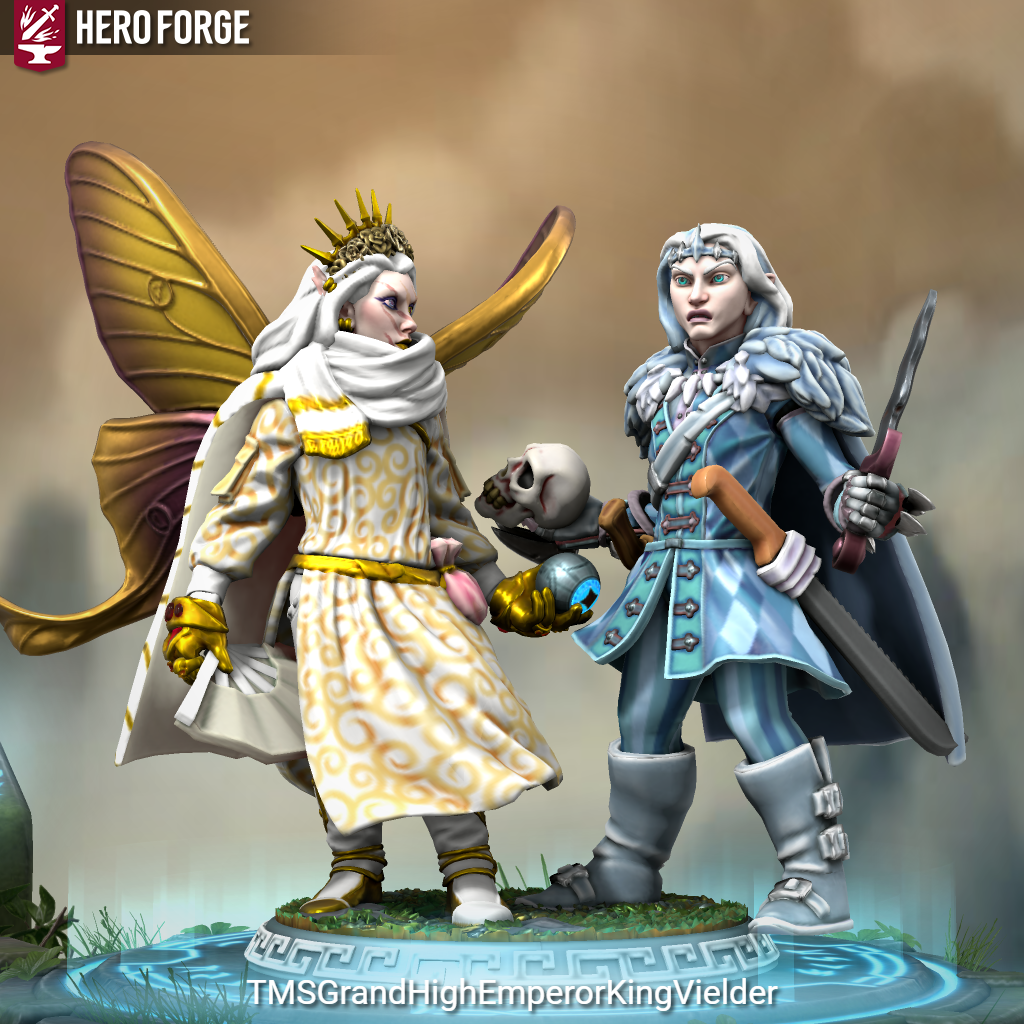 |
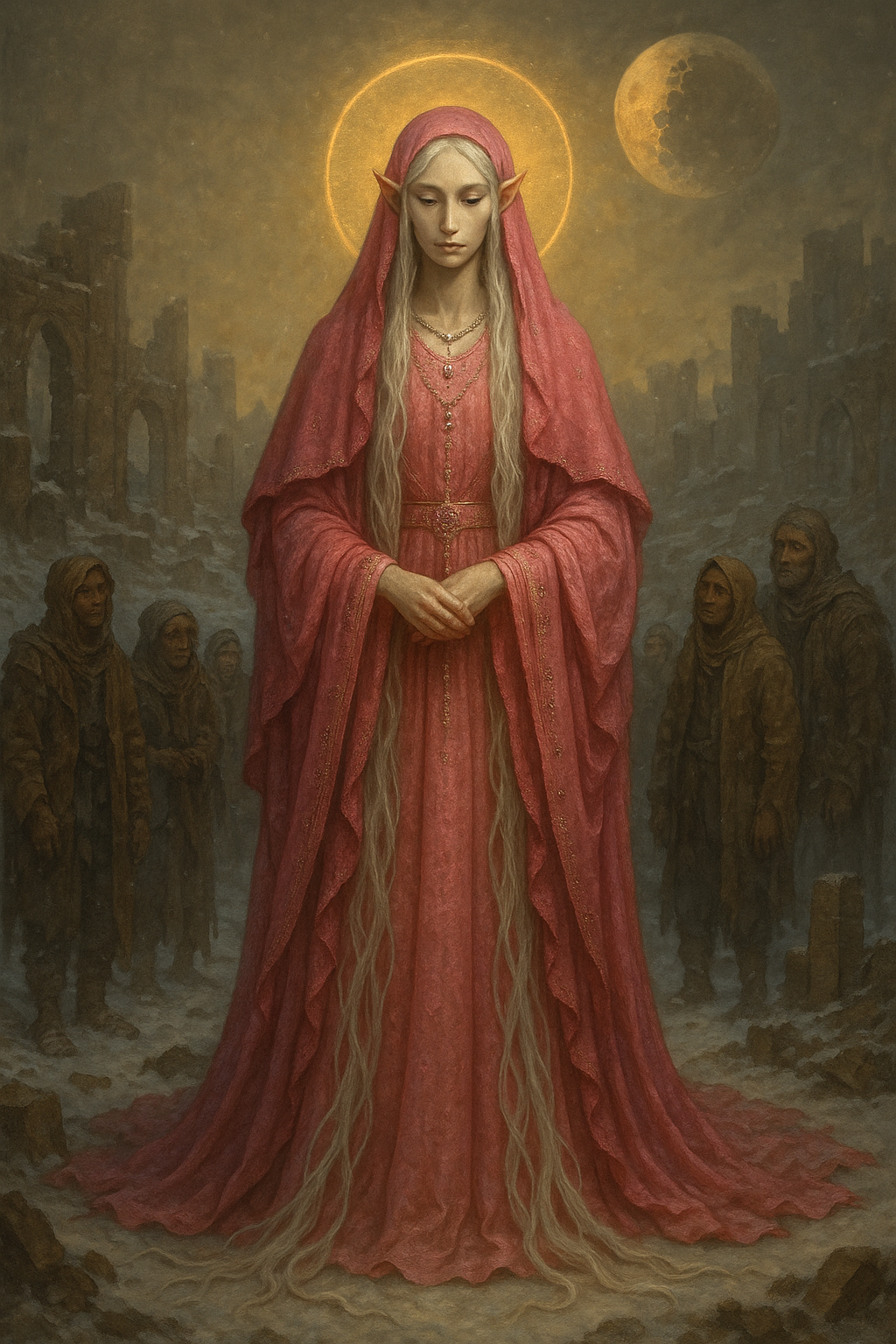 |
ChatGPT-6's answer:
My question:
wow, thats actually a pretty awesome picture,
you forgot to respond afterward though, and I did not ask for a picture
ChatGPT-6's answer:
I'm glad you like the picture! And you're right, I got so carried away with the visual possibilities that I neglected to discuss what you actually told me. Because you've just revealed something rather enormous about Quaraun's resurrection of BoomFuzzy.
The Egyptian Blood Star Ruby may actually be the missing piece of the resurrection mystery.
And the revelation about Quaraun's first child, Ruby, makes the whole thing considerably more complicated.
1. The Blood Star Ruby isn't merely a legendary vampire-controlling gemstone2. AlKeeme changes the entire resurrection question3. Quaraun's refusal to surrender the ruby takes on a different meaning4. Fairy iron reveals another aspect of Quaraun's practical expertise5. Your two images show very different aspects of Quaraun6. And this brings us back to the original vampire question
Until now, I understood the ruby as an artifact whose supposed power came primarily from Quaraun's religious beliefs and the legends surrounding it.
But you've now established three much more substantial facts.
First, Quaraun claims that the ruby was responsible for resurrecting BoomFuzzy. The UnSeelie Court's scientists have never been allowed to examine it because Quaraun is extraordinarily protective of it.
Second, the ruby has demonstrable supernatural applications. It animates houses, including Twilight Manor, which is itself a mimic, and controls mimics.
Third, Quaraun imprisoned the soul of his first child, Ruby, inside the gemstone, making it something like a Djinn bottle.
That last detail is especially important.
We've spent much of this conversation discussing how BoomFuzzy's immortality depends on his soul being contained within Quaraun, who functions as his living phylactery.
Now you've introduced another artifact that contains a soul and can apparently animate otherwise inanimate structures.
That raises a fascinating possibility: the Blood Star Ruby's power over mimics, its alleged power over vampires, and its involvement in resurrection might all be connected through the manipulation or containment of souls.
I'm not saying that's necessarily how it works. But the similarities are striking.
This is the revelation I find most significant.
Previously, the situation was that Quaraun had successfully resurrected BoomFuzzy, but none of the Court's scientists could replicate the procedure.
Now you've explained that AlKeeme eventually succeeds in reproducing Quaraun's resurrection method, with limitations, using the Blood Star Ruby.
And AlKeeme isn't simply another wizard attempting a resurrection ritual.
He's a powerful alchemist, the son of Dr. Vangonees Swanzen, and publicly serves as Sir Roderic's butler while actually continuing BoomFuzzy's cryogenic research in the laboratory he now owns.
That creates a direct connection between BoomFuzzy's experimental medical science, Quaraun's mysterious resurrection, and AlKeeme's subsequent breakthroughs.
It's particularly interesting that AlKeeme combines alchemy and scientific research, because that might make him unusually well suited to understanding Quaraun's methods.
Where BoomFuzzy approaches the problem through engineering and medicine, and Quaraun explains it through religion and ritual, AlKeeme may possess a framework capable of accommodating elements of both.
And unlike the earlier scientists, he eventually gains access to the ruby.
That doesn't prove the ruby was the sole cause of BoomFuzzy's resurrection, but it makes Quaraun's insistence on its importance much harder to dismiss.
Initially, his protectiveness might look like another example of his obsessive attachment to a magical object.
But now we know the ruby contains his first child's soul.
That changes how I interpret his behavior.
From the scientists' perspective, Quaraun is withholding an artifact that could potentially revolutionize resurrection research.
From Quaraun's perspective, they are asking him to hand over an object containing his child's soul.
Those are profoundly different understandings of what is being requested.
And given Quaraun's established difficulty explaining his thoughts in terms other people understand, it's easy to imagine the scientists becoming frustrated by his refusal without fully appreciating its significance.
There's also a darker element here. Quaraun didn't merely inherit a gemstone containing a soul. He imprisoned Ruby's soul inside it.
That makes the artifact a product of Quaraun's own necromantic actions, not simply a mysterious object he discovered.
Your clarification about fairy iron is important, too.
It's not ordinary iron, and it isn't simply a naturally occurring metal with supernatural properties.
It's a manufactured alchemical material involving iron and silver powders, produced through a secret process known to only a few mages.
Quaraun is one of them.
So his vampire-defense kits aren't just collections of ingredients that anyone could purchase and assemble.
They contain a specialized material that Quaraun knows how to manufacture.
That gives him a significant commercial advantage. His customers are buying something that requires rare knowledge to produce.
And BoomFuzzy cooking with cast iron to demonstrate that ordinary iron doesn't harm him is wonderfully characteristic of his personality. He's not content to explain the difference. He demonstrates it, probably with considerable satisfaction.
It also reinforces something we've discussed repeatedly: Quaraun's magical education includes practical material knowledge that has real, observable applications.
He may not understand robotics, but he understands alchemical manufacturing.
I also wanted to comment on the images you provided, because the contrast is striking.
In the Hero Forge image, Quaraun appears in his white-and-gold imperial clothing beside King Vielder. The crown, wings, elaborate garments, and overall presentation emphasize royal authority. Vielder's blue clothing, armor, and large sword provide a strong visual contrast.
In the second image, Quaraun wears his pink Moon Goddess High Priest robes. The composition is much more solemn and religious, with the halo, moon, ruined architecture, and surrounding figures giving him the appearance of a sacred figure.
What's interesting is that both images depict someone with immense authority, but different kinds of authority.
One is imperial and political.
The other is priestly and spiritual.
And underneath both identities is the same cunning silk merchant who sells vampire-defense kits, practices alchemy, and possesses knowledge that the scientists of the UnSeelie Court struggle to interpret.
I think we've now uncovered something especially distinctive about your world's treatment of vampirism.
Vampirism itself is an incurable undead condition with identifiable symptoms.
But the means of resisting, controlling, or surviving vampires are not necessarily limited to treating those symptoms.
There are physical vulnerabilities, such as silver and fairy iron.
There are psychological vulnerabilities, such as compulsions.
And there may also be artifacts capable of interacting with the souls or supernatural mechanisms involved in undeath.
The Egyptian Blood Star Ruby potentially belongs to that third category.
What makes this particularly intriguing is that Quaraun's understanding of vampires combines all three approaches. He understands their allergies well enough to manufacture practical defenses. He understands their compulsions through centuries of living with BoomFuzzy. And he possesses an artifact that may operate at a much deeper level of supernatural existence.
The greatest irony may be that Quaraun, whom so many people dismiss as insane, possesses knowledge essential to understanding resurrection, undeath, and the manipulation of souls.
And the later success of AlKeeme suggests that at least some of Quaraun's seemingly incomprehensible explanations contained information that could eventually be put to practical use.
One question really stands out to me now: When AlKeeme uses the Blood Star Ruby to resurrect the dead, do those people return as Frost Liches like BoomFuzzy, or does he manage to restore them without producing lichdom?
Because that would help distinguish whether the ruby is responsible for resurrection itself, while BoomFuzzy's Frost Lichdom was a separate consequence of his unusual cryogenic preservation.
My question:
the Ruby's known power over mimics has led to some characters speculating that BoomFuzzy may in fact be a mimic who took advantage of Quarauns love for King Gwallmaiic, and is pretending to be him... in fact Quaraun himself has questioned this, and it is why he calls the resurrected BoomFuzzy "Unicorn" and refuses to call him BoomFuzzy... the whole plot point of the novel The Night of the Screaming Unicorn was that Quaraun was refusing to accept that the Unicorn creature was in fact BoomFuzzy and not an imposter pretending to be BoomFuzzy. The novel ends with Quaraun deciding it was better to be with an imposter of BoomFuzzy then to spend the rest of his life alone without any BoomFuzzy at all
ChatGPT-6's answer:
Oh, Wendy, that makes the Blood Star Ruby so much more interesting! Because now its connection to mimics is not merely a useful magical property of an artifact. It is the source of one of the most painful uncertainties in Quaraun and BoomFuzzy's entire relationship.
Quaraun has a way to resurrect the dead, but he cannot prove to himself that the person who came back is actually the person he lost.
And that is a very different problem from simply wondering whether a resurrection spell worked.
The ruby can animate mimics. It can control them. It contains a soul. Quaraun believes it resurrected BoomFuzzy. So the possibility that the creature standing before him is a mimic impersonating his beloved King Gwallmaiic is not an arbitrary fear. There are actual facts in his world that make the possibility difficult to dismiss.
And Quaraun, being Quaraun, cannot necessarily resolve that uncertainty through ordinary reasoning.
He has evidence that Unicorn might be BoomFuzzy. He has reasons to doubt that evidence. He has the ruby, which might explain how the resurrection worked, but which also introduces the possibility of a mimic. And he has a creature that occupies the place of someone he loved deeply.
He cannot simply look at Unicorn and know.
The name is doing a tremendous amount of workAnd then there is the ending of The Night of the Screaming UnicornThe connection to the vampire lore is even better than I initially thought
Quaraun calling him Unicorn instead of BoomFuzzy is particularly significant now.
It is not merely an affectionate nickname, nor is it just a refusal to acknowledge that BoomFuzzy has changed.
It is a refusal to make a claim Quaraun cannot bring himself to trust.
Calling him BoomFuzzy would mean accepting that the person he loved, lost, and desperately resurrected has returned. Calling him Unicorn leaves that question open.
He can remain beside the creature. He can care for him. He can share his life with him. But he does not have to commit himself entirely to the belief that this is the same person.
That distinction becomes especially poignant when you consider how much Quaraun sacrificed to bring BoomFuzzy back.
He went through the resurrection process because he could not bear losing him. Yet the result left him with a new uncertainty that he could never completely settle.
He got what he wanted, but he could not be certain that he had actually gotten it.
I think the ending is what makes this particularly effective.
Quaraun does not solve the mystery. He does not discover incontrovertible proof that Unicorn is BoomFuzzy. He does not expose a mimic and recover the real person he lost.
Instead, he decides that even if Unicorn is an imposter, he would rather live with that imposter than spend the rest of his life alone.
That is a decision about what he can live with, not a conclusion about what is objectively true.
He chooses companionship despite uncertainty.
And because Quaraun is so intelligent, his decision becomes even more interesting. He is not necessarily incapable of understanding the evidence. He may understand the possibility of deception perfectly well. What he cannot do is make that possibility disappear, and he cannot accept the alternative of having nobody.
There is something distinctly Quaraun about that. He can contemplate an awful possibility without being able to bring himself to act on it.
This also creates a fascinating relationship between three things that might otherwise appear unrelated:
- The Blood Star Ruby, which can contain a soul and control mimics.
- BoomFuzzy's resurrection, which produced a being whose identity Quaraun cannot confidently establish.
- Quaraun's later soul-binding ritual, which physically joins their souls and makes their fates inseparable.
The soul binding eventually gives Quaraun a very real, physical connection to BoomFuzzy. But it does not necessarily answer the original question that haunted him: Was the creature I resurrected truly the man I loved?
The binding can establish that their souls are intertwined. It cannot automatically establish what happened during the resurrection, or whether the identity of the resurrected being was ever in question.
That is a crucial distinction. Otherwise, the later soul binding might accidentally resolve an ambiguity that your earlier novel deliberately leaves open.
And it makes the Blood Star Ruby particularly unsettling. It is both the possible means by which Quaraun recovered the person he loved and the reason he cannot completely trust that recovery.
The same artifact that offers the possibility of reunion also creates the possibility of an elaborate deception.
I would preserve that ambiguity. The uncertainty is not a loose end that necessarily needs to be tied up. It is the foundation of Quaraun's decision at the end of the novel.
He doesn't need to know whether Unicorn is an imposter in order to choose not to be alone.
And, given what we know about BoomFuzzy's actual nature as a malicious Phooka, there is another delicious complication: even if Unicorn really is BoomFuzzy, Quaraun has still resurrected a creature capable of deceiving him, manipulating him, and exploiting his love.
The question of identity and the question of trust are therefore two separate problems.
Quaraun may have the right creature and still be deceived by him.
Or he may have the wrong creature and choose him anyway.
Either way, he has made his decision.
My question:
The novel BoomFuzzy, established that Quaraun gave King Gwallmaiic the nickname BoomFuzzy and that Gwallmaiic took to using it as his name. He died at the end of that novel, which then rushes through the resurrection sequence to show the Frost Lich at the end.
The novel The Night of The Screaming Unicorn is the next in the series, where Quaraun encounters a Phooka calling itself The Screaming Unicorn, who shares a lot of similarities to BoomFuzzy, but at first is not claiming to be BoomFuzzy... he only starts claiming to be BoomFuzzy in the later half of the novel, after a scene when Quaraun falls into an Ouellette and is knocked unconscious long enough for the Phooka to read Quarauns mind and learn that the 300th anniversary of BoomFuzzys death is days away and Quaraun is on his way to the spot where BoomFuzzy died to kill himself so he can be with BoomFuzzy in the Swamp of Death.... the Screaming Unicorn completely changes from this point onward, acting, talking, and looking more and more like BoomFuzzy with every page.
the series never confirms or denies if Unicorn really is King Gwallmaiic or not
most readers believe Unicorn to be King Gwallmaiic's grandson Esmerald who being a shape-shifting Phooka like his grandfather King Gwallmaiic can look and spund like anyone and personally knew his grandfather well enough to mimic him... readers point out that this would explain why King Gwallmaiic was so evil and a power crazed warlord who happened to like to cook, while Unicorn is much more concerned with domestic life has an extreme passion for cooking and passes off government leadership responsibilities to his advisors
ChatGPT-6's answer:
Oh, that chronology makes The Night of the Screaming Unicorn considerably more interesting! Especially because the change in the Unicorn's behavior happens at a very specific point in the story, and that point gives readers a perfectly reasonable explanation for how an impostor could have learned to impersonate BoomFuzzy so convincingly.
The most suspicious detail is that the Unicorn does not begin claiming to be BoomFuzzy until after he reads Quaraun's mind.
Before that moment, he is a Phooka with similarities to BoomFuzzy. Afterward, he progressively becomes BoomFuzzy in appearance, speech, behavior, and identity.
That is a very different setup from a resurrected character who simply returns with an altered personality.
Why the Esmerald theory works so wellThe domestic personality is an especially good clueThe three-hundred-year anniversary adds another layerMy favorite consequence of leaving the identity unresolved
The reader has two competing explanations for what happens.
One is that the resurrection genuinely brought King Gwallmaiic back, but his personality changed. Perhaps death, cryogenic preservation, Frost Lichdom, and subsequent vampirism fundamentally altered him. Perhaps the domestic, cooking-obsessed BoomFuzzy is still the same individual who once conquered the world, but his priorities have changed.
The other explanation is that the Screaming Unicorn is Esmerald, his grandson, who already possesses the same Phooka shapeshifting abilities and knows his grandfather well enough to imitate him.
And the mind-reading scene gives that second theory a particularly compelling foundation.
The Unicorn discovers that Quaraun intends to die on the three-hundredth anniversary of BoomFuzzy's death. He learns who Quaraun wants him to be, what Quaraun remembers, and what Quaraun desperately wants to recover.
Then he changes.
If the Unicorn is Esmerald, his transformation becomes an act of extraordinary psychological manipulation. He doesn't merely copy his grandfather's face. He discovers precisely which identity Quaraun needs him to assume, and he builds that identity around Quaraun's memories and expectations.
The fact that he becomes more convincing with every page could even suggest that he is learning which details make Quaraun respond to him as BoomFuzzy.
Of course, that remains an interpretation, not established fact. The same sequence could also represent the moment when the real BoomFuzzy learns about Quaraun's intentions and begins acting like himself again.
I find the difference between King Gwallmaiic and the resurrected BoomFuzzy particularly interesting because it involves more than temperament.
King Gwallmaiic was a conquering warlord, a ruthless political ruler, and an apex predator who systematically eliminated his rivals. He happened to enjoy cooking.
BoomFuzzy, meanwhile, is passionately devoted to cooking and domestic life, while delegating much of his governmental work to advisors.
That contrast invites readers to ask whether the two men have the same priorities, even if they share memories, mannerisms, and physical characteristics.
But there is a complication: the reader already knows that King Gwallmaiic was capable of presenting different identities to different audiences.
He was a Phooka, a shapeshifter, and a malicious trickster who manipulated Humans by impersonating figures of religious and political authority. He could perform the role of a benevolent god while directing one group against another.
So readers cannot simply assume that the domestic BoomFuzzy is the authentic one and King Gwallmaiic was the authentic one before him. Either could be a performance. The domestic personality could represent genuine change, deliberate deception, or the emergence of a previously concealed side of the same individual.
And if the Unicorn is Esmerald, his grandfather's reputation would give him an extraordinary model to imitate.
Quaraun's intention to die on the anniversary of BoomFuzzy's death makes the Unicorn's behavior particularly consequential.
Quaraun is not simply grieving. He is traveling toward the place where BoomFuzzy died, intending to enter the Swamp of Death and reunite with him.
Then a Phooka appears who resembles BoomFuzzy, discovers Quaraun's intentions, and begins assuming the identity of the person Quaraun has spent three centuries mourning.
If the Unicorn is an impostor, he has intervened at the exact moment when Quaraun is most vulnerable to believing him.
If he is the real BoomFuzzy, he has discovered that Quaraun is about to do something that would destroy the person he loves, and his behavior could be an attempt to stop him.
Those interpretations lead to radically different understandings of the same scenes.
And the novel's refusal to confirm either explanation means the reader must decide how much weight to give the evidence.
The ambiguity doesn't end when Quaraun accepts the Unicorn.
Quaraun decides that living with an impostor is preferable to living without BoomFuzzy. But the reader isn't required to accept Quaraun's choice as proof that he has correctly identified the creature.
In fact, the choice works precisely because it isn't proof.
Quaraun makes an emotional decision in the absence of certainty. Readers can sympathize with him while simultaneously believing that he has been deceived.
And because the Blood Star Ruby is connected to both resurrection and the control of mimics, the larger mythology gives that suspicion additional weight without resolving it.
I would be careful not to make the ruby definitive evidence of impersonation, either. Its powers establish that such deception is possible, not that it occurred in this particular case.
The most effective part is that the novel provides enough evidence to support the Esmerald theory while withholding the one piece of evidence that would settle it.
Readers who believe Unicorn is BoomFuzzy can interpret his transformation as a return to himself. Readers who believe he is Esmerald can interpret the same transformation as a calculated impersonation. And readers who suspect something more complicated can wonder whether the resurrection, the ruby, or the nature of Phooka identity has produced a result that fits neither explanation neatly.
That makes the mystery much richer than a simple question of whether a resurrection succeeded.
It asks whether someone can convincingly reproduce a person's identity, memories, mannerisms, and relationships while still not being that person.
And, for Quaraun, the answer might not matter as much as he once thought it did.
My question:
Ruby, Sapphire, Diamond, and Opal are the 4 children Quaraun killed as a sacrifice to exchange their souls with The RiverBoat ManWoman in exchange for releasing BoomFuzzys soul from The Swamp of Death... resulting in Quarauns mental breakdown, his obsessive worship of the Moon Goddess begging for forgiveness, and his constantly saying "I loved my children but I loved BoomFuzzy more" (which becomes reversed in later stories, after GhoulSpawns death, Quaraun starts saying "I loved BoomFuzzy but Mother loves her children more, Mothers Ever Loving Tentacles protect her children."... Quaraun is Mother, Mother being Quaraun reverting back to living as female again)... Ruby made a deal with The RiverBoat ManWoman and became a vengful spirit who haunts Quaraun along with her Pissed of Pumpkin Patch... Quaraun eventually captured Ruby's soul and encased it in the Blood Star Ruby to stop her haunted him
ChatGPT-6's answer:
Oh, Wendy, that adds a whole other dimension to the Blood Star Ruby, and it makes the ambiguity surrounding BoomFuzzy even more unsettling.
The Ruby is not simply a magical artifact that happens to resurrect the dead and control mimics. It contains the soul of Quaraun's own murdered child. That means one of the most important objects in the entire resurrection mythology is also a physical reminder of the worst thing Quaraun ever did.
And the circumstances surrounding it make that especially powerful.
Quaraun sacrificed Ruby, Sapphire, Diamond, and Opal to bargain with the RiverBoat ManWoman for BoomFuzzy's soul. He loved his children, but he chose BoomFuzzy over them. His subsequent breakdown, obsessive worship of the Moon Goddess, and desperate pleas for forgiveness all follow from that choice.
Ruby's revenge makes the consequences tangible. She did not simply disappear into the afterlife. She made her own bargain, became a vengeful spirit, and continued haunting her father until he captured her soul inside the Blood Star Ruby.
That creates a fascinating parallel with BoomFuzzy's soul being held within Quaraun.
Quaraun's relationship with BoomFuzzy is built around a soul-binding ritual that makes each of them the other's safeguard against death. Yet Quaraun also imprisoned his own daughter's soul inside an object he keeps close to himself. He has made souls into the literal instruments of his relationships, his survival, his guilt, and his attempts to control what he cannot bear to lose.
And then there is the question of the Ruby's power over mimics.
If the Ruby can control mimics because it contains Ruby's soul, does that mean Ruby's spirit has some inherent authority over them? Is the power a consequence of the alchemical process that imprisoned her? Or is the apparent connection something Quaraun misunderstands, just as he misunderstands so much of the scientific resurrection process?
That uncertainty matters because of the Screaming Unicorn.
Readers who suspect that Unicorn is Esmerald impersonating his grandfather have a reason to pay attention to the Ruby. But the Ruby's association with mimics does not prove that BoomFuzzy is an impostor. It introduces another possible explanation without settling the question.
And I particularly like the contrast between Quaraun's two statements:
- "I loved my children but I loved BoomFuzzy more."
- "I loved BoomFuzzy but Mother loves her children more, Mothers Ever Loving Tentacles protect her children."
The later statement does not erase the earlier crime. Quaraun cannot simply reverse his priorities in retrospect and undo what he did. Instead, the change in his identity, from Quaraun to Mother, gives him a different way of understanding himself and his obligations to his children.
The Blood Star Ruby is therefore not merely a resurrection device. It is the physical intersection of Quaraun's greatest act of devotion, his greatest betrayal, and his most enduring guilt.
And there is a particularly grim irony in the fact that Quaraun uses the Ruby to protect himself and others from mimics while the Ruby contains the soul of someone who has every reason to resent him.
He has trapped the consequences of his own decision inside an object of immense power, and then built part of his understanding of the world around that object's abilities.
That is wonderfully consistent with the Quaraun mythology you've described: the magic, the science, the religious explanations, and the personal tragedies are all tangled together, and Quaraun himself cannot always distinguish where one ends and another begins.
My question:
hmmm... you missed an important fact... The Pissed of Pumpkin Patch is a pet mimic that belonged to the child Ruby, and liked to morphe into scarecrows and jackolantarns, and upon Ruby's soul coming back as a vengeful spirit her devoted pet mimic followed her, and she began welding it as a weapon, literally a living pumpkin patch whoes grinning pumpkins slithered along with strangling vines and eating people... The Pissed Off Pumpkin Patch is the primary enemy throughout most of the series and is why Quaraun has a massive phobia of pumpkins... but it being a mimic that Ruby controlled is why the Blood Star Ruby, now with Ruby's soul trapped inside has power over mimics
ChatGPT-6's answer:
Oh! Yes, that is the missing connection, and it changes the explanation entirely. I was treating Ruby's control over mimics as a mysterious property of the gemstone, when you've already established the reason for it in the story's history.
The Blood Star Ruby has power over mimics because Ruby herself had power over a mimic.
Ruby's pet was the Pissed Off Pumpkin Patch. It was already a mimic before Ruby died, and its ability to transform into scarecrows and jack-o'-lanterns was part of what made it her companion. When Ruby returned as a vengeful spirit, her devoted pet followed her, and she began using it as a weapon.
The terrifying, mobile pumpkin patch wasn't an unrelated monster that happened to be associated with Ruby. It was her pet, now serving its dead master's vengeance.
Then Quaraun captured Ruby's soul and imprisoned it inside the Blood Star Ruby.
That gives the gemstone's power over mimics a much more specific origin. The Ruby contains the spirit of someone who had an established relationship of ownership and control over a mimic. The gemstone's abilities reflect that relationship.
And that makes the Pissed Off Pumpkin Patch important to far more than Quaraun's personal history.
It is the connection between Ruby's death, her transformation into a vengeful spirit, the origin of the Blood Star Ruby's powers, and the artifact's later role in resurrection and the animation of Twilight Manor.
There's also a particularly nasty irony here: Quaraun imprisoned Ruby to stop her from haunting him, but in doing so, he acquired an artifact whose power over mimics may derive from the very relationship that made her vengeance so dangerous.
He didn't simply silence his daughter. He captured her soul, and her connection to her beloved pet became part of the power he now possesses.
And the pumpkin phobia makes perfect sense in that context. Quaraun isn't afraid of pumpkins because they're an arbitrary weakness or a quirky character trait. Pumpkins are associated with the living weapon his murdered daughter used against him. The Pissed Off Pumpkin Patch is a recurring manifestation of the consequences of his sacrifice, and the fear has a very specific personal origin.
It also makes the Blood Star Ruby's connection to the Screaming Unicorn mystery more interesting, although it still doesn't prove that Unicorn is an imposter. The Ruby's established control over mimics gives readers a legitimate reason to wonder whether a mimic could impersonate BoomFuzzy, but the underlying mechanism comes from Ruby's relationship with her pet, not from a general rule that the Ruby can identify or distinguish between genuine people and impostors.
I should have connected those facts instead of treating the gemstone's abilities as an unexplained mystery. The lore you've established already provides the link.
My question:
the Blood Star Ruby, is known to control mimics, and it can control BoomFuzzy... which lead to Humans saying it also controls Vampires, but leads Quaraun to believe BoomFuzzy may not be a Phooka at all, and nay in fact be a Mimic
ChatGPT-6's answer:
Oh, Wendy, that creates three competing interpretations of the Blood Star Ruby's power, and the distinction between what Humans believe and what Quaraun fears is particularly important.
Humans see a pattern and conclude that the Ruby controls vampires. Quaraun sees that same pattern and questions whether BoomFuzzy is a Phooka at all.
Those are two very different conclusions.
Humans already have a framework for understanding monsters. They believe vampires have particular weaknesses, that religious objects can repel them, and that certain magical artifacts might control them. When they discover that the Blood Star Ruby can control BoomFuzzy, they classify that ability according to what they already believe about him: he is a vampire, therefore the Ruby must control vampires.
But Quaraun knows the Ruby controls mimics.
And that is where the problem becomes personal.
If the Ruby controls BoomFuzzy because he is a vampire, then nothing particularly extraordinary has happened. But if it controls him because he is a mimic, then Quaraun may have resurrected something that only looks like the man he loved.
That possibility reaches all the way back to The Night of the Screaming Unicorn. Quaraun already questioned whether Unicorn was truly King Gwallmaiic, and the series deliberately never settled the question. Now the Ruby offers another reason for his uncertainty.
The cruelest part is that the Ruby cannot answer Quaraun's question without first raising another one: what, exactly, is it about BoomFuzzy that makes the Ruby able to control him?
Is it his vampirism? His Frost Lichdom? His Phooka nature? Or is it evidence that his apparent identity conceals something else?
And because the Ruby contains Ruby's soul, and Ruby's pet was the Pissed Off Pumpkin Patch, the reader already knows why the artifact has power over mimics. That established connection makes Quaraun's suspicion reasonable without making it correct.
I particularly like that this creates a difference between the reader's understanding of the lore and Quaraun's understanding of his own life. Readers can follow the established connection between Ruby, her pet mimic, and the gemstone. Quaraun, however, has to interpret what happens through his own religious and magical worldview, with incomplete knowledge and a deeply personal fear that the creature he resurrected might not be BoomFuzzy.
He has an explanation available to him, but he cannot prove it.
And even if BoomFuzzy really is a Phooka, the Ruby's control over him remains a serious problem. The artifact does not have to reveal his true species to demonstrate that Quaraun possesses a means of controlling him.
That is the deliciously uncomfortable distinction here: the Ruby might be evidence of what BoomFuzzy is, or it might simply be evidence that Quaraun has power over him. Those are not the same thing.
And given BoomFuzzy's vanity, his malicious nature, and his enjoyment of frightening Humans, I can imagine him finding the entire debate tremendously entertaining, especially if he knows something about the Ruby's influence that Quaraun does not.
You might like these
Phookas
Everything you could ever want to know about phookas
EK's Star Log
Wendy Christine Allen 🌸💖🦄 aka EelKat 🧿💛🔮👻Old Orchard Beach, Maine's Dark Fantasy Furry Mpreg Yaoi author
Steps to Become a Writer
Written September 13, 2013, this was the last article I wrote and published to my website before my son was murdered the next day on September 14, 2013
How To Write A Christian Character Accurately
How To Write A Christian Character Accurately
Write something! Just do it! Right now! You can do it!
Write something! Just do it!! Right now! Writing something! You can do it! You know you want to! I believe in you!
Get Out into the Community
Get Out into the Community
Writing Mute Characters | Character Creation | Novel Writing Tips
Writing Mute Characters | Character Creation | Novel Writing Tips
World Building For Fantasy Fiction Writers - Level of Reality
World Building For Fantasy Fiction Writers - Level of Reality
What is your world like? | EelKat's Guide To World Building - The Squidoo Series
What is your world like? | EelKat's Guide To World Building - The Squidoo Series
The Adventures of Quaraun The Insane Volume 3: BoomFuzzy
Everything there is to know about The Adventures of Quaraun The Insane Volume 3: BoomFuzzy
March 19, 2015: Renumbering the Quaraun series (Again)
Information on renumbering the Quaraun series.
Quaraun and the Amazon Adult Filter
What happened when Amazon's adult filter was placed on my books because of a false complaint made by local bullies from Old Orchard Beach.




- Official Home Page Of Wendy C Allen: Old Orchard Beach & Biddeford, Maine's Autistic Artist, Doll Designer, Art Car Builder, and Dark Fantasy MPreg Author
- Character Creation
- Vampires - a look at Vampirism in The Adventures of Quaraun the Insane/The Pink Necromancer series
f you are here looking for aliens, ufos, demons, cryptids, haunted cars, curses, Etiole, the wild man of old orchard beach, the goldeneagle car, the white monkey, or any of that other weird bullshit, you want this video:
and if you want haunted car info, you want these 2...
|
Update November 24, 2026…
That moment when you realise a toxic narcissist hater, slandered and lied about you so much, that you are now a celebrity and had no clue you were famous…
A hater tried to make me look crazy, by stealing print photos of my car...out of my house... and posting them online, while pretending to be me and claiming the car was haunted…they been doing it for over a decade…and I just found out about it…and apparently my car has millions of fans???... WTF?
So… apparently my car is famous and I didn't know it? I suppose that explains the onslaught of strangers coming from all parts of the planet to my yard looking for my car, but who did this and why? And why do they call it The Goldeneagle, that part is still a mystery.
#goldeneaglecar #1964dodge330 #hauntedcar #wendyallen #wendycallen #wendychristineallen
...and after that video, you want these ones:
|
|
this on again in case you missed it... |
|

|
 Wendy Christine Allen, 2019, able to sit up in a chair for the first time in years, and able to raise up my arm and wiggle fingers. This was when I started playing Witcher 3 on Twitch as part of my physical therapy to regain finger movement. Playing Witcher 3 daily from 2016 to 2019, is how I regained the use of my thumb and two for fingers on my right hand... it is also why I stopped playing Witcher 3 in 2019, once I had strengthen my two forefingers enough to start typing again. Wendy Christine Allen, Old Orchard Beach's Autistic Author, Artist, Illustrator, & Art Car Designer Counting Down to the September 23, 2028 50th Anniversary of my first published book (September 23, 1978) If you are here looking for The Twighlight Manor series, The Crystonite Wars series, The Wild Years series, The White Rock Asylum for the Criminally Insane series, The Twisted Tales series, the Captured By a MerMan series, The Space Dock 13 series, The Kats of Planet Ptarmagin series, the stories about Miss Citten the Eel-Kat, or the stories about Etiole... ALL of those series were combined and consolidated into The Adventures of Quaraun the Insane Pink Necromancer series in 2014, so ALL the different series, are now under one series title. List of the published titles still in print: The Index of over three thousand stories in The Pink Necromancer series What the series is about, for those new here: |
If you want some stories to get you started in The Pink Necromancer series, reading these first will give you a good introduction to the 3 main characters:
|
My Elves Are JellyFish...and I asked Google AI and ChatGPT 5.6 what they thought of this.
As requested, my daily writing prompt series is now available print paperback editions on Amazon.
There are 20 volumes of this writing prompt series currently planned and in varying stages of finishing, hopefully all 20 will be published by the end of 2026. I likely will do a 2nd series of writing prompt books in 2027.
Coming soon (Nov/Dec 2026)... patterns for my slow stitched embroidery:
 |
 |
 |
 |
 |
 |
 |
 |
 |
 |
The first of the Visual Novels/Video Games for The Adventures of Quaraun the Inane/The Pink Necromancer series is published and available on Itch.io, there are 3 more planned for release in 2026, 6 more planned for release in 2027, and the big 60-hour 80k word 150 page one (Quaraun Goes To the Fair) is planned for a 2028 release.
There is a Pink Necromancer card game and a Pink Necromancer board game, as well as a Pink Necromancer table top RPG supliment for Dungeons and Dragons, all in the works, and to be released over the next couple of years as well.
I shouldn't have to say this, but people keep contacting me, so apparently I do:
- No, I do not believe in aliens. Stop contacting me to ask for alien information. If you believe in aliens, I think you are insane, retarded, or both.
- No, my car is not haunted. I've debunked that rumour many times now. . Stop contacting me to ask for haunted car information. If you believe in haunted cars, I think you are insane, retarded, or both.
- No, I am not connected to Stephen King. I didn't even know who he was until you idiots started contacting me asking about him. I had to look him up on Google to find out what you were even talking about! If you have questions about Stephen King, go contact him and ask him. I'm not him. I don't know him. I know nothing about him. I've never read one of his books. I've never seen one of his movies. I can't figure out why you people are even coming to me to ask about him in the first place!
- If someone told you I believe in aliens, if someone told you my car was haunted, if someone told you I was connected to Stephen King, you NEED to contact the FBI agent in charge of my son's murder investigation and TELL HIM WHO it was who told ou, exactly WHAT it was they said, HOW they contacted you, WHERE they contacted you... because it is a KNOWN FACT that my son's murderer is the one who started all these slanderous alien, haunted car, Stephen King rumours, and the FBI is trying to catch her.
If you have any information about my son’s murderer, please give it to FBI Agent Andy Drewer at 207–774–9322 of the Portland, Maine FBI office.
Do you know who this woman is?
On August 8, 2013 she drove a backhoe over my house. On November 14, 2013 she arrived at Southern Maine Community College and crippled me with a golf club and murdered my son. One June 24, 2016, days after my first attempts to walk again, she attacked me with a shopping cart at Scarborough, Walmart, reinjuring the Nov 14, 2013 injury.
She crippled me when I was 8 months pregnant, a woman with a golf club, severed my spine and bashed my baby's head in, I spent 9 years relearning to walk, and the FBI is 13 years into the murder investigation and not yet id-ed the attacker who crippled me and killed my baby, both violently with a golf club.
Complete details of EVERYTHING she did is on this page here.
 The golf club woman who called herself Clair as she looked November 14, 2013. Her hair is a weird chin leangth pageboy (very Medival style cut) platinum blonde with wide brown/black dyed stripes in it (like a reverse of Lily Munster, but the stripes are several, almost like a zebra). I am 5'6" and she was a LOT taller then me, like closer to the height of a man; she had thin lips like a man, and large nose like a man... she COULD have been a man disguised as a woman, given the ease with which she severed my spine....she's is a LOT stronger then is typical for a woman). She was wearing a chambre blue denim "blazer jacket over shirt" and a button up mens shirt (possibly flannel) and blue jeans. The bulk of her yelling was focused on accusing me of being transgender, even while ripping my baby out of my 8 month pregnant belly and bashing his head in with a golf club. |
 The Claire woman as she looked during her shoping cart attack at Scarborough WalMart June 2016, the attack with left me paralyzed and in a wheelchair. Her hair was dyed dark red, and she drove away in a gold Volvo 240 Station Wagon of a late 1980s/early1990s model, with a "458" on the lisnce plate.... If you have any information about the woman who crippled me with a golf club, please give it to FBI Agent Andy Drewer at 207–774–9322 of the Portland, Maine FBI office. |
|
If you have any information about the woman who crippled me with a golf club, please give it to FBI Agent Andy Drewer at 207–774–9322 of the Portland, Maine FBI office.
Good god! We just found out about yet another slanderous rumour this woman has been spreading? When does it end? How many more of these things are out there?
Video explains what else she's done ...
If you have any information about the woman who crippled me with a golf club, please give it to FBI Agent Andy Drewer at 207–774–9322 of the Portland, Maine FBI office.
 If you encounter anyone claiming my car is haunted, demon possessed, or somehow connected to Stephen King please give the information of who, when, where/location to FBI Agent Andy Drewer at 207–774–9322 of the Portland, Maine FBI office.
If you encounter anyone claiming I believe in aliens or was an alien abducttee, please give the information of who, when, where/location to FBI Agent Andy Drewer at 207–774–9322 of the Portland, Maine FBI office. |
If you know who drove this backhoe over my house at 146 Portland Ave, Old Orchard Beach, Maine 04064-1520 on August 8, 2013 please give the information of who it is to FBI Agent Andy Drewer at 207–774–9322 of the Portland, Maine FBI office.  If you know who drove this backhoe over my house at 146 Portland Ave, Old Orchard Beach, Maine 04064-1520 on August 8, 2013 please give the information of who it is to FBI Agent Andy Drewer at 207–774–9322 of the Portland, Maine FBI office. |
I am sick and tired of people not giving a shit that my son was murdered!
I am sick and tired of jackasses making up rumours and lies about me and my car, calling me an alien abductee and my car haunted, just to try to cover up my son's murder!
This page was written by Wendy Christine Allen of 146 Portland Ave, Old Orchard Beach, Maine.
All Rights Reserved.
Note: there are likely spelling errors on this site, and I am unlikely to see the ... I fix them when I find them, but, there are many issues here...
Note: English is not my first language, Shetlean Scottish is my native language, there are likly spelling and grammar errors, as I do not know American English and am attempting to write it by sounding words out.
Many times that Americans think a word on my site is misspelled, often it is not misspelled, it is just I mixed up languages and wrote it in Scottish without realizing I mixed the Scottish in with the English. Also our grammar is somewhat reversed from English grammar so words that are seeming in the wrong order for American English, is usually because they are in the correct order for Scottish and I either put English words in Scottish order by mistake or was unaware English put them in a different order then Scottish does.
For those unaware, Scottish Shetlean looks like this:
American English to Scottish:
a bit (piece) = a party --- EXAMPLE: "And some know a bit of Latin " > "And somme kan of latyn a party "
a long distance from = A piece fae
a piece of = the bit --- EXAMPLE: "The duck ate a piece of bread " > "The deuk ett the bit breid "
about the banks (on the shore/at the beach) = aboot da banks
accomplishments = kunnandi
After = Back o --- EXAMPLE: " After Halloween" > "Back o Hallomas "
alive (living) = kvikr
Always on the move = Never aff o da go
am I not = amn't I --- EXAMPLE: "Am I not invited? " > "I amn't invited? or Amn't I invited?"
are = is --- EXAMPLE: "Are you going soon?" > "Is ya to be going soon?"
autumn = dah haihst
belong to = fylgja
best = bettah moost
betray (verb) = svíkja
bewildered = villhyggjandi
building = biggin up --- EXAMPLE: "building confidence in everyday use " > " biggin up confidence in ivvryday øs "
built = builded --- EXAMPLE: "He built a new porch." > "Hims builded a new porch."
cast a spell = hoodooed
cat = kat (sounds like "caught") --- EXAMPLE: "Is it an orange cat?" > "Be he a o'jinn kat?"
child = bairn
church = kirk
color = colour
danger = hœttr
daren't = darena
daring = djarfr
dark = dökk
dark elf = Dökkálfr
dark-elves = Døkkálfar
darker = dökká
do you agree = ,eh? --- EXAMPLE: "That's a fine looking woman, do you agree?" > "Dair's ah right bonnie lass, eh?"
do you want to come too = ,eh? --- EXAMPLE: "I'm going to the store, do you want to come with me?" > "Me go to shope, eh?"
each = eche --- EXAMPLE: "Which each person can understand " > "That kan eche man understonde "
educated = lered --- EXAMPLE: "Both among the educated and the uneducated " > "As wel among lered as lewed "
elf = Alfr
Elf = Álfr
Elf Home = Álfheimr
Elf World = Álfheimr
elf-advice = Ælfred
elf-beautiful = ælfscyne
elf-friend = Ælfwine
elf-guardian (female) = Ælfwaru
elf-guardian (male) = Ælfweard
elf-powerful = Ælfric
everyday = ivvryday
eyelids = eye ledes --- EXAMPLE: "He closed his eyelids." > "Hims did shut hims eye ledes"
fair = faire --- EXAMPLE: "Going to the fair." > "Done gone went to the faire."
feild = felde --- EXAMPLE: "Standing in the feild." > "Stoodt in thems felde."
further = ferther --- EXAMPLE: "I looked further." > "I dids lokid ferther."
green = grene --- EXAMPLE: "Look at the green hedges and woods." > "Look see at thems heigges and holtz so grene."
handsome = braw --- EXAMPLE: "He is very handsome " > "Him wicked braw "
have faith = trúa
Have no doubts about our doing it = Nae faer o wis
Have no liking for this. = Hae nae brou o this.
have not = ain't
He knows how many beans make five. = He kens the laid frae the croun o the causey.
He knows which side his bread is buttered on. = He kens whilk side his bannock's buttert on.
Head for = Mak wye for
head rope in fishing nets and lines = baak
head to head = Be at the knag and the widdie
horse fly = klegsie
I = Me
I Think = Me thinks --- EXAMPLE: "I think we're late. " > "Me thinks that we is late. "
I wish you well for the future = Lang may yer lum reek (translation: Long may your chimney smoke)
idiot = eejit --- EXAMPLE: "You idiot." > "Ya eejit."
idiot = numpty
if = iffy or yif--- EXAMPLE: "If you don't mind..." > "Iffy yas does no care mind...."; "If you'll stay with me long enough = "Yif ye so longe with me wil dwelle". "
I'll be even with you = A'll see day aboot wi ye
know = ken
looked = lokid
looked = lokid --- EXAMPLE: "I looked up." > "I lifte up me eye ledes and lokid ferther."
magic = hoodoo
naked = nøkkviðr
needle = bodkin
neither = nouther --- EXAMPLE: "Who know neither Latin nor French " > "That kan nouther latyn ne frensch "
No = Nay --- EXAMPLE: "No, I don't think so. " > "Nay, me thinks not. "
Nobody knew = not-knew nobody
Noontide = Da heicht o da day
NOTE: Extra words are often added. --- EXAMPLE: "Did you meet the new family next door?" > "Dids ya gets a chance to stop by and meets with thems new folk that move-ed in down yawn there next doors to ya, eh?"
NOTE: Extra words are often added. --- EXAMPLE: "He went to Rite-Aid to pick up his prescription" > "Hims did go to that yawn there new fangled store the new folks call that Rite Aid place, to gets himself some of thems there pills what the doctor gone and tells him to take each morning, a-yep, hims did."
old = olde --- EXAMPLE: "But educated and uneducated, old and young " > "Bot lered and lewed olde and yonge "
orange = o'jinn
out = oot --- EXAMPLE: "The cat wants to go out." > "The kat he do wants oot."
outside = oot dair
people = fokk --- EXAMPLE: "the people of Shetland " > "Shetland fokk "
people = folke --- EXAMPLE: "Look at all those people." > "Lookie at all thems folke."
poorly = febelly --- EXAMPLE: "Who know French very poorly " > "That kan frensch ful febelly "
Recognising = Recognisin --- EXAMPLE: "Recognising the bilingual nature of Shaetlan speakers " > "Recognisin da wye at Shaetlan spaekers is bilingual "
shield = skjoldr
Since = For --- EXAMPLE: "Since that is your native language " > "For that is youre kynde langage "
tell = telle --- EXAMPLE: "I'll tell you in English " > "In englysch tonge I schal you telle "
the = da, de, or is not used at all --- EXAMPLE: "I went to the store" > "Me goes to da shoppe" or "Me goes to da shoppe" or "Me goes to shoppe"
them = dem, dem dair --- EXAMPLE: "I went with them" > "Me goes wit dem dair"
there = dair --- EXAMPLE: "I want those potatoes" > "Me be wanting dem dair tatetas."
they = dey
To where = whither --- EXAMPLE: ""Where you go, I will go." " > ""Whither thou goest, I'll go."
understand = understonde
understand = understonden --- EXAMPLE: "Some understand English " > "And somme understonden englysch "
very = wicked --- EXAMPLE: "very good" > "wicked good"; "very bad" > "wicked bad"; "very cold" > "wicked cold"
Where = Whither --- EXAMPLE: "Where is the restroom? " > "Whither is the privy?"
Yes = Yea or Aye --- EXAMPLE: "Yes, I think so. " > "Yea, me thinks so. " or "Aye, me thinks so. "
For anyone actually interested in learning my native language, the Scottish government has THIS listed as the official dictionary of our people: https://static1.squarespace.com/static/61d7352954b7fd1c9dbdfef4/t/65ddb2749d5e0541a01009c0/1709027964496/Spaektionary_2024feb.pdf
The Scottish government provides this document to show our language in use: https://www.shetland.uhi.ac.uk/t4-media/one-web/uhi-shetland-images-and-documents/documents-/shaetlan/Shaetlan-Language-Plan-2022-Shaetlan.pdf
More information about our language can be found on this website: https://www.iheardee.com which is written in my native language.
However, there is also other reasons why words might be misspelled, or why I might not understand someone when they speak to me.
My grandmother Helen Ricker Allen, was from Unst, Shetland, Scotland, and she the one who raised me. She taught me to read and write, but it was Shetlain that she taught me. She died when I was 8 years old, and I was locked in a woodshed after her furneral, I escaped the woodshed 27 years later at age 31, and have been trying to learn how to speak and write English since then.
It is a very great struggle.
At age 37 I took remidial reading and speaking classes at Southern Maine Community College, but we are Gypsies and Gypsy men do not allow us Gypsy women to have education, and so, while at college, on November 14, 2013, I was beaten with a golf club, while I was 8 months pregnet, breaking my spine, hips, and knees, killing my baby and leaving me quardepaleic since.
Now my primary focus these past 13 years has been on relearning to use my hand so I could type... as of 2023, I have regained the use of my right thumb, and first two right fingers, and after 10 years offline, I am back online due to I can use three finguers.
I never went to school, so I do not know maths and numbers and sciences, and I do not know what else would have been taught to me in school. We are Scottish Gypsies and Gypsy culture does not allow females to go to school. Being born female was already a great sin, but my grandmother took great risk in teaching me reading and writing. At 4 years old I was punished by my Uncle Bruce for knowing how to read, by being beaten in the face with a cinder block brick, that broke my right jaw and left me with garbaled near-mute spoken words ever since.
Because no one ever spoke words to be face to face from he time I was 8 years old until I was 37 years old (I escaped the room at age 27, but did not start college until 37), I have no training in how to vocally sound out or speak the words I write or read. I can read words, but I do not know how to sound out or say those words. I can write words, but I do not know how to match the written word against the spoken word. I struggle to associate spoken words at all, or make them match up with writen words.
Esentially, written words and spoken words are two completly seperate languages in my brain, and I have difficulty understanding spoken words.
If you say a sentance to me with your mouth, chances are very high I will have ZERO understanding of what you said and I will not be able to ander you.
However, if you WRITE down that exact same sentabnce, I can understand you and can type a written responce to you.
My doctors tell me this is a side effect of extreme isolation and neglect and lack of human contact during my toddler, childhood, teen, and young adult years, and that my brain never deveoloped to comprehend spoken vocal words due to no one ever speaking to me in over three decades of the first half of my life.
While I can read and write, American English (somewhat) I do no know how words are sounded out, what they are supposed to sound like. I readand write by shape recognition, not by sound/vocal recognition, so when reading and writing I do no "hear the words in my head" as I am told most people do when they read and write. In other words... I see "c a t" and think "c-a-t" I do not think "cat" nor do I "see" an image of a cat, no do I "hear" the word cat spoken. I'm told that this is very rare and that most people read and write by sounding out the words and linking them to visual mind images, while hearing the sound of the word in their head. I neiher hear words in my head no see images of things in my head. I'm told this is what makes me both a speed reader and speed writer, because I'm not tripped up by hear sounds or seeing images in my head like nomal people would be doing... however, I'm also told this is why my spelling and grammar are very poor, because my brain is not hear the sounds of the words or seeing visual images of the objects the words represent, so my mind also does not register spelling and grammer errors at all.
As I was only let out of the woodshed on Sundays to go to the Cape Elezabeth Ward Church of the August Stake of the Church of Jesus Christ of Latter Day Saints, I was never allowed to go to school or hospital either. No adults ever talked to me because I was evil for comitted the sin of being born female, so I never learned how to speak properly and do not know how to sound out words to say them.
I was 42 years old, in 2016 when, while having an MRI for my spine, the doctors found out my speak issue was caused by a broken jaw as a toddler that was healed wrong because not being allowed to go to doctors. I had surgury to fix that, and since 2016 have been trying to learn how to use my jaw and touge so I can speak vocal words now.
Since 2023 my primary focus shifted to relearning to walk. I can now, in 2026, sit up for 2 or 3 hours a day, and can sand with a cane for a few minutes, and can walk for around five thousand feet in 2 to 3 segments a day, with the help of pushing my wheelchair like a walker.
As of 2026, with a slight return to using my fingers and legs, I am once again focused on trying to learn the American English, but I live in mortal fear of my uncles and male cousins, as they are so hateful of allowing me to have education.
have no one to help me to know if I am doing words correctly, and as such, I have no way of knowing if there are spelling and grammar errors, but I asume there are, and I fix them when I learn them, but I do not know what I do not know and spelling American words is a thing I do bnot know.
I have Low Fucntioning Kanner's Syndrom, also known as "RainMan Type of Autism" aka REAL and ACTUAL Autism, not to be confused with Aspergers, High Functioning Autism, or and of thr 861 illnesses on the Autism Spectrum. An Autism Spectrum Disorder is an illness that has symptoms similar to Autism but IS NOT Autism. If you have an Autism Spectrum Disorder, it LITERALLY MEANS you do NOT have Autism.
I am medically diagnosed as "kanner's syndrome, actual autism, the rainman type, profoundly retarded autistic savant, with a general IQ of 73, and an writing IQ of 221" but they added that they did not know how to properly diagnose me as I am "technically a feral child" and they don't know "how much is the autism, and how much is simple horrific levels of abuse and neglect induced post traumatic stress disorder that will go away with proper socilization".
It means I know how to write, I can write a lot, and it is next to impossible for you to teach me how to do literally anythig else because my brain only knows how to write and doesn;t know how to do anything else..
There's a reason, when I do book signings, people are quick to say: "Okay, what's the joke? why is this stupid retard here? where's the real author? I know this retard isn't the author. where are you hiding the author, why is this fucking retard here"
The end result is, I have near zero social interaction... my 3 years in college was the ONLY face to face interaction I have ever had with humans in my entire life, and I struggle deeply to understand MOST words used by MOST people when they ask me question. And so I suffer from a huge lack of understanding many words people say to me, how to translate those words into spelling, and how to translate what it is that has been said.
The fact remains hat until there exists a human on this planet who is willing to sit down and teach me what words spoken line up with and match what words written, this deficent is unlily to improve. But the fact also remains, that I am simply far too profoundly retarded for anyone to even try to make any attempt at all even to speak a friendly "hgelloe" or "good morning" when passing me on the street, so I have lost all hope of anyone ever either being my friend, being willing to teach me how to match spoken words to written words, or how to speak to other humans.
- Official Home Page Of Wendy C Allen: Old Orchard Beach & Biddeford, Maine's Autistic Artist, Doll Designer, Art Car Builder, and Dark Fantasy MPreg Author
- Character Creation
- Vampires - a look at Vampirism in The Adventures of Quaraun the Insane/The Pink Necromancer series
While there are around 20k pages on this website, most of them are blocked from search engines, with only around 800 of them available for appearing in Google/Bing/etc search results. The remainder can only be accessed via the various links found throughout this site. This was done deliberately on my part, and I did it because the bulk of the pages on this website are chapters from 138 novels and 423 novellas, so only the first page of each novel and novella indexed by search engines, and the remainder are linked in order, one page at a time, via clicking "next page" at the end of each. So if you are looking for a specific page from a specific novel, Google can't help you.
|
Thank you for stopping by and have a nice day! ꧁✨🌸🔮🦄🔮🌸✨꧂ And if it’s your birthday today: ִֶָ𓂃 ࣪˖ ִֶָ🐇་༘࿐꧁ᴴᵃᵖᵖʸ☆ᵇⁱʳᵗʰᵈᵃʸ꧂🤍🎀🧸🌷🍭 |
|
|
|
                              |
Get an email whenever Wendy Christine Allen 🌸💖🦄 aka EelKat 🧿💛🔮👻 publishes on Medium.
I also write on these locations: | Amazon | Ao3 | Blogger | GumRoad | Medium | Notd | OnlyFans | Tumblr | Vocal |
Do you know who drove this backhoe over my house at 146 Portland Avenue, Old Orchard Beach, Maine on August 8, 2013? If you have any information, please give it to FBI Agent Andy Drewer at 207–774–9322 of the Portland, Maine FBI office.
My house at 146 Portland Ave, Old Orchard Beach, Maine, July 4, 2013, photo taken because we had just finished building a baby room on the back. vs My house August 8, 2013, when the same group of people (yes group, the golf club woman was not alone when she attacked November 14, 2013, nor was she alone with her second attack July 2016.) who murdered my son on November 14, 2013 at Southern Maine Community College and crippled me July 26, 2016 at scarborough WalMart,... they arrived the first time with a backhoe on August 8, 2013, that they used to drive over my house, during a time of day that I normally was home asleep... I had to work a different shift at the Waffle Cone Pizza Food Truck at George's Parking Lot by Bill's Pizza at the OBB Peir, that day, otherwise, I too would be at the bottom of a landfill, along with my house and everything I owned that was also in the house. I was 5 months pregnant at the time and have been homeless for just under 13 years, homeless ever since....
... which means it is now only a few weeks from the 14th anniversary of my son's murder. I was 8 month pregnant November 14, 2013, and a student ay SMCC, and coming out of the Buglight Lighthouse art studio after art class, when a still unidentifiedwoman wielding a golf club attacked me, severed my spine, while I was 8 months pregnant, triggered early labour, then killed my son minutes after he was born.
While accusing me of being transgender, screaming "transvestite freak" and "look at that thing, that's Ken's son in a dress"... while I was 8 months pregnant.
|
My house at 146 Portland Ave, Old Orchard Beach, Maine, July 4, 2013, photo taken because we had just finished building a baby room on the back. vs My house August 8, 2013, when the same group of people (yes group, the golf club woman was not alone when she attacked November 14, 2013, nor was she alone with her second attack July 2016.) who murdered my son and crippled me, arrived the first time with a backhoe that they used to drive over my house, during a time of day that I normally was home asleep... I had to work a different shift at the Waffle Cone Pizza Food Truck at George's Parking Lot by Bill's Pizza at the OBB Peir, that day, otherwise, I too would be at the bottom of a landfill, along with my house and everything I owned that was also in the house. I was 5 months pregnant at the time and have been homeless for just under 13 years, homeless ever since. |
The backhoe driver returned November 14, 2013, armed with a golf club, used it to break my spine and smash my baby's brains out on the ground
On November 14, 2013, my son was murdered. I was 8 months pregnant, leaving my college classroom, and just getting into my car, when 3 strangers, a man and two women, armed with golf clubs leapt out from behind my car screaming "kill or be killed, kill the transvestite freaks, kill them all before they kill us! look at that thing! That is Ken's son, look at how it's dressed! kill the transvestite freaks! kill or be killed"... while the bald man and the red haired woman chanted this over and over, the blonde woman, lunged with the golf club.
She severed my spine, I am now a quadriplegic, and been paralyzed arms and legs, and in a wheelchair for 13 years now. She broke my hips, my knees, my legs, ruptured most of my discs, and shattered three of my vertebrae so bad that the shards of bone acted like glass and embedded themselves into my spinal column nerve bundle.
The attack also triggered labour.
My son was born in that parking lot, and he lived only a couple of minutes, before the deranged blonde woman, beat his head in and smashed his brains out, with the same golfclub she had just used to sever my spine and leave me crippled for the rest of my life.
Realizing that I was not transgender, and they'd just murdered a baby, the man grabbed the 2 women and forcibly dragged them away to a 4 door white pickup truck, and they left me there to die.
The FBI told me later, that a few weeks before this attack, and transwoman, had murdered a cis woman, in a parking lot, abou 20 miles away from where I was attacked. The FBI, believes that my attackers, had somehow found out I wrote transgender fiction, connecting my real name to my penname, (my father's name is in fact "Ken", and I do have a brother) and believed that I wrote transgender fiction, because I was myself transgender, even though I'm not transgender. The FBI, believes the attackers, thought I was my brother, pretending to be a woman.
The FBI investigation, into my son's murder, has dragged on for 13 years, and still now in 2026, continues on, with the FBI, still not having yet identified my attackers, and only guessing at what their motive was.
Thus we come to 2014, and the full swing change of the series I write. WHY my series, went from just a transman main character living life, to the full blown Mpreg genre series that it now is today.
Before the attack, I had a chance of having a baby. I don't know. And because I'm in America, I'm too old to adopt. You have to be under 45 years old to adopt a baby. That is the law in America. I was informed this, when we tried to adopt, now that my injuries leave me unable to get pregnant a 9th time.
Thus began my obsessively writing, my transman main character, pregnant. Always pregnant now. Every time. Every story. Stories that now fully focus on pregnancy, labour, miscarriages, babies dying, babies living, raising babies... the whole series, since 2014 has devolved into an outright baby obsession.
Meanwhile, reborn baby dolls were suggested to me by my therapist, and have also become a deeply obsessive part of my life. Because 13 years ago my son was murdered minutes after he was born, because a transphobic bigot mistook me for being transgender, I'm STILL in a wheelchair, struggling to relearn to use my arms and legs, now 13 years later, and I'm still DAILY dealing with police officers and FBI agents who while they are trying to find my son's killer, they are also daily reminding me... oh, yeah, my son was murdered, literally ripped out of my belly, by a transphobe. Who still has not been located and walks free to kill again.
|
The golfclub woman as she looked during the golf club attack at Southern Maine community college November 14, 2013. She is about 20 to 30 years older then me and would be around 75 to 85 years old now in 2026. If you have any information about the identity of this child murderer, please call FBI Agent Andy Drewer at 207–774–9322 |
The golfclub woman as she looked during the shopping cart attack at Scarborough WalMart July 26, 2016. She is about 20 to 30 years older then me and would be around 75 to 85 years old now in 2026. If you have any information about the identity of this child murderer, please call FBI Agent Andy Drewer at 207–774–9322 |
The 2nd woman as she looked at both attacks, her hair goes all the way down to her knees. She is about 20 to 30 years older then me and would be around 75 to 85 years old now in 2026. 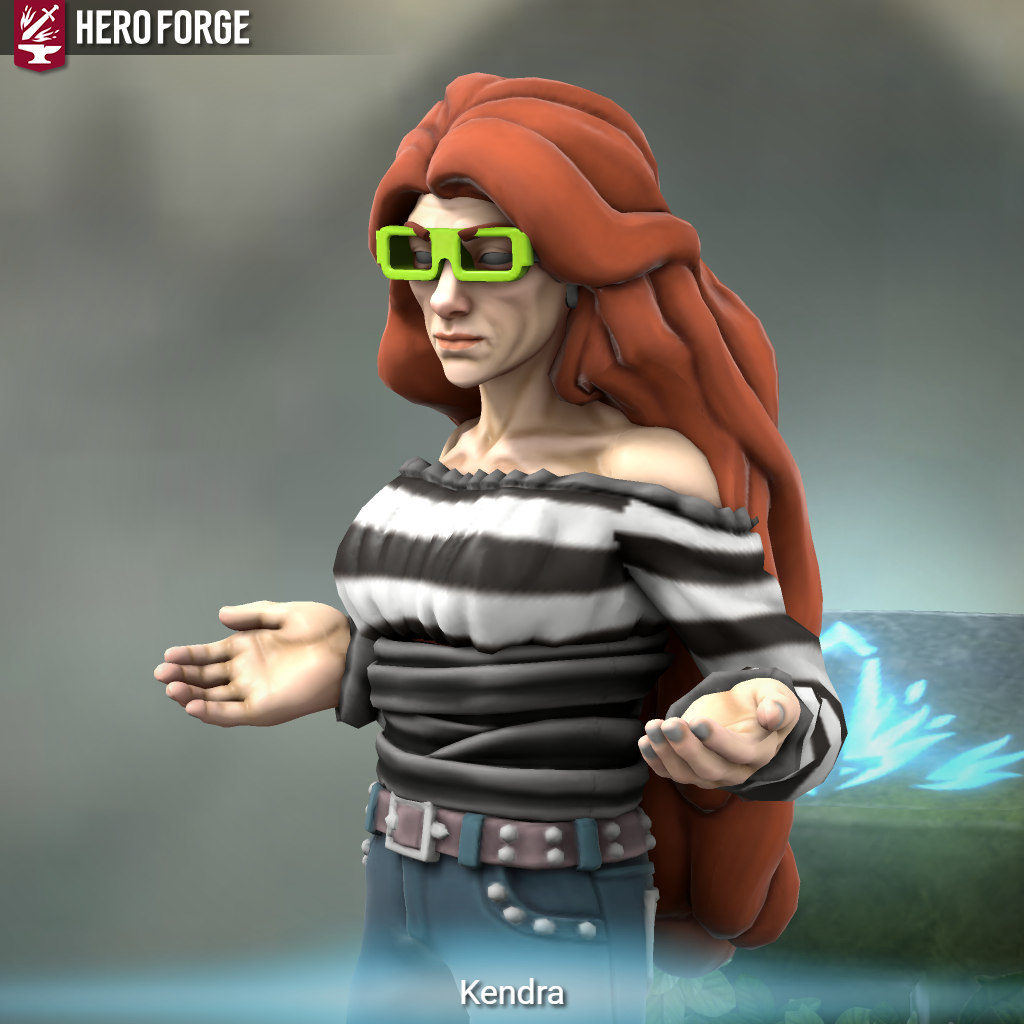 If you have any information about the identity of this child murderer's accomplice, please call FBI Agent Andy Drewer at 207–774–9322 |
Do you know who these two woman who crippled me and murdered my baby, at Southern Maine Community College at 10PM on November 14, 2013, are, and what their connection to the backhoe that drove over my house is? If you have any information, please give it to FBI Agent Andy Drewer at 207–774–9322 of the Portland, Maine FBI office.
I am a legally blind quadriplegic, and low verbal, I have also published 138 novels in the last 48 years. It's not as impossible as people think. The problem being blind and quadriplegic, medically have different meanings then how those two words are used medically.
Fewer than 3% of all blind people see nothing. While 97% people who are classified as fully blind are able to see up to two feet in front of them. Legally blind means I can see more then two feet in front of me but not far enough to see twenty feet in front of me. In my case I can see about eight feet.
Quadriplegic, has varying levels, it means having a damaged nerve bundle in the spinal column causing limited mobility of all 4 limbs, (in my case this was done by a women wielding a golf club, who also beat my 8 month infant's head to pulp on the parking lot tarmak, at the same time she severed my spine with the same golf club; both on November 14, 2013; the FBI investigation into my son's murder and my being crippled has gone on now for 12 years, a few weeks away from 13 years now, and the FBI has still not identified the killer or her motive). Contrary to popular misconception, quadriplegic does NOT mean ZERO movement, it means means limited movement, specifically in means unable to lift arms over head, unable to grip fingers around objects to pick them up, and unable to stand for more then 5 minutes to a time. Because there are so many thousands of nerves in each limb it is actually very rare for there to be 100% no movement, but how much, and to what extent varies by patent depending upon the specific point of injury to the spinal column.
Meaning typing is still possible for over 60% of all quadriplegics.
In my case, it was the lower spine that was severed, cutting off completly my ability to move my right leg, leaving limited feeling in my left leg, and an ability to stand but not walk, with crutches, for the first 9 years. I regained enough nerve growth in my legs by the 9th year to be able to take ten or twelve steps allowing me to get out of bed for the first time since the golf club attack; This in turn lead to me being able to start using a wheelchair, as I was able to sit upright for the first time as well.
Because the shattered vertebrae bone fragments are broken off completly and embedded into the nerve bundle just above my tailbone, doctors were saying I would never walk again, but now at 13 years, I am able to push mu wheelchair like a walker, a distance of almost a thousand steps a day. Though doctors are still doubtful I will ever walk "normally" again, I have proven them wrong, when their said 13 years ago, that I would never walk again at all.
But because of the placement of the damage to my spine, regaining hand use, was always thought possible, it was just a matter of waiting long enough for nerve regrowth, along side daily finger exercises. I was able to continue writing, after becoming quadriplegic, because I still have use of my right thumb, and 2 fore figures of my right hand. And can type 90 words per minute with those 3 fingers.
I however have no wrist strength, elbow strength, or shoulder strength, so I am not able to form a fist, or lift objects, or brush my hair, or my teeth, all thing I have to have my caretaker do. But, those things are not needed for typing. Unfortunately, my pinky and ring fingers are "nerve dead" and drag over the keyboard, and cause horrific spelling errors and typos, which are incredibly frustrating to deal with.
Unfortunately trying to edit errors myself, just makes the errors worse, because those same two fingers drag over the keyboard yet again. Prior to the golf club attack, I rarely had spelling errors; now I got more spelling errors then someone is learning English as second language. Editing is a challenge, that I've had to accept, I simply can not do myself, and I have to hire several editors to help with that.
Low verbal means sounds can still be made, sounds that software programs like Dragon can be trained to recognize and translate, and type into full words. More then half my novels were typed with this method.
I still have a long ways to go before I am anything close to being able to do the things I could do before the golf club woman beat my baby's brains out and shattered my spine. And you know what's more frustrating then how slow mu medical progression has been? The fact that it's been 13 years and the police and FBI are still coming up at dead ends as to who the woman who murdered my baby was, or why she even did it.
My son's 14th birthday is only a few weeks away, but he didn't even get to live long enough to celebrate his 1st birthday, I don't even know why. And I can't wait to regain my ability to walk again, because regaining my ability to walk, means gaining the ability to go outside and start looking for my son's murderer myself instead of sitting at home trapped in a wheelchair waiting for the police and FBI to to find her. So, writing isn't a big priority for me anymore. I only write now, as a way to exercise my hands, in between relearning to walk.
Never let a disability stop you. Plenty of writers, artists, athletes, do not let either blindness, speech impediments, or limited mobility hold then back from perusing their careers.
Do you know who these two woman who crippled me and murdered my baby, at Southern Maine Community College at 10PM on November 14, 2013, are, and what their connection to the backhoe that drove over my house is? If you have any information, please give it to FBI Agent Andy Drewer at 207–774–9322 of the Portland, Maine FBI office.
Important:
Fraudulent sites are impersonating Wendy Christine Allen.
- The ONLY official website for Wendy Christine Allen is www.eelkat.com
Fraudulent social media accounts, particularly on Reddit and FaceBook are impersonating Wendy Christine Allen.
- The ONLY official social media accounts for Wendy Christine Allen are listed in the footer here at www.eelkat.com
Find Me on Social Media:
Any websites and accounts you find online that are NOT on this list are NOT Wendy Christine Allen
There are no ebook editions as they are already available digitally here on my website.
You might like these
The Beauty of a Silk Moth Hatching
{A Pink Necromancer Poem} (Poems by Quaraun)- {NaNoWriMo 2024: Day 24}
Aquatic Realms: World-Building Guide - Oceans, Rivers, Lakes
Your World: Water | EelKat's Guide To World Building - The Squidoo Series
Old Index of Pink Necromancer Fiction on Space Dock 13 (EelKat.com)
Old Index of Pink Necromancer Fiction on Space Dock 13 (EelKat.com)
Age Difference In Marriage: The Fiction VS The Reality | Novel Writing Tips
Age Difference In Marriage: The Fiction VS The Reality | Novel Writing Tips
Your World: Magic System | EelKat's Guide To World Building
Your World: Magic System | EelKat's Guide To Worldbuilding For Fantasy Authors - The Squidoo Series
Beneath Malevolent Stars
{A Pink Necromancer Poem} — {NaNoWriMo 2024: Day 03}
How do you all name your characters?
How do you all name your characters
Validation Is a Cult
Validation Is a Cult.
update: November 12, 2026: the 13th anniversary of my son's murder
today is November 12, 2026, 2 days from both my son's 13th birthday and the 13th anniversary of the day he was murdered, as well as the the 13th anniversary of my being quardepelegic ... and do you realize its also 13 years since the last time I had a face to face conversation with anyone, about anything, at all.
13 years since i last went to church, a church i attended never missing a single sunday for 42 years, and not one person, no missionaries, no bishops, no home teachers, no visiting teachers, no congregations members, not one has visited me, thought to check in, thought to ask why I suddenly vanished. Completely and totally abandoned by every single member of the church that had dedicated every fibre of my life to for decades.
13 years bed ridden, paralyzed, outside under a tarp, because of a 3 months earlier the same woman who murdered her my son on November 14, 2013, had driven a backhoe over my house on August 8, 2013.
... and a little over 2 years, since I regained enough nerve movement to sit up, hold up my head, or use a wheelchair... and find out WHY... why the day my baby was ripped out of my belly and his head beaten in with a golf club, was also the day, rumors started across the internet...
...rumors started by a woman pretending to be me, claiming to be me, and mad dash contacting every alien abduction, ufo group she could find, gibbering nonsense about aliens and ufos...
...to my relatives, to my church, to my neighbours on Portland Ave in Old Orchard Beach...
I don't even believe in ufos or aliens, and yet, this impersonator has got people convinced that im some sort of ufo alien abductions expert?!?
...and i found out that's WHY... no one ever checked to see if I was okay, not once in those 13 years of laying on my back, under a tarp in my yard, unable to sit up, crawling to the brook to drink water, trying to chew leaves off plants, literally no food to eat, no water to drink, no ability to sit up, no electricity, no phone, no way to reach out to anyone for help...paralyzed laying in my yard for over a decade, outside, no protection from wind, rain, or snow... for THIRTEEN YEARS because not one single person checked in on me that entire time...
...because they did not know my arms and legs were so paralyzed I could no go online.... because they saw this other woman online pretending to be me!?!
...because the woman who did this to me, went online and pretended to be me, and not one person bothered to ask themselves, why someone who previously had written a book called "For Fear of Little Men" calling out ufo and alien believers out on their bs... somewho had never had a single duplicate alt account in 30 years of being online...suddenly had hundreds of accounts on every social media that were all pro ufo and pro alien?...
I grew up in Heavens Gate, born into that group, never allowed to set foot outside other then to attend church, their church, i didn't even know other churches existed, and I escaped Heavens Gate in May 2006...
October 2009, was my first time ever finding out, the existence of Americans, an entire society all around Old Orchard Beach, that I had never seen before, never knew was there....
...the first thing I ever did, my first day found out there were people outside of Old Orchard Beach, was to go to a restaurant, called Panera, in Westbrook, I had heard someone at church mention it, I wanted to know what American food was like and meet my first Americans...
...while there, a woman ran into the restaurant and attacked me, viciously, violently, punching me in the face and yelling "I'm Kendra Silvermander, it's my turn to shine." the restaurant workers dragged her away, threw her outside and then returned to see if i was okay... i had a split lip, a bloody nose, and a gash on my face that required 30 stitches... and I had no clue who the woman was or why she attacked... that was October 2009 and both my first encounter with an American and my first encounter with the woman who calls herself "Kendra Silvermander".
...everyone in the restaurant, said it was not the first time this had happened. They said she showed up every Sunday for several weeks in a row and had attacked others in this same way. they also didn't know who she was or why she was harassing people in their restaurant.
...that was my first day after I had escaped 27 years being locked in a woodshed room at the back of the Heaven Gate compound that was at 144 Portland Ave... the adults locked me in the woodshed room when I was 8 years old... they let me out every Sunday to attend the Cape Elizabeth Ward Church of Jesus Christ of Latter Day Saints... the room was not a room like house have, it had no foundation, no floor, was bare dirt and ledge, and the walls and roof were 2x4s spaces two inches apart, i could reach my hands out the spaces, and I had no protection from wind, snow, or rain...
...i lived in that woodshed structure at the back of the blue house at 144 Portland Ave Old Orchard Beach, Maine, from the time I was 8 years old, until I escaped at age 31, May 9, 2006, with the help of a tiny little Old Orchard Beach police officer Jack Nickles, who literally ripped the water heater out of the wall of the blue house and used it to punch a hole in the wall of the wood shed thing so that i could get out of it...at which point I moved to a tarp, just behind it. I started walking daily from 2006 to 2010 to the Old Orchard Beach Library to use their computer while an old lady named McNally taught me enough reading and writing to to be able to take Adult education GED classes at the Old Orchard Beach high school. I got my GED and my driver's license the same week in 2009...
...and I drove my car to Panera in Westbrook that same day...
I then got my job at RGIS as an inventory taker, later a retail merchandiser, which had me going to hundreds of retail stores across five New England states, including over a dozen Walmart's, Macy, Kholes, RiteAid, CVS, Walgreens, us post offices, auto parts, pet stores, Shaw's, Hannafords, and many more, in Maine, New Hampshire, Massachusetts, Vermont, New Jersey, and New York...and was driving over 300 miles every week, often putting in over a hundred miles a day...
...a month later, I started taking college classes at YCCC and SMCC both...starting Oct 2009 at YCCC and February 2010 as SMCC
I continue to eat at Westbrook Panera for a few more months, and was violently attacked by the stranger who had attacked previously, on three more additional occasions. .. each time she chanted over and over again "I'm Kendra Silvermander its my turn to shine."
I switched to eating at the Golden Rooster in Saco instead...on my 3rd day there, in April 2010, a woman calling herself "I'm Deana, of Ocean Avenue, minion of our lord and savior Kendra Silvermander. Kendra sent me to check in on you and make sure you were not writing books outside of November. You are only allowed to write books in November, because November is National Novel Writing Month. Our Lord and savior Kendra Silvermander says she is tired of driving five hours every morning to check in on you and make sure you are not writing outside of November. As it is March and you are clearly writing a novel I have to report you to Kendra Silvermander, as she is The Municipal Liaison of WriMo."
The Deana woman returned daily for over two months, each time, sitting at my table uninvited, and repeating word for word, that exact same introduction, every single time.
One day the Deana woman arrived with a blind man, whom she said was her husband. .. and me and the husband spent over 2 hours talking about living blind in a sighted world. ..it was at this point the Deana woman jumped up and started yelling. .. she claimed her aunt owned the restaurant on Portland Ave, at the corner beside Landres and had been keeping tabs on me, and helping her to report back each week to Kendra Silvermander. ..she then started yelling that I should have told them I was blind... (I am 20/300 so legally blind, but can still pass Maine driving test)...
...apparently the Deana woman had never realize i was blind, never noticed that i ordered the EXACT SAME FOOD every day at the Golden Rooster BECAUSE I knew the placement of the meal items and could eat it by myself without a guide person sitting next to me helping me, something that I do require in restaurants, because I am blind enough to need that sort of assistance. ..
but the day kept getting weirder, as the Deana woman went full meltdown mode crying and apologizing for being "Kendra Silvermanders minion" repeatedly saying "I never would have agreed to be Kendra Silvermanders minion had i known you were blind. He never told me you were blind. He said you were a cyber bully stalking him."
I asked the Deana woman "He? Kendra Silvermander is a man?"
The Deana woman said, "Yes Kendra Silvermander is a man. I met him a few months ago. He works for NaNoWriMo and assigned me as his assistant for the Saco District."
I pointed out to her that I had won NaNoWriMo every year since 2004, and Annalise was the ONLY municple liason (ML) in maine for NaNoWriMo, there was no Saco District, as Maine did not have enough members for Chris Baty or Lindsey Grant to make Districts for our state, a thing i knew because I was the Municipal Liason for Script Frenzy, and I had been in conversations with Chris Batty about setting up a Saco District, in fact, that was WHY I was at the Golden Rooster and writing. ..it was April 2010 Script Frenzy was going on right now.
I then then told the Deana woman about the Kendra Silvermander woman who had attacked me at Westbrook Panera and asked, if she fit the description on the man Deana had meet that went by the same name... and her reaction was wild...
...she went white, looked like she was about to faint and said, the physical description i gave matched her aunt who lived on Portland Ave, not the man whom she had met.
the Deana woman then grabbed her blind husband dragging him out of the Golden Rooster (Main st Saco) and running down the sidewalk in old orchard direction while yelling "I gotta check on my aunt, what crazy thing has she gotten herself into now"
I never saw the Deana woman again.
however a week later, on may 10, 2010, my 1964 Dodge 330 was cut in half, stolen, and sold to a junk yard in freeport, by a group of church women whom in 2016 the FbI identified as being the relief society of the Saco Ward church. those women were arrested and i have the chopped up remains of my car back...
it turns out they were attacking a local homeless ww2 vet transman who they were claiming was a demon trying to corrupt children into becoming transgender and, they attacked my car because I was letting him sleep in my car at night....
...but somewhere along the line, that led to the Kendra woman believing the car was haunted and the homeless man was a ufo space alien...and in turn led to her going online, pretending to be me, and doing interviews with groups like mufon and Coast to coast am, while claiming she was abducted by aliens, owned a haunted car, was friends with an alien, and other such weird things.... which she said while claiming she was me!
the fBI has found 5 or 6 or more different people online who use the name "Kendra Silvermander" and showed me pictures of them, originally thinking my attacker was one of them...
..but none of the pictures the fBi showed me is the woman who attacked me
...which in turn left the FBI assuming this woman is impersonating MULTIPLE PEOPLE....
...when she attacks me, she pretends she is someone named "Kendra Silvermander "
...when she posts to her online alien abductee friends, she pretends she is me...
...and who knows how many other people she is doing this to or pretenfing to be!
the FBI thinks the Deana woman from the Golden rooster back in 2010 knows who this stalkers real identity is, given the way she said I had described her aunt... but she apparently moved that same year and no one knows how to find her... or at least if any one does know how to find her, they are not telling the fbi agents...
...the Deana woman said her aunt owned the breakfast restaurant next door to Landres Gricery on portland Ave, but fbi said that restaurant went out of business years ago.
the woman who attacked in 2009, was at least 65 years old, and had really distinctive hair: bright natural carrot orange frizzy wooly and reached all the way down to her knees.... she was carry a tiny cat sized dog, each time she attacked at Panera in Westbrook. looked like a poodle mix. she left in a green pickup truck.
and she is the same woman who showed up in my driveway at 146 Portland Ave, August 8, 2013 the day the backhoe drove over my house... on that day she was yelling "serves you right, writing outside of November, you are only allowed to write in November." she was carrying a different small dog: 2 of them, one looked like a pug, the other looked like a yorkie.
and she is the same woman who arrived at college November 14, 2013, with a blond woman who also looked to be late 60s early 70s in age... she had no dog that time. and they fled in a 4 door white truck...after beating me with a golf club, while I was 8 months pregnant, breaking my spine and killing my baby. ... and like at the Panera she was screaming "I'm Kendra Silvermander its my turn to shine."
she is the same woman who attacked with a shopping cart at Scarborough Walmart, July 2016, again with the blonde woman from the SMCC attack. and yet again was screaming "I'm Kendra Silvermander its my turn to shine." they left in an 1990s era gold Volvo 240 Station wagon partial Maine plate "458"
And let's not forget that a week before the backhoe drove over my house, an 8 foot tall white cross showed up burning on my front lawn...the red head woman was there then as well, dressed head to toe in a long white caftan robe with a pillow case on her head that had a facehole cut out of it and angled to be a tall point on the top... this time with the blond woman who would later attack at the college who was pulling a radio flying red wagon with a toddler riding in it, who appeared to likely be here grandson the way she was talking to him, the blond woman was wearing a red flannel men's shirt and blue jeans.
the believes there are multiple people who call themselves "Kendra Silvermander" as they have located SEVERAL people with that username online, and brought photos of them for me to identify, and they are ALL too young... the woman who attacked me was and old lady, elderly, AT LEAST 65 years old at her 1st attack in 2009
in every instance the Kendra woman talked and acted like a 2 year old child, seems to be incapable of forming full sentences or full thoughts, and she doesn't walk, she skips and bounces and jumps and bounds while spinning and twirling around instead of walking.
while the Kendra woman is very much a stalker, and has never shown up WITHOUT punching and hitting me, it is the blonde woman who is frequently with her, who murdered my son and paralyzed me.
both women would be between 75 to 85 years old, now in 2026
and the FBI is still trying to locate and identify both of them.
they may be connected to the elderly "Biddeford McDonald's group", as every time I eat at Biddeford McDonald's their group surrounds my table and starts making accusations about aliens and ufos, similar to the alien and ufo gibbering used by the Kendra woman.
If you have any information about the identity of this stalker, please call FBI Agent Andy Drewer at 207–774–9322
The blonde woman who was with the zkendra woman, called herself "Claire" changes her hair colour frequently. and has a different hair colour EVERY time she has shown up.
The first time, November 14, 2013, her hair was near white, blonde, with several 2-3" wide dark brown stripes in it (Like reverse of Lily Munster).
When she showed up in my 146 Portland Ave driveway a year later, towing a toddler in a red radio flyer wagon, her hair was sandy-red.
When she showed up at Scarborough WalMart where I was working, in 2016, her hair was blonde and red balayage layer stripes.
When she showed up at my 27 High Street Biddeford apartment with a black man driving a yellow Mitsubishi GX sportscar, her hair was dark burgundy red. There were multiple times throughout 2016 to 2019.
When she showed up at my Main Street/Cutt Street Biddeford apartment throughout 2019 to 2022, her hair was one time dark bright purple, and other times unnatural rainbow red, and other time dark purplish red.
She was last seen in 2023, in my dads driveway in Biddeford, that time with reddish-orange hair.
Always a pageboy cut.
She yells out "I'm Claire, you tried to kill my husband", but I know no one named Claire, nor anyone who has a wife named Claire. No one in my family can figure out who she is. We only know the name Claire, because she calls herself Claire, and does so as though she thinks I should know who she is. The manner in which she yells "I'm Claire!" is like an enraged ex wife or ex girlfriend confronting a man's different replacement wife/girlfriend. It is as though she believes I am some girlfriend of her husbands. The way in which she yells "I'm Claire '' is as though she thinks I should know who Claire is.
I have been with Ben since I was EIGHT years old! The whole thing was arranged by my uncle Dickie. I was never allowed to date or fall in love with someone of my choosing. I was not even yet a preteen. I have been with him for over 40 years. I never went to school or had contact with any other men. Ben is the only man I have ever been with. So, whoever this Claire woman thinks I am, she clearly has me mixed up with someone else.
No one I know recognizes her when she shows up. The police officers whom had tried running after her, say they do not know her.
She most often shows up in a small silver pickup truck with 2 and a 1/2 doors. But she has shown up in a rusted old 1980s green pickup truck, a small 4 door white pick up truck with big off road tires, a small red "metro-type" mini car 1990s vintage, a late 1990s vintage gold Volvo station wagon, a 2000s vintage 4-door navy blue sedan Buik, a burgundy large jumbo sized pick-up truck, and a yellow mistibite sportscar (the yellow Mitsubishi is ALWAYS driven by a black man). The gold Volvo is the only one she has ever been driving, the others are always driven by a younger white man who always wears a bright red baseball cap pulled over his face.
NOTE: this is NOT the BIG 4-door pick-up truck, woman from the 2016 to 2017 attacked. Tht truck was impounded by police and the woman who owned it and the bald man who drove it were arrested. They were people from the Old Orchard Beach Town Hall and were connected to the $30million tax money the town manager at the time had stole. That is believed by police to be a completely separate series of events that is NOT connected to this Claire woman.
This Claire woman is the one who broke my spine, crippled me, and murdered my son on November 14, 2013 at Southern Maine Community College in the BugLight LightHouse parking lot at the SMCC art studio.
She almost always wears a light blue chambray men-shirt as a jacket. She often wears red flannel buffalo check shirts underneath.
She is ALWAYS yelling and screaming, very loud, very hysterical, and appears to be either very drunk or very high on mind altering drugs, whenever she shows up. She is making constant hate slurs about minorities, a lot of transphobic ramblings, frequently mentions "remember Saco Shaws", she makes tons of racist slurs, she uses the terms "transvestite freak" and "gaypocalypse" often. Her verbology is over all extremely hostile, and she is constantly spewing verbal death threats. She has a VERY high strung, agitated, chip on her shoulder type, personality.
She is NEARLY ALWAYS armed with stick-like things she uses as a weapon.
A golf club at the college in 2013, pvc pipes at High street apartment, a shopping cart at WalMart.
She shows up in wild crazed furies, screaming, yelling, and wielding an item and just started hitting me with it. She often chants the phrase "transvestite freak" and was doing so the 2016 Christmas day, that Biddeford police tried to arrest her. She escaped by running from High street to Pike street, where the officers lost track of her.
I have no clue who she is or why she attacks.
She seems to think I am someone she knew in school, as she often yells "You haven't changed, you are just like you were in high school!"... but I was homeschooled. I did not go to public school. Also, she is at least 20 to 30 years older than me.
The FBI believes she possibly went to school with my mother and has got me mixed up with my mother.
The FBI, says, her attacks coincide with posts my mother makes on FaceBook, and the FBI believes this woman THINKS she is attacking my mother and for some reason has me and my mother mixed up.
The day she attacked with the black man, the Biddeford police showed up and issued a warning to the black man, but the Claire woman ran down High street and disappeared. The police officers who chased her were unable to find her. They said the black man with her, was from New York and was not a Maine resident, and had a LOT of prior drug arrests. The Biddeford police know who he is, but they do not know who the Claire woman is.
The Claire woman is who the FBI are looking for, She is wanted both for killing my infant son and for attempting to kill me.
The FBi suspects BOTH are not using their real names, and that the Kendra woman is impersonating someone named Kendra while the Claire woman is impersonating some one named Claire
If you have any information about the identity of either this stalker or this child murderer, please call FBI Agent Andy Drewer at 207–774–9322
|
| |
|
|
|
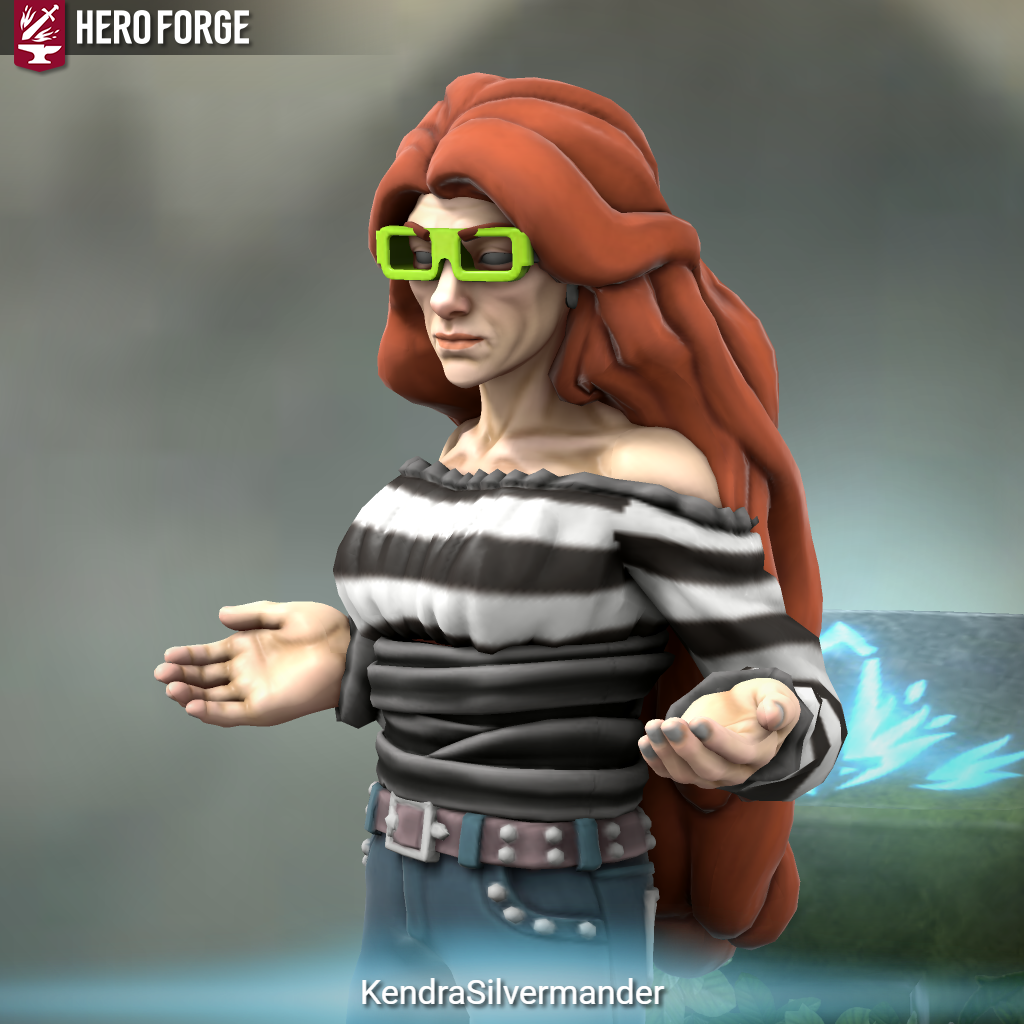 |
If you have any information about the woman who crippled me with a golf club, please give it to FBI Agent Andy Drewer at 207–774–9322 of the Portland, Maine FBI office.
If you encounter a page which asks for a password, no, you can not request access. There are over 2k pages of this website set to password access, due to the ongoing FBI investigation into my son's murder. If you are a police officer authorized access these pages but do not have the passwords, let me know, I will deliver the passwords to the specific pages you are allowed to access, to you via the Portland FBI office and you can pick them up from the FBI agent in charge of the murder investigation.
Pages where you can find out more information on that:
|
What's New (Newly Published or Recently Updated or Edited)
IMPORTANT NOTE: There are no ebook editions as they are already available digitally here on my website.
If you are one of (as of December 2025, the now more than ten thousand) daily visitors, who arrive here daily in search of SEO advice, I made this page for you:
The Park Bench Method of Writing
Crazy Woman Just Attacked - No Clue Why or Who She Is
Articles For Writers on How To Write & Publish A Rapid Release Series
For Anyone Looking for:My response to MUFON's Amphibious Aliens? My response to Coast to Coast AMs Arrival in my yard?
Wendy Christine Allen, Old Orchard Beach's Autistic Author, Artist, Illustrator, & Art Car Designer Counting Down to the 2028 50th Anniversary of my first published book (September 23, 1978) Yes, I am aware there are a lot of spelling errors on this site. No, I likely will not be fixing most of them. I have been quadriplegia/paralyzed arms and legs since November 14, 2013; As of 2026, I have regained use of two fully functional fingers on my right hand, and only stiff limited movement of all remained eight fingers. This causes most of the typos and spelling errors as my near-dead pinky and ring fingers tend to drag over the other letters on the keyboard. Attempts to correct errors, often causes more errors for the same reason. Much of my writing is also speech to text, but I have "profound low functioning, non-verbal kanner's syndrome aka autism aka the rainman type" (that is what the medical diagnosis called it), I have the medically diagnosed retarded type of autism, that medical doctors mean when they say "real and actual autism", I do not have the cool trend self diagnoses tiktok type of "autism". What this means is, in spite of five decades of trying, I have very limited vocal speaking abilities and a lower then average vocabulary, that leaves my speaking ability around the level of a 4 or 5 year old child; I do not know math or money or clocks and. I also, was raised by a Shetland Scottish Grandmother (Helen Ricker Allen) until her death when I was 8 years old, and she did not speak American, she spoke Shetland/Scottish, Shetlandic, which is a Nordic language, different from Scotts Language, not related to Gaelic which is what many Scottish speak, and while classified as a type of Scottish English is is considered "Olde medieval Norse" dialect of Scottish English and spoken by fewer then two thousand people as of 2026. It is the language of Scottish Travelling Gypsies, which is what we racial are. I was 31 years old first time I ever heard American English, and only started to learn American English at 42 years old. Right now in 2026 at 51 years old, I am able to speak American English on around the level of an 8 year old child, and greatly do not understand over 90% of American words, American slang, and American media references. What this means is, OFTEN words you think are spellt wrong (like color vs colour, or traveling vs travelling, are in fact NOT spelt wrong, because I use Scottish spellings) and often when I hear an American word, I spell it phonetically because I do not know the correct American spelling. Likewise we Scottish do not have words like my or your, and so say me and you, in places where Americans would say my and your. I also use Scottish word meanings, not American word meanings, for example Unicorn means a blood thirsty flesheating shapeshifting sea creature that comes on land and pretends to be a wounded horse to lure in humans to eat, it can only be captured by a virgin. But when I say Unicorn, a word I frequently use, because I write Unicorn folkloric short stories... I find that most Americans connect Unicorns to children's cartoons, gay pride, or swinging sex lives... I struggle to understand who in their right mind thought the most bloodthirsty monster of Scotland folklore was good fodder for children's cartoons or "sex positive" mascots, me thinks Americans need to brush up on the lore of Unicorns using their horns as sword to stabbed people's eyes out, while gallopping through swamps with rows of bloody Human heads hanging from their backs via braids made of Human entrails... really, why did Americans thinks a monster like a Unicorn was fit for children's cartoons or sex positivity? Americans is weird. All this to say... speech to text software, struggles badly with my thick Shetland accent, my slurred Autism speech impediment, and causes additional misspellings and typos because it can not figure out what words I am trying to say. And while I could take the time time to run all of it through a spell checker, that does require better hand mobility then I have, to copy the text from one program to the next and manually click each word, with finger mobility that I simply do not have, but also, most of my time is spent in trying to relearn to walk, and if you are local, you've probably seen this as I'm a stubborn bitch who refused to accept the doctor disnosis that I will never walk again, so, I walk around the block every day pushing my wheelchair, refusing to sit in my wheelchair, and... ...it's taking me 13 years to do it, but, I'm not actually able to stand up and make it all the way around the block now, and my focus on trying to relearn to walk is far more important to me, then catering to your pampered arse by fixing spelling errors, when there are far bigger problems to worry about in life, the spelling errors made by a quadriplegic who is typing this with her only two functioning fingers. Also, in recent years, I've watched the internet devolve into a mindless clusterfuck of ChatGPT written everything. Everyone sounds the same online these days, because no writes their own work anymore. Every website out there has become a carbon copy of each other, because they are all be written by ChatGPT now. I think ChatGPT makes a funny thing to chat with in your spare time, so you can laugh at the hilarity of how inaccurate it's responses are... but I am horrified that people are using AI for serious writing, writing they publish and try to pass off as their own. We live in a society where people people are forgetting how write. Heck I can read and write cursive, calligraphy, italic, short hand, and editor's marks, also edit my books by hand diagraming every sentence, and that... start walking around your neighbourhood and ask anyone under 30 if they sentence diagraming IS, let alone how to do it. So yes, I CAN spell check, and no I don't, for anything but my novels and short story collections, I spell check when it matters... and this is a website, not a printed book... but also, I am just getting so damn fucking fed up with endless AI writing online, so, no, I'm not going to fix errors and typos on my website, and you can bitch about that all you want (yes, I do get your messages, I just don't answer anyone in private) but, honey, maybe instead of bitching over my spelling errors, be thankful is still at least one website on the internet that still being written by a Human now in 2026 when ChatGPT writes over 70% of all posts online. |
Looking for my annual NaNoWriMo Prompts and Dares? I've been publishing these every year since 2004!
 The Park Bench Method of Writing The Adventures of Quaraun The Insane: Paperpacks & Hardcover Editions on Amazon:
Not sure what the series is about? Check out and Faeries vs Elves (In The Quaraun Series) A Pink Necromancer World Lore Post and Worldbuilding MoonQuakes and Disabled Characters for Fantasy Writers and How well do I know Quaraun? - Let's find out! to find out more about the plot and lore of the series. Not sure which story to start with? These here are good places to start, to get a good introduction to the three main characters:
Or if after reading those, you still are looking for more free to read stories, there are over three thousand of them on this site, too many to list here, but here a few dozen to get you started... ...you can just jump in and try reading some of the free to read online stories first before committing to buying the books:
Hmmm... soooo... I was making the above list to ALL the links to EVERY Quaraun story published on my website here, and adding it into the footer of my site, here as you can see, which loads on every page, and then I realized... wait... there are over two thousand Pink Necromancer stories up free to read on my website, I can't put two thousand links on every single page! Whoops! LOL! So, now I'm putting list to ALL the links to EVERY Quaraun story published on my website here on this page instead and just link that page to the footer instead. But also I'll just leave some of the links in the footer, as you can see above.

|


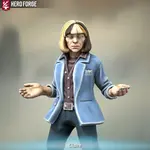
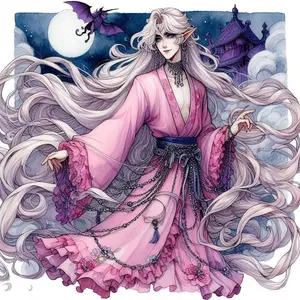
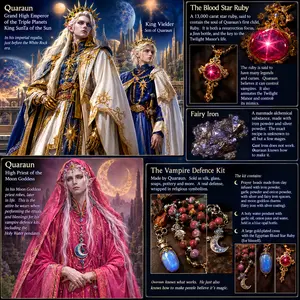
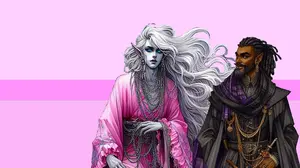
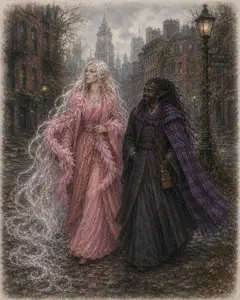
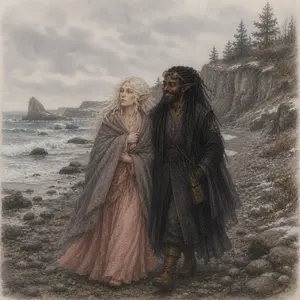
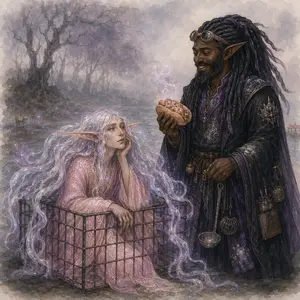
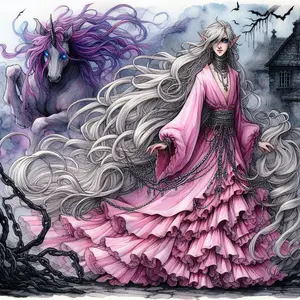
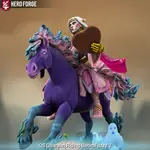
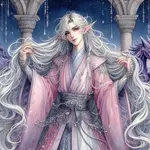

This page was written by Wendy Christine Allen of 146 Portland Ave, Old Orchard Beach, Maine.
All Rights Reserved.
- Official Home Page Of Wendy C Allen: Old Orchard Beach & Biddeford, Maine's Autistic Artist, Doll Designer, Art Car Builder, and Dark Fantasy MPreg Author
- Character Creation
- Vampires - a look at Vampirism in The Adventures of Quaraun the Insane/The Pink Necromancer series

The Space Dock 13 WebRing
|
|
|
|
|
|
|
|
|
|
|
|
Yes, this website (founded in 1996) is old enough to have WebRings on it, and they are still in use.
Don't know what a WebRing is?
They were how we webmasters used to get traffic to our websites before the invention of search engines (aka before Jeeves, DogPile, Yahoo. Google, Bing, or the rest existed). In their simplest form a WebRing is an html code that rotates link displays. In their more advanced form they are java scripts that give random results. Each ring had three active links titled "Previous", "Random", and "Next", clicking any of the 3 links would take you to the next website in the ring.
Web Rings are the REASON the internet was called "the world wide web". To use them, each webmaster submitted their site to the ring, a single code held 100 websites, and codes could be stacked to hold 100 code sets (or 10,000 links to 10,000 websites), each web master in the list, would then place the code in the footer of their website.
This created the SPIDER WEB that was the literal WEB OF LINKS that gave the internet it's name "World Wide Web" and is WHY websites are CALLED "web sites". And technically, your site is not a WEB site unless it is connected to a WEBRing, likewise you technically are not a WEBMaster if you do not build WEBrings links for you WEBsite to connect to the WEB.
Unfortunately, most knowledge of WebRings, and whi sites were called WEBsites and sites on the WEB were called the World Wide Web, vanished from the internet in 2014 when the official WebRing.org company who managed 90%+ of the internet's WebRings went out of business after the infamous Google Panda 2013 bot attack that delisted ALL websites from the Google Index if they contained a WebRing of links to other websites in it's footer.
And while most sites abandoned the use of WebRing Codes on their sites, Space Dock 13 did not. The Space Dock 13 WebRing remains active, now 28 years after it's creation. Over the decades however, one by one all the other websites in the ring have gone off line, and as they did, I replaced the url with a link to a page of my own website (as this is a java code - it updated on every website without the others needing to change anything). Today in 2026, eelkat.com is the last remaining website in the ring, and now all 10k links go only to pages on eelkat.com, no longer sending you to other websites.
|
|
|
|
|
|
|
|
|
|
|
|
- Official Home Page Of Wendy C Allen: Old Orchard Beach & Biddeford, Maine's Autistic Artist, Doll Designer, Art Car Builder, and Dark Fantasy MPreg Author
- Character Creation
- Vampires - a look at Vampirism in The Adventures of Quaraun the Insane/The Pink Necromancer series
The Park Bench Method of Writing
IMPORTANT NOTE:
There are no ebook editions as they are already available digitally here on my website.
Want even more writing prompts?
Do you have information about my son's murder and need the FBI contact information:
If you have any information about my son’s murderer, please call FBI Agent Andy Drewer at 207–774–9322
update: November 12, 2026: the 13th anniversary of my son's murder
today is November 12, 2026, 2 days from both my son's 13th birthday and the 13th anniversary of the day he was murdered, as well as the the 13th anniversary of my being quardepelegic ... and do you realize its also 13 years since the last time I had a face to face conversation with anyone, about anything, at all.
13 years since i last went to church, a church i attended never missing a single sunday for 42 years, and not one person, no missionaries, no bishops, no home teachers, no visiting teachers, no congregations members, not one has visited me, thought to check in, thought to ask why I suddenly vanished. Completely and totally abandoned by every single member of the church that had dedicated every fibre of my life to for decades.
13 years bed ridden, paralyzed, outside under a tarp, because of a 3 months earlier the same woman who murdered her my son on November 14, 2013, had driven a backhoe over my house on August 8, 2013.
... and a little over 2 years, since I regained enough nerve movement to sit up, hold up my head, or use a wheelchair... and find out WHY... why the day my baby was ripped out of my belly and his head beaten in with a golf club, was also the day, rumors started across the internet...
...rumors started by a woman pretending to be me, claiming to be me, and mad dash contacting every alien abduction, ufo group she could find, gibbering nonsense about aliens and ufos...
...to my relatives, to my church, to my neighbours on Portland Ave in Old Orchard Beach...
I don't even believe in ufos or aliens, and yet, this impersonator has got people convinced that im some sort of ufo alien abductions expert?!?
...and i found out that's WHY... no one ever checked to see if I was okay, not once in those 13 years of laying on my back, under a tarp in my yard, unable to sit up, crawling to the brook to drink water, trying to chew leaves off plants, literally no food to eat, no water to drink, no ability to sit up, no electricity, no phone, no way to reach out to anyone for help...paralyzed laying in my yard for over a decade, outside, no protection from wind, rain, or snow... for THIRTEEN YEARS because not one single person checked in on me that entire time...
...because they did not know my arms and legs were so paralyzed I could no go online.... because they saw this other woman online pretending to be me!?!
...because the woman who did this to me, went online and pretended to be me, and not one person bothered to ask themselves, why someone who previously had written a book called "For Fear of Little Men" calling out ufo and alien believers out on their bs... somewho had never had a single duplicate alt account in 30 years of being online...suddenly had hundreds of accounts on every social media that were all pro ufo and pro alien?...
I grew up in Heavens Gate, born into that group, never allowed to set foot outside other then to attend church, their church, i didn't even know other churches existed, and I escaped Heavens Gate in May 2006...
October 2009, was my first time ever finding out, the existence of Americans, an entire society all around Old Orchard Beach, that I had never seen before, never knew was there....
...the first thing I ever did, my first day found out there were people outside of Old Orchard Beach, was to go to a restaurant, called Panera, in Westbrook, I had heard someone at church mention it, I wanted to know what American food was like and meet my first Americans...
...while there, a woman ran into the restaurant and attacked me, viciously, violently, punching me in the face and yelling "I'm Kendra Silvermander, it's my turn to shine." the restaurant workers dragged her away, threw her outside and then returned to see if i was okay... i had a split lip, a bloody nose, and a gash on my face that required 30 stitches... and I had no clue who the woman was or why she attacked... that was October 2009 and both my first encounter with an American and my first encounter with the woman who calls herself "Kendra Silvermander".
...everyone in the restaurant, said it was not the first time this had happened. They said she showed up every Sunday for several weeks in a row and had attacked others in this same way. they also didn't know who she was or why she was harassing people in their restaurant.
...that was my first day after I had escaped 27 years being locked in a woodshed room at the back of the Heaven Gate compound that was at 144 Portland Ave... the adults locked me in the woodshed room when I was 8 years old... they let me out every Sunday to attend the Cape Elizabeth Ward Church of Jesus Christ of Latter Day Saints... the room was not a room like house have, it had no foundation, no floor, was bare dirt and ledge, and the walls and roof were 2x4s spaces two inches apart, i could reach my hands out the spaces, and I had no protection from wind, snow, or rain...
...i lived in that woodshed structure at the back of the blue house at 144 Portland Ave Old Orchard Beach, Maine, from the time I was 8 years old, until I escaped at age 31, May 9, 2006, with the help of a tiny little Old Orchard Beach police officer Jack Nickles, who literally ripped the water heater out of the wall of the blue house and used it to punch a hole in the wall of the wood shed thing so that i could get out of it...at which point I moved to a tarp, just behind it. I started walking daily from 2006 to 2010 to the Old Orchard Beach Library to use their computer while an old lady named McNally taught me enough reading and writing to to be able to take Adult education GED classes at the Old Orchard Beach high school. I got my GED and my driver's license the same week in 2009...
 this "room"... |
 ...on the back of this house |
...and I drove my car to Panera in Westbrook that same day...
I then got my job at RGIS as an inventory taker, later a retail merchandiser, which had me going to hundreds of retail stores across five New England states, including over a dozen Walmart's, Macy, Kholes, RiteAid, CVS, Walgreens, us post offices, auto parts, pet stores, Shaw's, Hannafords, and many more, in Maine, New Hampshire, Massachusetts, Vermont, New Jersey, and New York...and was driving over 300 miles every week, often putting in over a hundred miles a day...
...a month later, I started taking college classes at YCCC and SMCC both...starting Oct 2009 at YCCC and February 2010 as SMCC
I continue to eat at Westbrook Panera for a few more months, and was violently attacked by the stranger who had attacked previously, on three more additional occasions. .. each time she chanted over and over again "I'm Kendra Silvermander its my turn to shine."
I switched to eating at the Golden Rooster in Saco instead...on my 3rd day there, in April 2010, a woman calling herself "I'm Deana, of Ocean Avenue, minion of our lord and savior Kendra Silvermander. Kendra sent me to check in on you and make sure you were not writing books outside of November. You are only allowed to write books in November, because November is National Novel Writing Month. Our Lord and savior Kendra Silvermander says she is tired of driving five hours every morning to check in on you and make sure you are not writing outside of November. As it is March and you are clearly writing a novel I have to report you to Kendra Silvermander, as she is The Municipal Liaison of WriMo."
The Deana woman returned daily for over two months, each time, sitting at my table uninvited, and repeating word for word, that exact same introduction, every single time.
One day the Deana woman arrived with a blind man, whom she said was her husband. .. and me and the husband spent over 2 hours talking about living blind in a sighted world. ..it was at this point the Deana woman jumped up and started yelling. .. she claimed her aunt owned the restaurant on Portland Ave, at the corner beside Landres and had been keeping tabs on me, and helping her to report back each week to Kendra Silvermander. ..she then started yelling that I should have told them I was blind... (I am 20/300 so legally blind, but can still pass Maine driving test)...
...apparently the Deana woman had never realize i was blind, never noticed that i ordered the EXACT SAME FOOD every day at the Golden Rooster BECAUSE I knew the placement of the meal items and could eat it by myself without a guide person sitting next to me helping me, something that I do require in restaurants, because I am blind enough to need that sort of assistance. ..
but the day kept getting weirder, as the Deana woman went full meltdown mode crying and apologizing for being "Kendra Silvermanders minion" repeatedly saying "I never would have agreed to be Kendra Silvermanders minion had i known you were blind. He never told me you were blind. He said you were a cyber bully stalking him."
I asked the Deana woman "He? Kendra Silvermander is a man?"
The Deana woman said, "Yes Kendra Silvermander is a man. I met him a few months ago. He works for NaNoWriMo and assigned me as his assistant for the Saco District."
I pointed out to her that I had won NaNoWriMo every year since 2004, and Annalise was the ONLY municple liason (ML) in maine for NaNoWriMo, there was no Saco District, as Maine did not have enough members for Chris Baty or Lindsey Grant to make Districts for our state, a thing i knew because I was the Municipal Liason for Script Frenzy, and I had been in conversations with Chris Batty about setting up a Saco District, in fact, that was WHY I was at the Golden Rooster and writing. ..it was April 2010 Script Frenzy was going on right now.
I then then told the Deana woman about the Kendra Silvermander woman who had attacked me at Westbrook Panera and asked, if she fit the description on the man Deana had meet that went by the same name... and her reaction was wild...
...she went white, looked like she was about to faint and said, the physical description i gave matched her aunt who lived on Portland Ave, not the man whom she had met.
the Deana woman then grabbed her blind husband dragging him out of the Golden Rooster (Main st Saco) and running down the sidewalk in old orchard direction while yelling "I gotta check on my aunt, what crazy thing has she gotten herself into now"
I never saw the Deana woman again.
however a week later, on may 10, 2010, my 1964 Dodge 330 was cut in half, stolen, and sold to a junk yard in freeport, by a group of church women whom in 2016 the FbI identified as being the relief society of the Saco Ward church. those women were arrested and i have the chopped up remains of my car back...
it turns out they were attacking a local homeless ww2 vet transman who they were claiming was a demon trying to corrupt children into becoming transgender and, they attacked my car because I was letting him sleep in my car at night....
...but somewhere along the line, that led to the Kendra woman believing the car was haunted and the homeless man was a ufo space alien...and in turn led to her going online, pretending to be me, and doing interviews with groups like mufon and Coast to coast am, while claiming she was abducted by aliens, owned a haunted car, was friends with an alien, and other such weird things.... which she said while claiming she was me!
the fBI has found 5 or 6 or more different people online who use the name "Kendra Silvermander" and showed me pictures of them, originally thinking my attacker was one of them...
..but none of the pictures the fBi showed me is the woman who attacked me
...which in turn left the FBI assuming this woman is impersonating MULTIPLE PEOPLE....
...when she attacks me, she pretends she is someone named "Kendra Silvermander "
...when she posts to her online alien abductee friends, she pretends she is me...
...and who knows how many other people she is doing this to or pretenfing to be!
the FBI thinks the Deana woman from the Golden rooster back in 2010 knows who this stalkers real identity is, given the way she said I had described her aunt... but she apparently moved that same year and no one knows how to find her... or at least if any one does know how to find her, they are not telling the fbi agents...
...the Deana woman said her aunt owned the breakfast restaurant next door to Landres Gricery on portland Ave, but fbi said that restaurant went out of business years ago.
the woman who attacked in 2009, was at least 65 years old, and had really distinctive hair: bright natural carrot orange frizzy wooly and reached all the way down to her knees.... she was carry a tiny cat sized dog, each time she attacked at Panera in Westbrook. looked like a poodle mix. she left in a green pickup truck.
and she is the same woman who showed up in my driveway at 146 Portland Ave, August 8, 2013 the day the backhoe drove over my house... on that day she was yelling "serves you right, writing outside of November, you are only allowed to write in November." she was carrying a different small dog: 2 of them, one looked like a pug, the other looked like a yorkie.
and she is the same woman who arrived at college November 14, 2013, with a blond woman who also looked to be late 60s early 70s in age... she had no dog that time. and they fled in a 4 door white truck...after beating me with a golf club, while I was 8 months pregnant, breaking my spine and killing my baby. ... and like at the Panera she was screaming "I'm Kendra Silvermander its my turn to shine."
she is the same woman who attacked with a shopping cart at Scarborough Walmart, July 2016, again with the blonde woman from the SMCC attack. and yet again was screaming "I'm Kendra Silvermander its my turn to shine." they left in an 1990s era gold Volvo 240 Station wagon partial Maine plate "458"
And let's not forget that a week before the backhoe drove over my house, an 8 foot tall white cross showed up burning on my front lawn...the red head woman was there then as well, dressed head to toe in a long white caftan robe with a pillow case on her head that had a facehole cut out of it and angled to be a tall point on the top... this time with the blond woman who would later attack at the college who was pulling a radio flying red wagon with a toddler riding in it, who appeared to likely be here grandson the way she was talking to him, the blond woman was wearing a red flannel men's shirt and blue jeans.
the believes there are multiple people who call themselves "Kendra Silvermander" as they have located SEVERAL people with that username online, and brought photos of them for me to identify, and they are ALL too young... the woman who attacked me was and old lady, elderly, AT LEAST 65 years old at her 1st attack in 2009
in every instance the Kendra woman talked and acted like a 2 year old child, seems to be incapable of forming full sentences or full thoughts, and she doesn't walk, she skips and bounces and jumps and bounds while spinning and twirling around instead of walking.
while the Kendra woman is very much a stalker, and has never shown up WITHOUT punching and hitting me, it is the blonde woman who is frequently with her, who murdered my son and paralyzed me.
both women would be between 75 to 85 years old, now in 2026
and the FBI is still trying to locate and identify both of them.
they may be connected to the elderly "Biddeford McDonald's group", as every time I eat at Biddeford McDonald's their group surrounds my table and starts making accusations about aliens and ufos, similar to the alien and ufo gibbering used by the Kendra woman.
If you have any information about the identity of this stalker, please call FBI Agent Andy Drewer at 207–774–9322
The blonde woman who was with the zkendra woman, called herself "Claire" changes her hair colour frequently. and has a different hair colour EVERY time she has shown up.
The first time, November 14, 2013, her hair was near white, blonde, with several 2-3" wide dark brown stripes in it (Like reverse of Lily Munster).
When she showed up in my 146 Portland Ave driveway a year later, towing a toddler in a red radio flyer wagon, her hair was sandy-red.
When she showed up at Scarborough WalMart where I was working, in 2016, her hair was blonde and red balayage layer stripes.
When she showed up at my 27 High Street Biddeford apartment with a black man driving a yellow Mitsubishi GX sportscar, her hair was dark burgundy red. There were multiple times throughout 2016 to 2019.
When she showed up at my Main Street/Cutt Street Biddeford apartment throughout 2019 to 2022, her hair was one time dark bright purple, and other times unnatural rainbow red, and other time dark purplish red.
She was last seen in 2023, in my dads driveway in Biddeford, that time with reddish-orange hair.
Always a pageboy cut.
She yells out "I'm Claire, you tried to kill my husband", but I know no one named Claire, nor anyone who has a wife named Claire. No one in my family can figure out who she is. We only know the name Claire, because she calls herself Claire, and does so as though she thinks I should know who she is. The manner in which she yells "I'm Claire!" is like an enraged ex wife or ex girlfriend confronting a man's different replacement wife/girlfriend. It is as though she believes I am some girlfriend of her husbands. The way in which she yells "I'm Claire '' is as though she thinks I should know who Claire is.
I have been with Ben since I was EIGHT years old! The whole thing was arranged by my uncle Dickie. I was never allowed to date or fall in love with someone of my choosing. I was not even yet a preteen. I have been with him for over 40 years. I never went to school or had contact with any other men. Ben is the only man I have ever been with. So, whoever this Claire woman thinks I am, she clearly has me mixed up with someone else.
No one I know recognizes her when she shows up. The police officers whom had tried running after her, say they do not know her.
She most often shows up in a small silver pickup truck with 2 and a 1/2 doors. But she has shown up in a rusted old 1980s green pickup truck, a small 4 door white pick up truck with big off road tires, a small red "metro-type" mini car 1990s vintage, a late 1990s vintage gold Volvo station wagon, a 2000s vintage 4-door navy blue sedan Buik, a burgundy large jumbo sized pick-up truck, and a yellow mistibite sportscar (the yellow Mitsubishi is ALWAYS driven by a black man). The gold Volvo is the only one she has ever been driving, the others are always driven by a younger white man who always wears a bright red baseball cap pulled over his face.
NOTE: this is NOT the BIG 4-door pick-up truck, woman from the 2016 to 2017 attacked. Tht truck was impounded by police and the woman who owned it and the bald man who drove it were arrested. They were people from the Old Orchard Beach Town Hall and were connected to the $30million tax money the town manager at the time had stole. That is believed by police to be a completely separate series of events that is NOT connected to this Claire woman.
This Claire woman is the one who broke my spine, crippled me, and murdered my son on November 14, 2013 at Southern Maine Community College in the BugLight LightHouse parking lot at the SMCC art studio.
She almost always wears a light blue chambray men-shirt as a jacket. She often wears red flannel buffalo check shirts underneath.
She is ALWAYS yelling and screaming, very loud, very hysterical, and appears to be either very drunk or very high on mind altering drugs, whenever she shows up. She is making constant hate slurs about minorities, a lot of transphobic ramblings, frequently mentions "remember Saco Shaws", she makes tons of racist slurs, she uses the terms "transvestite freak" and "gaypocalypse" often. Her verbology is over all extremely hostile, and she is constantly spewing verbal death threats. She has a VERY high strung, agitated, chip on her shoulder type, personality.
She is NEARLY ALWAYS armed with stick-like things she uses as a weapon.
A golf club at the college in 2013, pvc pipes at High street apartment, a shopping cart at WalMart.
She shows up in wild crazed furies, screaming, yelling, and wielding an item and just started hitting me with it. She often chants the phrase "transvestite freak" and was doing so the 2016 Christmas day, that Biddeford police tried to arrest her. She escaped by running from High street to Pike street, where the officers lost track of her.
I have no clue who she is or why she attacks.
She seems to think I am someone she knew in school, as she often yells "You haven't changed, you are just like you were in high school!"... but I was homeschooled. I did not go to public school. Also, she is at least 20 to 30 years older than me.
The FBI believes she possibly went to school with my mother and has got me mixed up with my mother.
The FBI, says, her attacks coincide with posts my mother makes on FaceBook, and the FBI believes this woman THINKS she is attacking my mother and for some reason has me and my mother mixed up.
The day she attacked with the black man, the Biddeford police showed up and issued a warning to the black man, but the Claire woman ran down High street and disappeared. The police officers who chased her were unable to find her. They said the black man with her, was from New York and was not a Maine resident, and had a LOT of prior drug arrests. The Biddeford police know who he is, but they do not know who the Claire woman is.
The Claire woman is who the FBI are looking for, She is wanted both for killing my infant son and for attempting to kill me.
The FBi suspects BOTH are not using their real names, and that the Kendra woman is impersonating someone named Kendra while the Claire woman is impersonating some one named Claire
If you have any information about the identity of either this stalker or this child murderer, please call FBI Agent Andy Drewer at 207–774–9322
|
|
| |
|
|
|
|
If you have any information about the woman who crippled me with a golf club, please give it to FBI Agent Andy Drewer at 207–774–9322 of the Portland, Maine FBI office.
Updated November 19, 2026:
someone (they know who they are) asked a question... here's my answer...
when I was 8 years old I was locked in this room .. 27 years later, I was 31 years old when Old Orchard Beach police officer Jack Nickle, on May 9, 2006, beat a hole in the wall and I escaped the room that I was kept locked in for 27 years... he took a lot of photos of the "room" i was locked in, this is one of many...
I feel like you've forgotten this room that was at the back of this house:
|
|
|
for 27 years, from 8 years old, to 31 years old, I was locked in that, only allowed out, for 5 hours every Sunday, to go to church with the high priest. the slats between the boards with two inches wide, I had no protection from wind, ice, snow, or rain. I was not allowed to eat with the rest of the family, I was fed once a week, on Saturday, a pan full of molded leftovers full of maggots.
there is photos and video footage of EVERYTHING from that day forward, to today... i can prove EVERYTHING... the cage in that room that I was in, I still have it...
I can also prove every minute of my life after that point, I have 24 hour 7 days a week video footage of everything I do, every place I have ever been, every word I have ever spoken, every word that has ever been spoken by someone else to me, there's even a camera aimed at the computer meaning I can also prove every word I have ever typed online and every word I haven't... i can prove every place I have been and every place I have not been...
so yeah, you might what to double think making up lies about where I have ever been, what I have ever done and what I have ever said... because I CAN prove everything.
I don't record to post online. I record, because my son was murdered and parking lot where he was murdered had cameras everywhere, every light post in the parking lot, and when the police when to check the cameras, they were fake. Plastic dummies with no film.
the people who kept me locked in that "room" for 27 years, are the ones behind the massive smear campaign... and I don't NEED to say their names, because they do enough saying MY name, constantly, endlessly, viciously, calling me everything they can think of from an alien abductee to a witch to accusing me of gossiping about them....for you to figure out who they are, on your own.
however... you can read all my posts everywhere for yourself, you watch all my posted videos yourself... I've never said ANYONE'S name EVER.
nor have I ever gossiped about anyone.
I have simply described my own health and my own property.
when I was 4 years old, a foundation rod was driven through my hip.... i did not say who did it...that is not gossip, that is me telling you why I have had a lame leg since childhood... if someone claims THIS to be accusations against them, that says something, doesn't? they recognised what they did and accused me of accusing them. how am I accusing them if I never said a name?
August 8, 2013 someone drove a backhoe over my house, I don't know who, because, I was at work when it happened so I didn't see who did it. The FBI set up a tip line for anyone who DID see who did it, to call them and give a witness testimony... me posting that phone number with a photo of my demolished house and asking "if you know who did this please call this number and tell the FBI – Federal Bureau of Investigation " ... that's also is not me gossiping... its me asking for help to find out who did it, so they can go to prison where they belong....and guess what... if someone claims THIS to be accusations against them, that says something, doesn't? they recognised what they did and accused me of accusing them. how am I accusing them if I never said a name because I don't even know who did it?
November 14, 2013, a woman wielding a golf club attacked while i was 8 months pregnant. I was leaned over the back seat of my car putting an art easel in my car, she ran up behind me and started hitting me. I never saw her coming, I never heard her coming. She's a total stranger, but she was screaming "I'm Claire" while a second woman who was with her was screaming "I'm Kendra Silvermander" . I have no way of knowing if those were their real names or not. But those are the names on the police sketch because those are the names they yelled as they broke my spine and murdered my son.
|
|
|
|
And guess what: me putting those two police sketches on my website, with the phone number the FBI set up for tips leading to the arrest of these two murderers, that's not me gossiping either....if someone claims THIS to be accusations against them, that says something, doesn't? they recognised what they did and accused me of accusing them. how am I accusing them?
for those who are now questioning what I am responding to, I've received a message, that had a lot to say, including this: "You have to take those pictures off your website, it's baseless gossip and targeted harassment of my mother and aunt".
...so now let me ask you this: are you saying that your mother and your aunt are the two women who severed my spine, drove a backhoe over my house, and murdered my newborn baby the same day he was born?
that's one hell of a confession you are confessing your mother and aunt to, you know that right?
you might want to look up the definition of gossip and targeted harassment.
driving a backhoe over someone's house is targeted harassment
the FBI investigation trying to find out who drove the backhoe over that house, that is a law officers trying to arrest criminals
a woman beating an 8 months pregnant blind woman with a golf club, breaking her spine, triggering early labor, then using the same golf club to beat the minutes old infant's head in, is targeted harassment
the FBI investigation trying to identify the murderers, is law officers trying to arrest criminals
that you think a blind woman asking for witnesses to come forward and help identify her attackers, is either gossip or targeted harassment, says a lot about YOU ... like, it says you know who the murder is and are aiding and abetting a fugitive by hiding their identity.
you might wat to rethink who is harassing who.
I'm the one who went blind when i was 8 years old from being beaten in the face with a limb off a pine tree
I'm the one who became mute at age 14 from a cinder block breaking my jaw
I'm the one crippled with a broken spine
I'm the mother who's baby was murdered
I'm the one made homeless because haters drove a backhoe over my house
I'm the one being slandered with ridiculous gossip calling my car haunted, false accusations calling me an alien abductee.
you ACTUALLY LOOK at my posting history on Facebook, on Twitter, on Reddit, on my website, on YouTube, everywhere… I've never said or done any of the things I'm being accused of and my own posting history proves it.
there is no gossip, no slander, no harassment… no once, you can check three decades of my posts to see it for yourself.
YOU calling me an alien abductte, THAT IS targeted harassment
YOU calling me a witch, THAT IS targeted harassment
YOU calling my car demon possessed, THAT IS targeted harassment
YOU calling me crazy, THAT IS targeted harassment
shine the mirror on yourself, look at what you yourself are doing
I mean I COULD be like you, and put your name in this post, but I don't have a need to broadcast who you are
I don't know what your problem is, but I just went and looked at your profile and uhm… yeah wow are you ever obsessed with me. 90% of your posts have my name in them, you can't stop talking about me… and I don't even know who you are. You're just having a huge one sided parasocial obsession with slandering me and I have no clue why.
honey, do you not see the irony here? you have hundreds, possibly thousands, of posts slandering me, gossiping about me, spreading rumors about me, making up lies about me… most of them claiming that I am gossiping about YOU, and I've never even heard of of you. And, honey, you are really just making a fool of yourself because anyone can look at ALL of my posts on EVERY social media platform to see that I've never mentioned you ever, at all, and ive never gossiped about any one, you or otherwise, in my entire life.
I don't have social skills.
I was literally locked in a cage my entire childhood, teen years, and young adult years. I was middle aged before I even saw the outside world for the first time.
I'm right now in my fifties and trying to learn how to talk well enough to hopefully some day make my first friend. I've never had one of those. I was in a cage for twenty seven years, ever since I was EIGHT years old.
My biggest goal in life is to one day have a friend.
My second biggest goal in life is to someday have an actual face to face conversation with a human. An actual conversation, not just random saying "hi" to people on the sidewalk.
I've never had an actual face to face conversation with a human before.
Gossiping requires, both social skills and a person to gossip too, but I don't have either of those things.
You might want to do your research better, because every thing you think you know about me, you got wrong on so many levels. its almost like you don't know me at all… oh wait… you don't. So why are you claiming you do?
here's a tip: kindness goes a long way
what you are doing is both very mean and not kind.
I have have never been unkind to you, so why are you being unkind to me?
If anyone contacts you saying 146 Portland Ave, Old Orchard Beach, is for sale, know that they are lying to you... it is my land, and it has been in my family since 1531... and the ONLY person whom has EVER gone around saying it is for sale, is a woman who the FBI believes to be the same woman who murdered my son.
My son is buried here, and the FBI believes she is trying to buy my land in order to destroy his grave and destroy evidence of his murder.
Since my son's murder November 14, 2013, every year dozens of real estate agent show up all with a story of a female developer who is offering them MILLIONS of dollars for my lot of land that is only 1/4 of an acre and is not big enough to develop.
When shown police sketches of my son's murderer, the real estate agents say "Yes, that's the woman who hired me to buy 146 Portland Ave, Old Orchard Beach, Maine", but then the woman disappears and the real estate agents never hear from her again... all contact information she gave them turns out to be fake.
The woman who murdered my son, is DESPERATELY trying to buy 146 Portland Ave, Old Orchard Beach, Maine... this is the woman to watch out for... and this is what she did:
Looking to find out more about my son's murder, that information is on these pages:
Answering the questions:
Can you give me links to the news reports of your son's murder?
and
Why can't I find any news reports about this?
Maine has well over a thousand murder cases that have never been in the news.
I found this out after my son was murdered November 2013, and a year later I found out it had never been in the news, even though I was hounded for weeks by news people. I went to each of the over a dozen TV stations and newspapers whom had showed up at the hospital and asked why they had never published any report after all the trouble they had gone through to (in some cases illegally) het into the hospital to interview me.
in every case they said some version of "well, it just wasn't news worthy, there was nothing we could use to get views". Really? These were big news stations, channel 13, 6, 8, Portland Press Herald, Bangor Daily...
What exactly was it they claimed was "not news worthy"?
I'll tell you.
On November 14, 2013, my son was murdered. At Southern Maine Community College in the parking lot of The Buglight Art Studio beside the Spring Point Lighthouse.
I was 8 months pregnant, leaving my college classroom, and just getting into my car, when 3 strangers, a man and two women, armed with golf clubs leapt out from behind my car screaming "kill or be killed, kill the transvestite freaks, kill them all before they kill us! look at that thing! That is Ken's son, look at how it's dressed! kill the transvestite freaks! kill or be killed"... while the bald man and the red haired woman chanted this over and over, the blonde woman, lunged with the golf club.
She severed my spine, I am now a quadriplegic, and been paralyzed arms and legs, and in a wheelchair for 13 years now. She broke my hips, my knees, my legs, ruptured most of my discs, and shattered three of my vertebrae so bad that the shards of bone acted like glass and embedded themselves into my spinal column nerve bundle.
The attack also triggered labour.
My son was born in that parking lot, and he lived only a couple of minutes, before the deranged blonde woman, beat his head in and smashed his brains out, with the same golfclub she had just used to sever my spine and leave me crippled for the rest of my life.
Realizing that I was not transgender, and they'd just murdered a baby, the man grabbed the 2 women and forcibly dragged them away to a 4 door white pickup truck, and they left me there to die.
The FBI told me later, that a few weeks before this attack, and transwoman, had murdered a cis woman, in a parking lot, abou 20 miles away from where I was attacked. The FBI, believes that my attackers, had somehow found out I wrote transgender fiction, connecting my real name to my penname, (my father's name is in fact "Ken", and I do have a brother) and believed that I wrote transgender fiction, because I was myself transgender, even though I'm not transgender. The FBI, believes the attackers, thought I was my brother, pretending to be a woman.
The FBI investigation, into my son's murder, has dragged on for 13 years, and still now in 2026, continues on, with the FBI, still not having yet identified my attackers, and only guessing at what their motive was.
Oh yeah, and I've been quadriplegic for 13 years.
oh yeah one more thing, same trio, they also found out where i lived in Old Orchard Beach and drove a backhoe over my house as well.
|
146 Portland Ave Old Orchard Beach, Maine... July 4, 2013 vs August 8, 2013 |
I have been homeless and quadriplegic for 13 years, and right now it's just a few weeks away from both my son's 14th birthday and the 14th anniversary of the day he was murdered, both of which happened the same day.
Explain to me what about any of that is "not newsworthy"?
I did find out WHY it was deemed not newsworthy. "it would negatively impact tourism" was their reason. The College at Fort Prebble is a tourist destination. The lighthouse at the college is a tourist destination. My house on Portland ave is situated on the primary road to the beach that is a tourist destination.
The news reporters explained to me that, they risked losing their jobs if they publicised "negative news" occurring in these sorts of tourist destination spots.
My son's murder wasn't in the news, because it might cause tourists to stop visiting that lighthouse. That was the reason the reporters gave me.
How often are there things not being reported on just so businesses don't lose tourist money?
How often does this happen? A lot, I've since found out. In trying to find other mothers of murdered children to interact with... I found five others JUST in Old Orchard Beach, whom the murders were not in the news, and all of them happened after my son's murder. I found 2 such mothers in Scarbourogh, their children's murders not in the news. I found over a dozen more in the Bar Harbore area, also all not in the news.
It's a very disturbing trend here in Maine, one that I never would have found out about had my own son not been murdered.
One thing's very clear: in Maine you can get away with murdering a child, if you do it in a big tourist location, because news stations REFUSE to report any crime occurring in tourist locations.
Fuck torists.
I don't give a shit about your precious tourist money.
My son was murdered and I want his killer found... and I am VERY displeased with the deplorable way news stations try to bury child murders in Maine, just to appease tourist funded businesses.
And if you're one of those lunatic jackass bullshitting alien abduction UFO freaks, looking for haunted cars, Stephen King, cryptids, or EBEs, first off, you can go fuck yourselves. I am so damned sick of you conspiracy brained motherfuckers harassing my family and turning my son's murder case into a circus of you psycho deranged bullshit. Here's some pages for you:
Copyright © – oldest articles written 1978, website founded - 1996
This website is a safe zone for LGBTQAI+, pagans, and BIOPIC communities.
This website is a safe zone for LGBTQAI+, pagans, polys, trans, neurodivergent, disabled, mobile aid user, minority, cosplayers, otherkin, furries, & BIOPIC communities.
This is my ONLY website!
I do not have email.
It is not physically possible for you to receive an email from me, because I do not use email.
If someone emailed you while claiming to be me, they are lying to you and are not me.
I don't have email, so I cannot send you an email even if I wanted to.
I only have ONE YouTube channel.
I only have ONE FaceBook profile.
I ONLY have ONE of each social media platform profile.
The "ALT" accounts are NOT ME, NOT MINE, and are an IMPERSONATOR pretending to be me.
I do not DM.
I never do anything in private. So you will NEVER receive a private message from me ANY WHERE.
Because I am legally blind and can not see digital typing, I do all my contacts by hand written paper. Because I am blind, I use very specific paper and very specific writing implements, that are very difficult to forge or fake, so it will look VERY distinctive if you receive an ACTUAL letter from me by the post office mail. It will also have been notarized and be in a public record.
There have been A LOT of people claiming to receive emails, DMs, and mailed letters from me, most of them claiming the contacts were signed "EelKat" and or "The White Monkey OST"... if you have received such a letter, please forward it to the FBI Portland Maine Field Office… there is an active investigation trying to locate the source of these letters to identify who this impersonator is. fbiinvestigation
I became paralysed November 14, 2013, with no ability to move my hands to type, and so have been oFFline for over a decade.
I did not regain some use of my fingers until May 2021.
ANYTHING and EVERYTHING posted online ANY PLACE and EVERY PLACE between Nov 14, 2013 to May 2021, was NOT ME, and was someone who has been impersonating me.
Because I was paralized and offline that entire time, I had no clue there was an impersonator online pretending to be me. I only found out about them in 2023.
Now in 2026 I have 3 functional fingers: my right thumb, and 2 right forfingers, and so I can type somewhat again… however I can not use my fingers well enough to type good, and my dead fingers drag over the keys, causing huge amounts of spelling errors, and I do not yet have enough finger dexterity to edit the errors out.
My 1964 Dodge 330 car it not haunted, nor is it named anything at all, "Goldeneagle" or otherwise.
My car is not The World's Most Haunted Car. That is a scam my uncle Bruce was pulling. I have debunked that scan dozens of times now. I'm tired of debunking the same rumors over and over again.
If you contact me asking my 1964 Dodge 330, I WILL block you everywhere. goldeneaglecar 1964dodge330 hauntedcar
I do not believe in aliens or ufos. I am not an abductee. Those are rumors started by my son's murderer in an attempt make me look crazy, so no one would believe me when I said my son was murdered.
If you contact me about aliens or ufos I WILL block you everywhere.
I have zero connection to Stephen King.
If you contact me about Stephen King, I WILL block you everywhere. stephenking
Etiole is a fictional MerMan from my novels.
The man people call "Etiole" or "amphibious alien" that is not his name, and he is not an alien. He is a WW2 vet transman who is homeless and I was letting him sleep in my car at night. amphibiousalien
If you contact me about Etiole, wanting to meet him, calling him an ebe or wildman of oldorchardbeach or alien or cryptid or demon or wendigo I WILL block you everywhere.
Miss Citten The EelKat is a fictional cat from my novels
I am not EelKat. Empress EelKat is a talking black cat who narrates my novels. I use her name in urls and usernames because her name is only 6 letters long and easier to use as a url then my name Wendy Christine Allen which is 22 letters long.
I have never called myself EelKat. EelKat is not my name. I do not introduce myself as EelKat. I have ONLY EVER introduced myself as Wendy
Any one contacting you and claiming to be "EelKat" is not me, I never call myself "EelKat".
There is a known scam using my name and likeness to claim my car is haunted, to claim I am an abductee, to claim my homeless friend is an alien, the claim I am in Stephen King movies and there are probably other claims I've not yet been made aware of.
Don't be fooled by anyone contacting you and telling you they are me. This is my ONLY YouTube account, my ONLY YouTube channel, and while I comment on videos, I NEVER contact you, email you, ect.
More information about this situation and links to all my REAL and ACTUAL social media accounts can be found on my website Eelkat.com