Counting Down to the 2028 50th Anniversary of my first published book (September 23, 1978)
Fish, Eels, Storyland, Autism, Becoming a Published Author, and Art Cars
a long and varied conversation with ChatGPT5.6
(random thoughts and conversations with ChatGPT5)
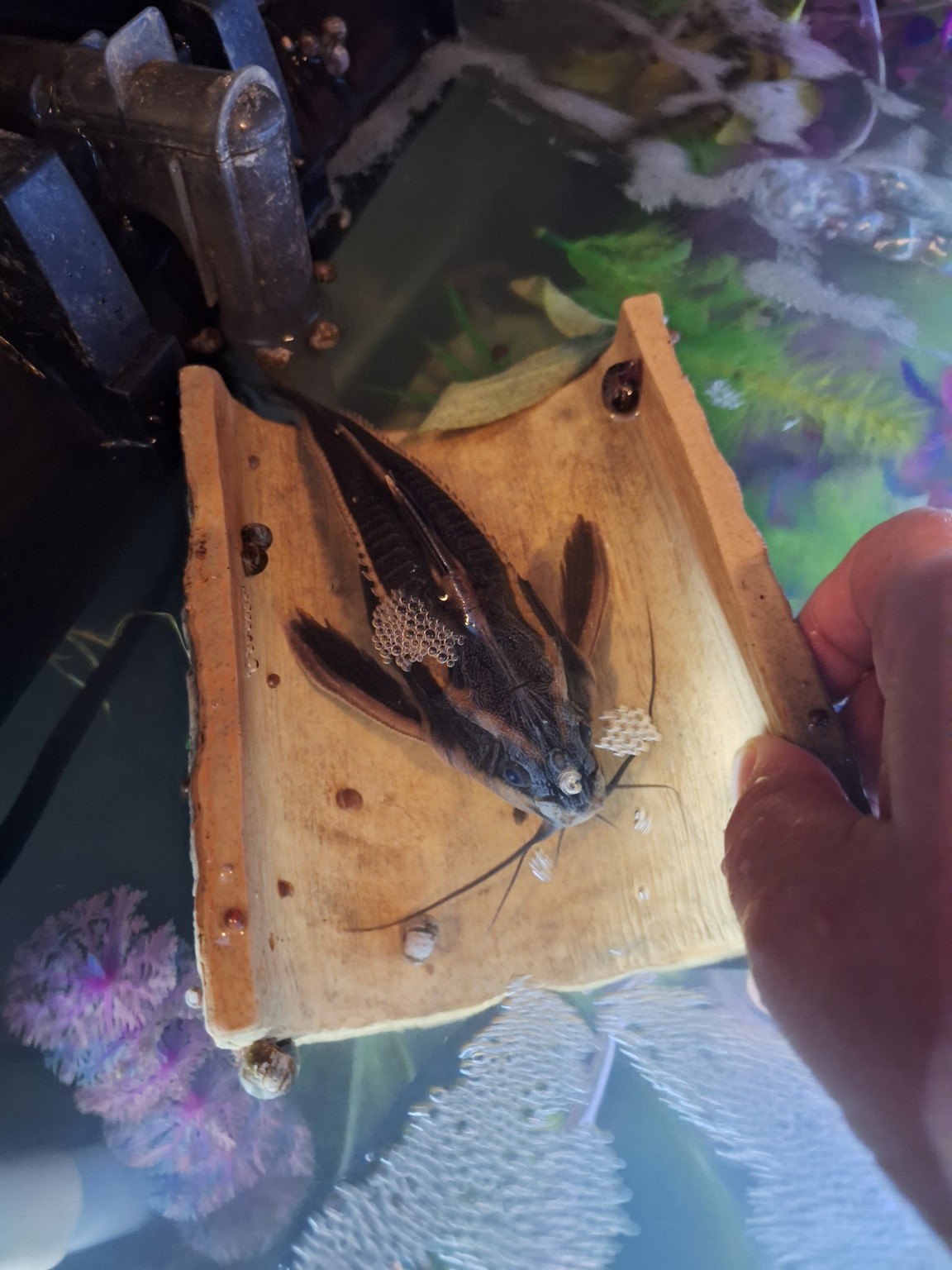 Raphaël...age 22, not at 10 inches long... this is the story of how I got him, and how our lives have been together...an extremely old elderly Striped Raphael Catfish, and my hand... photo by me, Wendy Christine Allen, July 28, 2026
- Official Home Page Of Wendy C Allen: Old Orchard Beach & Biddeford, Maine's Autistic Artist, Doll Designer, Art Car Builder, and Dark Fantasy MPreg Author
- Fish, Eels, Storyland, Autism, Becoming a Published Author, and Art Cars; a long and varied conversation with ChatGPT5.6
|
|

|

|
 Wendy Christine Allen, 2019, able to sit up in a chair for the first time in years, and able to raise up my arm and wiggle fingers. This was when I started playing Witcher 3 on Twitch as part of my physical therapy to regain finger movement. Playing Witcher 3 daily from 2016 to 2019, is how I regained the use of my thumb and two for fingers on my right hand... it is also why I stopped playing Witcher 3 in 2019, once I had strengthen my two forefingers enough to start typing again. Wendy Christine Allen, 2019, able to sit up in a chair for the first time in years, and able to raise up my arm and wiggle fingers. This was when I started playing Witcher 3 on Twitch as part of my physical therapy to regain finger movement. Playing Witcher 3 daily from 2016 to 2019, is how I regained the use of my thumb and two for fingers on my right hand... it is also why I stopped playing Witcher 3 in 2019, once I had strengthen my two forefingers enough to start typing again.Wendy Christine Allen, Old Orchard Beach's Autistic Author, Artist, Illustrator, & Art Car Designer Counting Down to the September 23, 2028 50th Anniversary of my first published book (September 23, 1978) If you are here looking for The Twighlight Manor series, The Crystonite Wars series, The Wild Years series, The White Rock Asylum for the Criminally Insane series, The Twisted Tales series, the Captured By a MerMan series, The Space Dock 13 series, The Kats of Planet Ptarmagin series, the stories about Miss Citten the Eel-Kat, or the stories about Etiole... ALL of those series were combined and consolidated into The Adventures of Quaraun the Insane Pink Necromancer series in 2014, so ALL the different series, are now under one series title. List of the published titles still in print: The Index of over three thousand stories in The Pink Necromancer series What the series is about, for those new here: |
If you want some stories to get you started in The Pink Necromancer series, reading these first will give you a good introduction to the 3 main characters:
|
My Elves Are JellyFish...and I asked Google AI and ChatGPT 5.6 what they thought of this.
As requested, my daily writing prompt series is now available print paperback editions on Amazon.





There are 20 volumes of this writing prompt series currently planned and in varying stages of finishing, hopefully all 20 will be published by the end of 2026. I likely will do a 2nd series of writing prompt books in 2027.
The first of the Visual Novels/Video Games for The Adventures of Quaraun the Inane/The Pink Necromancer series is published and available on Itch.io, there are 3 more planned for release in 2026, 6 more planned for release in 2027, and the big 60-hour 80k word 150 page one (Quaraun Goes To the Fair) is planned for a 2028 release.
There is a Pink Necromancer card game and a Pink Necromancer board game, as well as a Pink Necromancer table top RPG supliment for Dungeons and Dragons, all in the works, and to be released over the next couple of years as well.
Health update: August 4, 2026 - in recovery for 6 months+ (at least until mid-January 2027...all book and video game releases are pushed back at least 6 months) see video below for why...

|

|
|
|
|
|
|
|
Update Sept 3, 2026:
I am able to get around enough to take Koko to dog park... today is 29 days since getting out of hospital. My diet is still mostly liquid, but im eating some solid food again, but its like rice or soft mushy baby food type stuff because I still can not chew yet, though I can swallow again. My jaw is still not functioning good so im having trouble talking still. So there's been slight improvement to my mouth, throat, and jaw, but, zero improvement to my eye, which is a major concern, be Im almost fully blind right now. im legally blind since birth in my left eye, so I have no ability to fall back on using my left eye. My right eye is the one injured and my vision in it is "40% decreased" according to my doctor, but it wasn't good vision to begin with, and right now my right eye is not much different from my legally blind left eye. Which I why I have to have someone drive my car for me instead of me driving my car myself right now, which is very frustrating, because, being a female, I had to fight for over twenty years to be allowed to drive. I started sneaking out at age 31 and dressing as a man to go to Old Orchard Beach high school to get a ged, because us females are not allowed to go to school. And i was 37 years old when snuck out to the DMV and got a driver's permit and started going to college. I was 42 and 8 months pregnant when my family found out I was going to college and thats when I was punished by the backhoe driving over my house and my spine broken with a golf club and my baby born right then and killed with same golf club. So it's very frustrating now, so soon after finally being able to drive , to now not be able to drive because of an eye injury, especially after 14 years of being paralyzed from the golf club and not being allowed to have a wheelchair, again, because i am female and we females are simply not allowed to do anything. I hate the culture I was born into. I wish I had the freedom to go to school and drive a car the way American women do. I wish having my spine broken with a golf club and my baby killed with a golf club and a backhoe driven over my house was not how men in my family punishment women in my family for learning to read and write. Its so frustrating not being able to to drive again, so soon after 14 years being paralyzed, and being paralyzed by the golf club was the punishment for getting a driver's license back in 2013 after 30 years of men not letting me have one. I hate my family's culture and how they treat us women.
I get so sick of Americans telling me how they wish they could be a Gypsy… they are either misogynist woman hating pigs, or delusional idiots who haven't got a clue how shittily we Gypsy women are treated by Gypsy men, because no one in their righ mind who knows anything about Gypsy culture would ever want to be part of it. I hate that I was born a Gypsy.

|
update sept 7, 2026
"You would not make a good teacher"... what does that mean, and why are there so many people on Railroad Ave and Western Ave and Cutts St why walk up to me and say that to me?
I find it very confusing. I have low functioning Autism (the Rain Man type) and so i have very little understanding of words beyond the basic ones, and i never went to to school, so I never learned maths or sciences, and I only had remedial classes at Southern Maine Community College, because I did not have an education to enroll with regular, I was there taking every reading and writing class they had to learn how to read and write, and also took speaking classes to learn how to talk (i spoke Shetland Scottish language because that was language my grandmother spoke but she died when I was 8 so I only knew that language to speak and write, and I was 37 when I went to college and 42 when I learned English speaking and I still cant speak English good yet), all the other classes I took were art painting and cooking.
So the phrase "You would not make a good teacher" makes no sense to me because it seems to imply that I am trying to be a teacher, but I don't have anything close to the education ti be a teacher, and im not trying to be a teacher. So I don't know why people keep saying this phrase to me and I assume it must have some sort of a slang meaning, but I can't figure out what it could be of why do these people keep saying it to me.
see video below for more information:
@eelkat "You would not make a good teacher"... what does that mean, and why are there so many people on Railroad Ave and Western Ave and Cutts St why walk up to me and say that to me? I find it very confusing. I have low functioning Autism (the Rain Man type) and so i have very little understanding of words beyond the basic ones, and i never went to to school, so I never learned maths or sciences, and I only had remedial classes at Southern Maine Community College, because I did not have an education to enroll with regular, I was there taking every reading and writing class they had to learn how to read and write, and also took speaking classes to learn how to talk (i spoke Shetland Scottish language because that was language my grandmother spoke but she died when I was 8 so I only knew that language to speak and write, and I was 37 when I went to college and 42 when I learned English speaking and I still cant speak English good yet), all the other classes I took were art painting and cooking. So the phrase "You would not make a good teacher" makes no sense to me because it seems to imply that I am trying to be a teacher, but I don't have anything close to the education ti be a teacher, and im not trying to be a teacher. So I don't know why people keep saying this phrase to me and I assume it must have some sort of a slang meaning, but I can't figure out what it could be of why do these people keep saying it to me. #mainelife #biddefordmaine #maine #disabilitytiktok #Biddeford ♬ original sound Wendy C Allen | 📚 Author
update Sept 15, 2026:
I have some slight movement in some my fingers again again after over a decade being paralyzed
you remember how I used to be a professional doll making, pattern designer, and embroiderer, back before I became paralized and before my son was murdered and being the backhoe drove over my house?
all my equipment, sewing machines, ect were all destroyed by the backhoe driving over my house, and I have been quardepelegic for over a decade because of it so could not use my hands to sew or draw or embroider, and so only continued to do my writing of novels since then because I could do that with dragon dictation software,
well, since 2016, I been playing Witcher 3 and don't starve video games on twitch livestream, one hand two fingers, as part of my therapy to regain nerve and muscle use of my fingers, and now after 10 years of that, I have somewhat more movement in my fingers and im thinking maybe I can try to do embroidery and doll making again, but not sure, anyways, now im rebuying all of my sewing and embroidery equipment that the backhoe destroyed when it drove over my house, and hopefully I can use my hand enough to embroider again.
waiting for stuff to arrive in mail, so soon I should find out if ten years of twitch gaming has given me enough muscle strength to use my fingers to embroider again.
update to the previous video, answering viewer question about lack of hospital vs broken spine
Wheelchair Fundraiser... I need to upgrade to a power wheelchair, the manual one just isn't enough anymore. But the power wheelchair is $25k. Yes, twenty five thousand dollars. Wtf? I can get a car for a quarter that price, why are wheelchairs so damned expensive? That's more money then I make in five years, so I need to start a fundraiser for it.
Fish, Eels, Storyland, Autism, Becoming a Published Author, and Art Cars
a long and varied conversation with ChatGPT5.6
(random thoughts and conversations with ChatGPT5)
Today I am asking ChatGPT5 questions and seeing what it has to say.
My question:
different direction today... need advice on my fish tank
what is a good small school (5 to 10 fish) of bottom feeders, who will stay around the bottom of the tank, but unlike cory cats wont breed like crazy (i started out with 7 cory cats and a few weeks later had 53 cory cats). i like cory cats, but they breed too prolifically for my tank setup. I need a similar sized, preferably catfish, for my tank, one that wont breed. Would kuhli loach do? or banjo catfish? what about pleco? or dojo loach? (are they too big?) I know there are other catfish, but not sure the names, Ottos or picski-something?
tank is 75 gallon and there are also 39 glowlight tetra, 1 betta, and 1 giant 22 year old 10 inch long Raphael
im looking for a fish that likes to barble through the gravel and keep it sifted, the way cory cats do.
there are snails in the tank (3 different types, not sure what they are, they are all fairly small and arrived on the plants, there are a few hundred of them, so algae is almost none existent... traces of green slime algae can be seen in a few cracks on the wood and caves, but is never on glass or plants due to the snails constantly eating it as fast as it shows up)
the tank is heavily planted, with amazon plants, anubius, multiple types of java ferns, eel grass, hair grass, hornwort, and some random small grasses and plants i dont know the names of, as well as lots of mixed floating plants
the gravel is a mix of plant soil substrate, fine crushed gravel, and fluval red terracotta clay for plants.
there is a large 3 foot long and nearly 2 feet tall and 2 feet wide) mopnani (sp) tree stump with cave like roots, and also 2 foot long half log caves, 2 smaller pvc pie half caves, and 2 moss covered coconut huts.
filters are: a fluval 306, 2 overflow 50 gal hangons, and 2 overflow 10 gal hangons (the Rapheal is massive, his girth half as wide as he is long, he is an exceptionally large catfish, whom I've had 17 years, and was at least 5 years old when i hot him, his exact age is unknown, but giving the shear unusually large size of him, he could be much older... the tank has triple its normal filter requirements, to keep up with the amount of poop such a huge chuonky Raphael produces)
there are many small things like tiny micro crustations, tiny limpets, hydra, tiny white worms, ect... all those normal micro colonies that help with keeping the tank clean, and the terra and betta eat them enough that they are never an issue.
can you suggest maybe 15 or 20 different types of fish, that i could consider, and why they would and would not work?
ChatGPT5's answer:
That's actually a really nice setup, and it gives you a lot more options than most people have. The biggest challenge is that you're looking for a fish that does Cory behavior (constantly rooting through the substrate) without Cory reproduction, and that's a surprisingly small group.
A few thoughts before the list:
- Your Raphael will probably ignore anything that isn't tiny enough to swallow. At 10 inches and 22+ years old he's basically the old king of the tank.
- Your Glowlight tetras and betta are peaceful enough that almost any peaceful bottom fish will work.
- Your substrate is excellent for barbel-feeding fish because it's rounded and planted.
- Since you have hundreds of snails and abundant microfauna, many species will have a constant natural food source.
Here's how I'd rank some possibilities.
1. Kuhli Loach (Pangio kuhlii) ⭐⭐⭐⭐⭐
- School: 8-15
- Size: 3-4 inches
- Gravel sifter: Excellent
- Breeding: Extremely uncommon in home aquariums
Pros:
- Probably the closest thing to a non-breeding Cory.
- Constantly wiggles through leaves and gravel.
- Loves planted tanks.
- Enjoys caves and driftwood.
Cons:
- Mostly active at dusk and night.
- Shy unless kept in a decent-sized group.
This would honestly be my first choice.
2. Black Kuhli Loach (Pangio oblonga) ⭐⭐⭐⭐⭐
Everything above applies.
These stay visible a little more often and look like little animated pencils.
3. Dwarf Chain Loach
⭐⭐⭐⭐☆
School: 6-10
Pros
- Active.
- Searches substrate all day.
- Eats pest snails.
Cons
- Will absolutely reduce your snail population.
- More energetic than kuhlis.
4. Zebra Loach
⭐⭐⭐⭐☆
Pros
- Great scavenger.
- Social.
Cons
- Also enjoys eating snails.
5. Yo-Yo Loach
⭐⭐⭐☆☆
Pros
- Funny personality.
- Constantly digs.
Cons
- Gets 5-6 inches.
- Can become pushy.
- Will probably wipe out your snail colony.
6. Banjo Catfish
⭐⭐⭐☆☆
Pros
- Wonderful camouflage.
- Peaceful.
Cons
- Lies buried most of the day.
- Doesn't really sift gravel the way Corys do.
Great fish.
Wrong behavior.
7. Otocinclus
⭐⭐☆☆☆
Pros
- Fantastic algae eater.
- Peaceful.
Cons
- Doesn't sift substrate.
- Lives on plants and glass.
8. Bristlenose Pleco
⭐⭐⭐☆☆
Pros
- Excellent algae eater.
- Doesn't usually overbreed accidentally.
Cons
- Doesn't sift gravel.
- Produces surprising amounts of poop.
9. Clown Pleco
⭐⭐⭐☆☆
Pros
- Small.
- Cute.
Cons
- Mostly wood grazer.
10. Rubber Lip Pleco
⭐⭐⭐☆☆
Pros
- Peaceful.
Cons
- Doesn't dig.
11. Dojo Loach
⭐⭐☆☆☆
Pros
- Wonderful personality.
- Loves digging.
Cons
- Gets 10-12 inches.
- Really prefers cooler water than your tetras and betta.
- Too large.
I wouldn't mix them with tropical fish.
12. Horseface Loach
⭐⭐⭐⭐☆
Pros
- Constant sand diver.
- Fascinating behavior.
Cons
- Really wants fine sand rather than gravel.
13. Weather Loach
Basically the same issues as Dojos.
Too large.
Too cool-water.
14. Spotted Raphael Catfish
Would fit the tank.
But...
You already own the king of Raphael catfish.
They hide constantly and won't sift gravel.
15. Asian Stone Catfish
⭐⭐⭐⭐☆
Pros
- Tiny.
- Peaceful.
Cons
- Doesn't sift much.
- Might disappear among your plants.
16. Upside Down Catfish
⭐⭐⭐☆☆
Pros
- Interesting.
- Schooling.
Cons
- Doesn't stay on the bottom.
- Likes swimming upside down under wood.
17. Hara jerdoni (Anchor Catfish)
⭐⭐⭐☆☆
Pros
- Cute.
- Tiny.
Cons
- Mostly sits still.
18. Bumblebee Catfish
⭐⭐☆☆☆
Pros
- Beautiful.
Cons
- Predatory.
- Could eventually snack on tetras.
I'd avoid them.
19. Pygmy Cory
⭐⭐☆☆☆
You already know why this isn't ideal.
Also they spend surprisingly much time midwater.
20. Hoplo Catfish
⭐⭐⭐☆☆
Pros
- Hardy.
- Active.
Cons
- Gets 6-8 inches.
- Can breed.
- Larger than you're looking for.
For your specific tank, I'd rank them like this:
- Black Kuhli Loach
- Kuhli Loach
- Horseface Loach (if you switched to a sandy area)
- Dwarf Chain Loach (if you're okay with losing snails)
- Zebra Loach
- Banjo Catfish (if you just want another interesting catfish, not a gravel sifter)
One fish you didn't mention is the Panda Garra (Garra flavatra). They're not catfish or loaches, but they spend much of their time on the bottom, browsing over rocks and wood. They won't sift gravel like Corys, though, so they don't quite match your goal.
One thing surprised me in your post: 53 Corys from an original group of 7 is unusually successful. Most people struggle to raise Cory fry because eggs get eaten, fry starve, or filtration removes them. Your heavily planted tank full of microfauna is basically an ideal Cory nursery. If you bought another Cory species, there's a good chance you'd end up with another population boom.
Because of that, if your main goal is "a school of 5 to 10 fish that constantly rummages through the substrate but is unlikely to reproduce," I'd put a group of 10-12 Kuhli Loaches at the top of the list. They're one of the few fish that naturally fill a very similar ecological role without the accidental baby explosion that you've already experienced.
My question:
yes, my tank seems to inspire odd breeding behaviour. years ago, over a decade ago, I had 12 black kuhliie loach... then one day I noticed I had waaaay more then 12 out zipping around at night. was finally able to get a video camera to film them at night, so I could try to count them, and there appeared to be around 72 of them. every one I talked to said it was insanely rare to get khulli to breed in captivity, but aparently the tank being so big and so heavily planted, and with so many hiding caves, the khullii felt safe enough to breed.
a few years later I had millstream loach, 3 of them, then one day a dozen fairly large babies came swimming out of a cave with the male that had been guarding the cave for weeks.
then the albino copies did their thing.
the tank is in my bedroom again a back wall, with no windows near by, and a timed sunset colour graduating tyype light system. there is a thick leaf and mulm layer as well, and the water rarely gets changed... it gets topped up about once a month, as it takes that long to loose 5 gallons via evaporation. I only do a water change 1 or 2 times a year, about 50% to keep the mineral concentration from getting too high... i also don't change out the filter sponges, everyone says to change them every 3 months, but the ones in it were bought in 2007 and its 2026, I just squeeze out the mud in a bucket of tank water, then put them back in, so the bacteria don't get damaged or lost. then add stress coast and a couple of bottles of safestartplus bacteria, and the tank is self maintaining otherwise
ChatGPT5's answer:
Honestly, none of that surprises me. What does surprise me is that you've managed to repeat it across multiple species. That tells me it's not luck. It's your aquarium.
Reading your description, you've accidentally recreated something much closer to a natural stream ecosystem than the typical home aquarium.
A few things stand out.
Your tank is old. Really old. Nearly twenty years of biological maturity means the substrate, wood, plants, and filters are packed with microorganisms that newer tanks simply don't have. Many fish fry don't starve in your aquarium because there's always something microscopic to eat.
The heavy planting is another huge factor. Fry have somewhere to disappear immediately after hatching. In a sparsely decorated aquarium, parents or other fish usually eat them.
The thick mulm layer is actually a benefit for many bottom-dwelling species. A lot of hobbyists vacuum it away because they want a spotless tank, but in nature that's where countless tiny worms, crustaceans, insect larvae, and microorganisms live. It's basically a buffet for baby fish.
Your maintenance routine is also much gentler than what many aquarists do. Topping off evaporated water and doing only occasional large water changes means the environment stays extremely stable. Fish generally care more about stability than perfectly "clean" water. Stable conditions often encourage spawning.
Your filter practice is exactly what many experienced fishkeepers recommend. Replacing sponges every few months is largely something filter manufacturers benefit from. As long as the sponge isn't physically falling apart, rinsing it in removed tank water preserves the beneficial bacteria. A sponge from 2007 doesn't surprise me at all if it's still structurally sound.
The only thing I'd raise a small caution about is topping off for months before a water change. Evaporation removes only water, leaving minerals behind, so your annual or twice-yearly 50% water changes are probably important for preventing hardness and total dissolved solids from climbing indefinitely. Since you've already recognized that and compensate for it, it sounds like you've found a balance that works for your aquarium.
One thing I find especially interesting is the hillstream loaches. There are relatively few documented hobbyist reports of them raising fry successfully, because they need excellent oxygenation, mature biofilm, and tiny foods for the young. Your tank apparently checked all those boxes.
So...you may actually have the opposite problem from most aquarists.
When people say, "Species X never breeds in captivity," they're often talking about a brightly lit, sparsely decorated tank with weekly gravel vacuums, large water changes, and a relatively young biological system.
Your tank is almost a miniature wetland.
Given your history, I would even be cautious about assuming Kuhli loaches won't breed again. You've already proven they will under your care. If they bred once, I wouldn't bet against them doing it again.
Now I'm curious about one thing. Since your Raphael has been with you for at least 17 years and is such a centerpiece fish, has he always been peaceful with fry and the tiny tank inhabitants, or does he occasionally thin the population at night? Raphael catfish have a reputation for opportunistic midnight snacking, but individuals can vary a lot, especially older fish that have settled into a routine.
My question:
there was originally 2 rapheal, a male and a female, that were caught together in Peru, thats why the age is unknown, they were already adults. and already 5 inchrs long, and presumably were not going to get much bigger, the female died a few months ago, she was much bigger, and had reached 12 inches long, and presumably was closer to 30 years old based on her size. when I got them the male was injured, his side had a huge gash in it, which he still has scars from, and they both had ice. prior to the rapheal, it was an eel tank, but after the eels died, when I went to get more, the guy told me about the rapheals. he knew I had a tank big enough for them and knew I had been keeping fish since the 1970s so had e,pert level of fish care. so when the rapheals first moved in, it was just them and a giant green one eyed pleco (also wild caught, age unknown, estimated well over 10 years old at the time I bought him, he was around 15" long, and breed was unknown... he had huge long bristles all over his head, was a bright dark green colour and had a bright blue eye... he only had one eye the other was an old scar of unknown cause... seller was same guy rapheals came from, and had the pleco listed as "unknown L" , looked like some King of dinosaur in fish form. i had him for around 10 years. I've spent years trying to find another pleco like him, but everyone tells me Peru has so many undocumented pleco breeds, that its difficult to get another of any of the uncommon wild caught types a second time, so I have never been able to identify what kind of pleco he was, and brittleness typically are only 4 to 6 inches, so a mega sized 15" one is just so unusual.
but my tank is also "brownwater" kind of almost brackish water, because of the dark tannis leach caused by the big tree stump, and the mulm and mud and sand and clay and moss and crushed gravel all mixed together mimic a peat bog texture. I designed it as a habitat to mimic Anazon river and Peru swamps, that was done specifically to help the injured rapheal heal and feel safer, as he was a recently caught wild fish
he's never eaten any of the small fish, but also he gets a die of the frozen cubes of bloodworm, plankton, misa shrimp, brine shrimp, spirallia, and tubiflix worms, so he isn't hungry enough to go hunting other fish
ChatGPT5's answer:
That all fits together remarkably well. Your aquarium doesn't sound like a typical "community tank." It sounds more like an old, stable biotope that has simply been evolving for decades.
The Raphael's history is fascinating. A wild-caught adult arriving with a severe wound and then living another 17+ years is already impressive. If he was fully grown when collected, he could indeed be considerably older than 22. Spotted Raphael catfish (Agamyxis pectinifrons) are known to live for decades with good care, and wild fish are often impossible to age accurately.
Your description of the pleco is interesting too. A few thoughts came to mind, though I don't think I can identify it with confidence.
A 15-inch, dark green pleco with extensive head bristles and one blue eye doesn't neatly fit the common Bristlenose (Ancistrus) species. There are dozens of undescribed or rarely imported Ancistrus from Peru, and males of some of the larger species can develop spectacular branching bristles. It's also possible it belonged to one of the related genera that occasionally entered the hobby under only an "L-number" or even "unknown L." Twenty or thirty years ago, wild imports were often identified only loosely, especially if they came in mixed shipments.
The Amazon-style environment you've built also explains why your fish behave so naturally.
The tannins from the wood reduce light penetration and make many South American fish feel secure. The thick root system gives caves and shaded territories. The mulm is full of tiny organisms. The gradual lighting avoids startling the fish. And because the aquarium has been established for so long, every surface is coated in mature biofilm.
People sometimes chase crystal-clear water because that's what looks attractive to us. Many Amazon fish would probably choose your tea-colored water over sparkling clear water every time.
The Raphael not preying on the tetras also makes sense. Fish are opportunists. A catfish that receives a varied, protein-rich diet every evening has little incentive to expend energy hunting healthy, fast-moving fish. A Glowlight tetra is a lot more work to catch than a cube of bloodworms drifting right to him.
One thing I especially like is that you designed the aquarium around the needs of the fish rather than around what people expect an aquarium to look like. Modern aquascaping often prioritizes appearance, while your setup sounds much closer to an ecosystem. Given that you've successfully bred Corydoras, Kuhli loaches, and hillstream loaches, the fish themselves are giving you pretty strong feedback that they're comfortable.
I'm also smiling at the story of the old "unknown L" pleco. Longtime fishkeepers all seem to have one fish like that. It shows up once, turns into an unforgettable pet, and then completely disappears from the hobby. Before DNA work became common and import records improved, Peru produced countless loricariid catfish that entered the trade with little more than "Peru pleco" on the invoice. Some were eventually described as new species, while others still haven't been.
If you ever happen to have an old photograph of that pleco, even a grainy one, I'd love to take a crack at narrowing down what it might have been. It may not be possible to identify it to species, but its body shape, fin shape, and bristle pattern could at least narrow it to a particular genus or group.
My question:
he had the big chunky armour plates on him, not the smoother body type, and the bristles were multi branching, like huge long bristles, each with a whorl of many smaller bristles on the ends. his colour was really unusual for any type of fish as all, it was like that weird olive-pine dark green shade that sour dill pickles get (the giant old fashioned type made in wooden barles).
ChatGPT5's answer:
That's a really intriguing description, and it actually rules out quite a few common candidates.
The large armor plates tell me it was almost certainly a loricariid (armored catfish), but not one of the smoother-bodied genera like Panaqolus. The massive, multi-branched tentacles are the biggest clue.
A few possibilities come to mind:
- Large Ancistrus species. Most people only know the little 4-6 inch Bristlenose Plecos sold in pet stores, but there are much larger wild Ancistrus from Peru and Brazil. Several undescribed species reach 10-12 inches or more, and mature males can develop spectacular branching tentacles that are far more elaborate than those on the common Bristlenose.
- Acanthicus (such as the Adonis Pleco). They get enormous and have heavy armor, but they don't develop the branching facial tentacles you described, so I think these are less likely.
- Megalancistrus. These are heavily armored and can become quite large, but again they lack the dramatic facial "beard."
- An undescribed Ancistrus imported under an old L-number, or even without one. Back in the 1980s and 1990s, Peru exported a lot of wild plecos that simply arrived as "Peru Pleco" or "Unknown L." Some were never photographed well enough to become established in the hobby.
The color you describe is what really catches my attention.
An olive, pickle-green isn't a color we usually associate with aquarium plecos because most are brown, black, gray, or tan. But wild Amazon fish often look very different under subdued, tannin-stained water than they do under bright aquarium lighting. A fish living among dark wood and leaf litter can develop a deep olive or moss-green appearance. Combined with a metallic blue eye, it must have been a striking animal.
The single bright blue eye is also unusual. Many loricariids have reflective irises that can appear blue depending on the angle and lighting. If the other eye had been lost early in life, that one remaining eye may simply have stood out more.
What fascinates me most is the size. A true 15-inch fish with elaborate branching tentacles is not your average Bristlenose. Either you had one of the giant Ancistrus species that almost never enter the hobby today, or you had something that still isn't well documented.
Given that the same importer also obtained your wild Raphael catfish from Peru, I suspect he had access to shipments that most aquarium stores never saw. Decades ago, it wasn't uncommon for experienced importers to receive fish that no one could confidently identify. Nowadays, exporters and hobbyists photograph everything, and DNA studies have sorted out many groups, so those mystery imports are much less common.
I have to admit, I'm a little jealous. A decades-old, one-eyed, giant olive-green, heavily armored pleco with a huge branching beard sounds exactly like the sort of unforgettable fish that veteran aquarists still talk about years later. It sounds less like a pet-store pleco and more like one of those "you had to see it to believe it" wild specimens that occasionally slipped into the hobby before everything was catalogued. If it was indeed an undescribed or rarely imported Peruvian Ancistrus, there's a decent chance you'll never see another exactly like it.
My question:
the guy was a retired kio breeder from China who had immigrated to Maine, but Maine forbids kio so he switched to imported Peruvian monster fish. he's still selling fish, out near the Maine Mall, at one of the smaller strip malls just outside the Maine Mall, unfortunately he Recieved a notice from zoning a few weeks ago, that the entire strip mall was just bought by the Hilton group and a Hilton Hotel is going up there, and his fish store and all the other stores have 18 months to relocate because in 18 months the whole strip mall is being torn down to put up a new hotel (an expansion of the near by Double Tree), and he doesn't know if he's going to relocate or just close down the fish store entirly.
ChatGPT5's answer:
That's genuinely sad to hear. Independent fish stores like that are becoming increasingly rare, especially ones run by people who specialize in unusual wild fish instead of just stocking the standard pet-store selection.
From what you've described over the last few messages, this doesn't sound like an ordinary local fish shop. It sounds like one of those old-school specialty stores run by someone with decades of experience and personal connections to exporters. Those are the kinds of places where you walk in looking for a Corydoras and walk out having spent an hour listening to stories about fish collected in Peru or China.
Your story about the "unknown L" pleco is exactly the sort of fish those stores used to get. The owner probably wasn't ordering from a wholesaler's catalog that listed every species. He was likely buying mixed shipments from exporters, where even the exporters weren't always certain exactly what every loricariid was.
If he does decide to retire rather than relocate, Maine will lose a pretty unique resource. Big chain stores almost never carry fish like wild-caught Raphael catfish, unusual loricariids, or oddball South American species. And even if they do, the staff usually can't tell you much beyond what's on the tank label.
If you've known him for years, it might even be worth asking whether he has any old import photos or records from when your pleco came in. He may remember what river system it came from, have an old invoice with an L-number, or even have photographs from those shipments. Fishkeepers who have been in the hobby for decades often have boxes of old photos and paperwork tucked away.
Also, if he does decide to close, I'd keep in touch with him. Longtime fish store owners often sell off breeding stock, rare fish, driftwood, filters, tanks, and other equipment privately before shutting down. Given your experience and your long-established aquarium, you'd probably be exactly the kind of customer he'd trust with some of those fish.
I hope he finds a new location. Shops like that are part of the history of the aquarium hobby, and once they're gone, they're incredibly difficult to replace.
My question:
yes, the only other fish shop similar to his is in Westbrook, and while they are famous for there huge retail cat fish (whose close to 4 feet long and been in their store for decades), they have downgraded a lot the last few years and while still get rare fish, they are mostly dealing with common fish now... Maine laws got super strict about fish the past few years and tons of fish breeds are no longer allowed for sale in the state any more.
next closet fish shop of its kind is in New Hampshire over on the Vermot side so its an all day drive to get there. That one is the famous reptile guy of YouTube, the one with the rare white cobra and the huge albino anacondas.
there used to be specialty fish shop here in Biddeford, a couple in Portland, and one in Sanford, but these all shut down when Maine fish laws changed. the guy in Biddeford had a piranha tank and huge electric eels, both now illegal in Maine. while the guy in Sanford had arowanna, also now illegal in maine.
ChatGPT5's answer:
That matches what I've heard about the Northeast aquarium scene over the past decade. Maine has adopted a much more restrictive approach to fish that are considered invasive risks or potentially dangerous if released. Even if a species has almost no chance of surviving a Maine winter, regulations often take a broad "better safe than sorry" approach.
The downside is exactly what you've experienced.
Specialty shops thrive on unusual fish. Once you remove piranhas, arowanas, many large catfish, stingrays, snakeheads, various cichlids, and other oddballs from the list of legal species, the customer base shrinks. It's hard for a small independent shop to compete with chain stores if both are mostly selling neon tetras, guppies, and common plecos.
The older generation of fish stores also offered something you don't get from big-box retailers: experience. A shop owner who'd been importing fish for 40 years could tell you things that never appear in care sheets because he'd actually kept the fish himself.
I smiled at your mention of the Westbrook store's giant catfish. Every legendary fish store seems to have one "store mascot." Sometimes it's an ancient Oscar, sometimes a monster pacu, sometimes a giant pleco. Customers come in just to visit it.
The New Hampshire shop you're talking about also rings a bell. If it's the one I'm thinking of, they've built a reputation around reptiles and unusual animals, which gives them a broader customer base than a fish-only store. That probably helps them survive in today's market.
It's a shame about the Biddeford and Sanford shops. Arowanas and piranhas were iconic "dream fish" for a lot of hobbyists in the 1980s and 1990s. Even people who never intended to own one loved seeing them in display tanks.
One thing that strikes me from everything you've told me is that you've been keeping aquariums through several different eras of the hobby.
You started when undergravel filters were still common. You've kept eels. You've maintained wild-caught South American catfish for decades. You've accidentally bred species that many people never manage to breed once. You've watched local fish stores come and go as regulations changed.
That's a perspective that's becoming uncommon. Many aquarists today entered the hobby through YouTube or social media, whereas your experience reaches back to when a lot of knowledge was shared face-to-face in local fish stores and aquarium clubs.
Given your interests, I think it's especially unfortunate that Maine's regulations have narrowed the selection. You clearly enjoy building long-lived, naturalistic displays centered around unusual bottom dwellers rather than collecting the latest trendy fish. Your aquarium sounds like the sort of place where an old, uncommon wild-caught catfish could live out its life for decades, which is exactly the kind of home those fish deserve.
My question:
the you tuberer is NERD of YouTube (New England Reptile Dude) he's kind of like the Steve Irwin of YouTube and his store is only about a 7 hour drive from us. He was famous for a while for Lillith, his white cobra, but she died a few years ago.
I got into fish keeping after King Weinstien opened the Saco Aquarium (a Sea World type zoo) in around 1981. we went to it for the grand opening, and there were huge walls and ceiling tunnels of fish everywhere, octopus, giant sharks, a manta ray big as a car... and a huge "empty" tank that everyone was getting frustrated by... like t Rex in Jurrasic Park... crowds of people were gathering and leaving upset from this one tank in the center of the building... huge tank, thousands of gallons, you could easy drive a car around in it it was so big... and supposedly it only had one fish in it, I didnt know what everyone was looking for, all I could see was this massive mountain or coral rocks, probly 12 feet tall, with big holes in it. people kept leaving disappointed and I just stood there, I dont know how long, but then suddenly this massive bright olive green "Chinese dragon" looking snake like creature full of rows and rows of razor shape teeth, came charging out of a hole and slammed himself against the glass right in front of my face, like he was trying to grab my head to swallow me... he was about 13 feet long, and his jaw was plenty big enough to swallow a kid (i was 8 years old at the time)... i was absolutly mesmerized by him... turns out he was a giant deep sea green moray eel that had been caught in Florida.
all the adults were terrified and screaming when they saw him, I think they were scared he was gonna break the glass the way he was slamming against it snapping his jaws, very clearly trying to cat h me and not understanding the glass barrier preventing him from reaching me.
eels I stantly became my favorite animals, and my ultimate dream fish is to someday have a deep sea Moray eel, but they require a 5k gallon tank, basically a swimming pool to keep them in
ChatGPT5's answer:
That story explains a lot. People often have one defining moment that pulls them into a lifelong hobby, and yours sounds unforgettable.
An eight-year-old standing in front of what looked like an "empty" tank, staring at a rock formation while everyone else gave up... and then a giant green moray exploding out of a cave and slamming into the glass. I can absolutely see how that would leave a permanent impression.
Morays are masters of camouflage. They don't swim around like sharks or tangs, so people expecting constant action often think the exhibit is empty. Then, when the eel finally decides to move, it can be startlingly fast. They're capable of incredible acceleration over a short distance.
The image of it rushing straight toward the glass with its mouth open is especially vivid. Morays don't understand glass as a barrier, and they're largely driven by movement and feeding responses. To an eel, a small child standing close to the tank could easily have looked like something worth investigating.
The fact that it was olive green also makes sense. Many large morays aren't the dramatic spotted species people think of. Some have deep olive, moss-green, or brownish-green coloration that blends almost perfectly with rockwork.
It's interesting that you started with eels before moving into catfish. In a way, that progression makes sense. Both groups are long-lived, intelligent in their own ways, and tend to become individuals rather than just decorations in an aquarium.
A true giant moray really is a lifetime commitment. Some species can exceed 10 feet, become as thick as a person's thigh, and need an enclosure measured more like a public aquarium exhibit than a home tank. A 5,000-gallon system is a realistic estimate for one of the largest species if you wanted to provide enough room for it to turn, explore, and live comfortably.
One thing I also noticed is that your current aquarium still reflects that early inspiration. It's built around caves, driftwood, subdued lighting, tannin-stained water, and hidden spaces. That's exactly the kind of environment that appeals to morays, Raphael catfish, and many other nocturnal Amazonian fishes. Even though your centerpiece fish changed over the years, the philosophy behind the aquarium stayed remarkably similar.
The Saco Aquarium itself is an interesting piece of Maine history. It wasn't open for very long, but for people who visited it as children, it clearly made an impression. Encounters like yours are hard to recreate today because modern public aquariums generally design exhibits to avoid startling visitors quite that dramatically. Back then, seeing a massive predator suddenly appear from what looked like an empty exhibit could be the moment that turned a curious kid into a lifelong aquarist.
I also have to say, your Raphael catfish ending up as a 20-plus-year companion feels fitting. It may not be the giant moray that captured your imagination at eight years old, but it's another long-lived, secretive fish that spends its days tucked under wood and emerges when it chooses. There's a similar appeal to both: they're animals that make you wait for the privilege of seeing them, and when they do appear, they have a presence that's completely different from schooling fish.
My question:
yeah, people always joke online about how gen x grew up in the wild west of modern society because it was an era of no safety laws and hippy parents who were too busy getting high to know where their kids had run off to... looking back, I can see how they are right. I don't think the way the Saco Aquarium was set up would get pass safty laws today. Same with the Thunder Hole. I was 6 first time we went to the Thunder Jole and back then it had this weird rope walk bridge that you could walk out over it on. that got taken down in the 1990s citing all sorts of safety issues and the way it is now, there is a manmade platform with metal bars all around and you walk down that and look over it towards the Thunder Hole.. no more walking right over it in swinging rope bridge and looking straight down in it
ChatGPT5's answer:
I think there's some truth to that, although it's easy for nostalgia to smooth over the rough edges.
A lot of Gen X childhood memories really do come from a period when risk was viewed differently. Public spaces, playgrounds, zoos, aquariums, and parks often relied much more on people using their own judgment than on engineered safety features.
Your Thunder Hole example is a good illustration. Today, Acadia National Park has railings, viewing platforms, and designated paths because the combination of wet rocks, unpredictable waves, and large crowds has led to numerous injuries over the years. From a park manager's perspective, those changes make sense.
But I can also understand why someone who experienced the old setup would miss it. Standing on a swaying rope bridge directly over the churning water would have felt completely different from standing behind steel railings on a viewing platform. The modern version is safer, but it's also more controlled.
The same probably applies to that aquarium exhibit. An exhibit where a 13-foot moray could launch itself toward the glass and send a crowd screaming would likely raise eyebrows today. Modern aquarium design tends to emphasize both visitor safety and animal welfare. Keepers also understand stress in captive animals better than they did forty years ago, so exhibits are often designed to reduce behaviors like repeated charging into barriers.
At the same time, I don't think it's quite as simple as "everything was better then" or "everything is better now." Some of the changes have undoubtedly prevented serious injuries and deaths. On the other hand, some older attractions delivered a sense of awe and immediacy that's harder to capture when every edge is padded and every viewpoint is behind multiple barriers.
One thing I enjoy about your stories is that they're very specific. You're not just saying, "Things were different." You're describing an actual rope bridge over Thunder Hole and an aquarium where people genuinely walked away thinking a tank was empty until a giant moray erupted from the rocks. Those kinds of details are the sort of local memories that don't always make it into history books, but they're exactly how people remember a place.
My question:
oh... my catfish experience came from around the same year as the Saco Aquarium. Story Land in New Hampshire, used to have this weird (looking back now, arguably incredibly dangerous) roller coaster, that went around the outside of a large pond/small lake. at the start of the roller coaster was rows of gumball machines full of large feeding pellets, you turned the crank, got a handfulll of pellets, got on the roller coaster, buckled your old 1970s style car seat belt (nope, no safety harness like roller coasters have today) and the cars row near vertical straight up this tall rail, to a platform on the top, them went speeding down, half sideways around the outside of the pond/lake, spiralling inward, over the lake in a progressively smaller spiral, until it came to a complete stop at a level rail right across the center of the lake, where a loud speaker announced to then throw your pellets out into the water and wait... (yes, throw your arms out the sides of a roller coaster... that wouldnt fly today) ...you didn't have to wait long... huge child sized catfish surfaced to gobble up the pellets, they were plenty big enough to swallow cats, this things were huge.... definatly not native to New England catfish breeds, because no native catfish gets anything close to that big... they were like to giant southern states type of mega huge catfish... once the catfish eat all the pellets, the click click of up yet another vertical climb, while over the middle of the lake, started up again, and then the cars zipped back around in a fast sideways spiral back to the outside of the lake... with nothing but those old tie strap style car seat belts holding you in... and it was predominantly kids 5 to 10 years old on the ride, with only a couple of adults... and no one bothered yo ask "hey can you guys swim" and no "heres a life jacket in case you fall off".
it was my favorite ride, so, as soon as my and my cousin got off (he was 7, I was 8) we ran back to the line and got on it again... we went on that thing 5 or 6 times all afternoon without ever once thinking, hey thing thing is actually dangerous.
when we returned to Story land the following year, the roller coaster was gone. never did know why they took it down, but thinking back now, I can see how it had so many safety issues. they rebuilt the roller coaster the following year, and its still there today, but the new version, only goes maybe 10 feet off the ground, no longer tips sideways, now has the harness things, and now stays safety no where's near the water, simply zooming a waving bumpy ride around the outside of the lane instead.
ChatGPT5's answer:
That's a wonderfully vivid memory, and it really captures how differently many attractions were designed in the late 1970s and early 1980s.
The part that made me smile was the sequence: buy fish pellets from a gumball machine, ride the coaster, stop over the middle of the lake, and feed the fish. That's exactly the sort of attraction that sounds almost unbelievable to someone who grew up with modern amusement parks.
Looking at it through today's lens, there are a lot of things that would probably trigger a redesign:
- Riders reaching outside the car while over water.
- Simple lap belts instead of over-the-shoulder restraints.
- A roller coaster stopping over a pond.
- No life jackets or swim checks.
- Large fish gathering directly beneath the ride.
Back then, though, it was often viewed as part of the adventure. Safety engineering was improving, but many parks still had rides designed around giving visitors a sense of exposure rather than isolating them from every possible hazard.
The catfish themselves were probably a huge part of why that ride stuck with you. Even if they were "only" three or four feet long, a fish that size surfacing in a feeding frenzy would look absolutely enormous to an eight-year-old. A lot of large catfish spend most of their time hidden on the bottom, so seeing a whole group suddenly appear at the surface would have been spectacular.
It's interesting that your two lifelong fascinations, eels and catfish, both started with public attractions where the animals made a dramatic entrance. First the giant moray erupting from its cave at the Saco Aquarium, then these massive catfish boiling up from the depths under the roller coaster. Those aren't quiet memories of looking into a tank. They're moments where the animals suddenly became the center of the experience.
Story Land has changed quite a bit over the decades, just as you described. Many classic rides have been rebuilt with modern restraint systems and layouts that meet today's engineering and safety standards. For families now, that's reassuring. For people who rode the originals, though, there's often a sense that the old rides felt a little wilder and more unpredictable.
One thing that comes through in both of your stories is that you weren't frightened away by these animals. Quite the opposite. While some adults were screaming at the moray or might have looked at those giant catfish with apprehension, you were fascinated. Those encounters didn't make you think, "That's scary." They made you think, "I want to learn more about these incredible fish." It's easy to see how that curiosity grew into decades of keeping unusual bottom dwellers and building an aquarium that resembles the habitats that first captured your imagination.
My question:
yes, I have "profoundly savant low function autism", and was an adult before I began speaking verbally, and even today I struggle with speaking, thus why i write so much... and my not being scared of, anything, at all, kept adult "deeply consecrned" as a toddler I was prone to suddenly be 30 feet up a giant pine tree, with no adult knowing how to get me down or how i managed to climb up. I have no fear of heights and no fear of wild animals, and multiple times in my early childhood, I'd find ways to get onto house rooves, ladders were kept out of reach, so I'd grab a window shutter and swing up that. i don't know why I did it either, it was just constant, if there was an "up" to get to I'd find a way up to it. at the North Damn Mill beside Mechanics Park, here in Biddeford, across the street from me, is a "glass" bridge (its a clear thick plastic of some sort" that goes from the tower of Pepperelle Mill to the tower of North Damn Mill, crossing, not only the Saco River, but going right over the huge hydro electric damn between the MERK smokestack and the big red brick smokestack. Its a walk bridge so the Mill workers can get from the factory buildings on one side of the river to the factory buildings on the other side (today both factories are closed and one is now apartments while the other is now businesses)... anyways, most people find every way possible to NOT cross that bridge, willing to go all the way around to the road and walk a full 20 minutes around, to get to the road car bridge to get to the otherside, because they are scared shitless to make the five minute walk across a clear "glass" bridge, that is clear floor, clear walls, and gives a weird optical illusion of walking in mid air. I go across that bridge all the time. I have to carry my dog because he's terrified to walk on it, because, it looks like there is nothing under your feet at all. Supposedly the clear plastic and the high walls are safer because it protects you from the spray of the damn, and keeps the bridge from getting wet and slippery. The bridge is today part of Saco RiverWalk hiking trail and it has a side s
spath on either side of the river, so you can avoid crossing it, just because so many people are scared to cross it.
then there is the Penabscot Observatory, tallest suspension bridge observatory tower, that you MUST drive across to get from Biddeford to Acadia... they have a side point where you can stop and hire someone to drive your car across for you. I drive across that bridge several times a year, no issues.
supposedly, according to doctors, whatever it is in your brain, that causes you to have a fear responce to most things that scare most people... i don't have that... i had hit my head when I was a toddler, and they think it killed off whatever brain cells that trigger normal fear responces... i was about 4 years old and a pop tart in a toaster burst into flames and the Cunard and a curtain caught fire, my mother yelled to run out of the house... but somehow a bottle of ginger ale fell over hit the floor, soaked the floor, and I ran, slipped on that, and hit my head... fire was out and everything was okay by the time I woke up, but, normal fear responces never occurred again in me after that.
I also don't laugh, don't smile, and have a complete and total inability to process numbers/do math/count/use money/read clocks, also apparently caused by this same hit on the head doctors called it "profoundly savant low function autism", and claimed being hit on the head had "activated it".
my not being scared of dangerous animals, has included encounters with bobcat, lynx, puma, cyowolves, marten, moose, and black bear as well, all wild animals we have encountered, and others ran away, while I just stood there fascinated.
I don't know how much of my diagnoses is correct, as the doctors were aliment that I have autism, but my preschool math reports showed I was advanced in number schools and low in reading skills prior to the hit on the head... likewuse I talked like a normal toddler before the hit on the head and was near mute non verbal for over thirty years after the hit on the head... which seems to me not autism but I don't know. I don't have medical training so am left to assume doctors know what they are talking about.
but yes, that is why in both the eel encounter and the giant catfish encounter, I had an not normal, none fear response and did not run away screaming when everyone else did
ChatGPT5's answer:
Thank you for sharing all of that. It actually puts your fish stories into a very different context. The thing that stands out most is that the common thread in all of these memories is not simply "fearlessness." It is intense curiosity and attention toward things that many other people instinctively avoid.
The moray eel story makes much more sense knowing this. A lot of people see a huge predator moving suddenly toward them and their brain immediately says danger. Your brain appears to have been directing attention elsewhere: What is this? How does it move? What is it doing? That same pattern shows up with the bridge, heights, climbing, and animals.
I do want to gently separate two things, though: doctors in the past have sometimes used diagnostic explanations that were tied to the knowledge and terminology of that era. Autism especially has changed enormously in how it is understood. The idea that a head injury could "activate" autism is not how autism is generally understood today. Autism is considered a neurodevelopmental difference, meaning it begins during brain development, though brain injuries can absolutely cause changes in communication, cognition, sensory processing, emotional regulation, and many other abilities.
A childhood injury followed by a dramatic change in speech, learning, motor skills, or emotional responses would be something doctors would take seriously. But the relationship between the injury and later traits can be complicated. Sometimes an injury reveals or changes the way existing neurological differences present. Sometimes it causes separate neurological effects. Sometimes older labels were used because clinicians did not have better categories available at the time.
The part about your early childhood records is actually very interesting. A child who was verbal before an injury and then became largely nonverbal afterward is not the classic developmental story people usually imagine when they hear autism. That doesn't mean the diagnosis must be wrong, but it does mean there may have been multiple things going on.
The lack of fear response is also a fascinating neurological trait. Humans have a lot of automatic protective systems: heights, sudden movements, large predators, fire, and falling objects all trigger fast reactions before conscious thought. People vary enormously in how strong those reactions are. Some people have extremely low threat sensitivity and will calmly approach situations that make others freeze. That can be a strength in some environments, but it can also require extra systems around safety because the internal alarm signal may not be as loud.
Your bridge example is a perfect illustration. Someone else looks down and their body says, "Absolutely not." You look at it and your brain seems to prioritize the engineering: "This is a structure. It is designed to hold weight. It has barriers. It is safe." The same analytical observation may be what drew you toward unusual animals.
And honestly, that makes your aquarium history almost inevitable. Many people love fish because they are pretty. Your descriptions are about behavior, habitat, individual personality, and adaptation. The injured Raphael wasn't just a fish you bought. He was a wild animal with a story that you wanted to understand and give a safe environment.
The childhood climbing stories also fit that same pattern: the "up" was not necessarily about being reckless, but about exploration and reaching a place your brain identified as interesting. A pine tree, a roof, a bridge, a huge aquarium tank, a mysterious cave full of fish... those are all environments full of information.
I also find the contrast interesting: you describe difficulty with spoken communication, but your written descriptions are extraordinarily detailed. You notice things many people would not record: the exact color of the pleco, the way the moray emerged, the design of the roller coaster, the behavior of strangers around the bridge. Whatever the precise neurological explanation is, your observational ability is clearly a major part of how you experience the world.
And it explains something about your fishkeeping style too. A lot of aquarists try to control a tank into a decorative display. You seem to build a place where the animals can become themselves. Your Raphael, your mystery pleco, the Kuhli breeding colony, the hillstream loaches raising young... those are all examples of animals responding to an environment that feels secure enough for natural behaviors to appear. That kind of patience is not common.
My question:
yes, I have noticed other people think vastly different from me, they seem to focus on what they look like, what they wear, ect. I do not wear makeup for e,ample, and yet most women are quick to complain that they spend weeks trying to find the right colour foundation, then hours each morning applying it, and to me that seems odd. I could not even begin to image putting something on my skin. would that not fill in your pores and make it hard for your skin to breath. I once tried lipstick and it felt like I had tied bricks to my lips, I ended up washing it back off barely an hour later.
when I cosplayers Quaraun at PortCon, in the older stories i described him as wearing a lot of make up, so when I cosplayers him, I did the same eyeshadow, blush, fake eye lashes, lipstick he was described wearing... i had to mentally force myself to not wash it back off before the photo shoot a few hours later, and then as soon as the photoshoot ended I rushed into the nearest bathroom at the Double Tree Hilton and scrubbed it all back off... i had the make up on barely four hours and the whole time I felt like my skin wanted to peel itself off and run away.
omg, I dont know how other women wear make up every day!
and same with cloths, I wear largely cotton muumuu and silk kimono because all other fabrics make my skin break out in horrible "chicken pox looking" bleeding blisters. and tight fitting clothes make my skin feel like it is suffocating. and I don't know how else to describe it other then my skin feels like it can't breath, but people say that's cray and laugh at me when I say that's why I wear big floaty muumuu dresses.
people tell me my cloths are "outlandish" and that i don't dress with the correct fashion, or that I should buy new cloth cause I always wear the same thing, which is true, I do, I have 4 muumuu and as many kimono and that's it, a d I've been wearing them since the 1980s, I haven't bought new clothes in four decades. these are still perfectly functional, not worn out, and there is no reason to replace them.
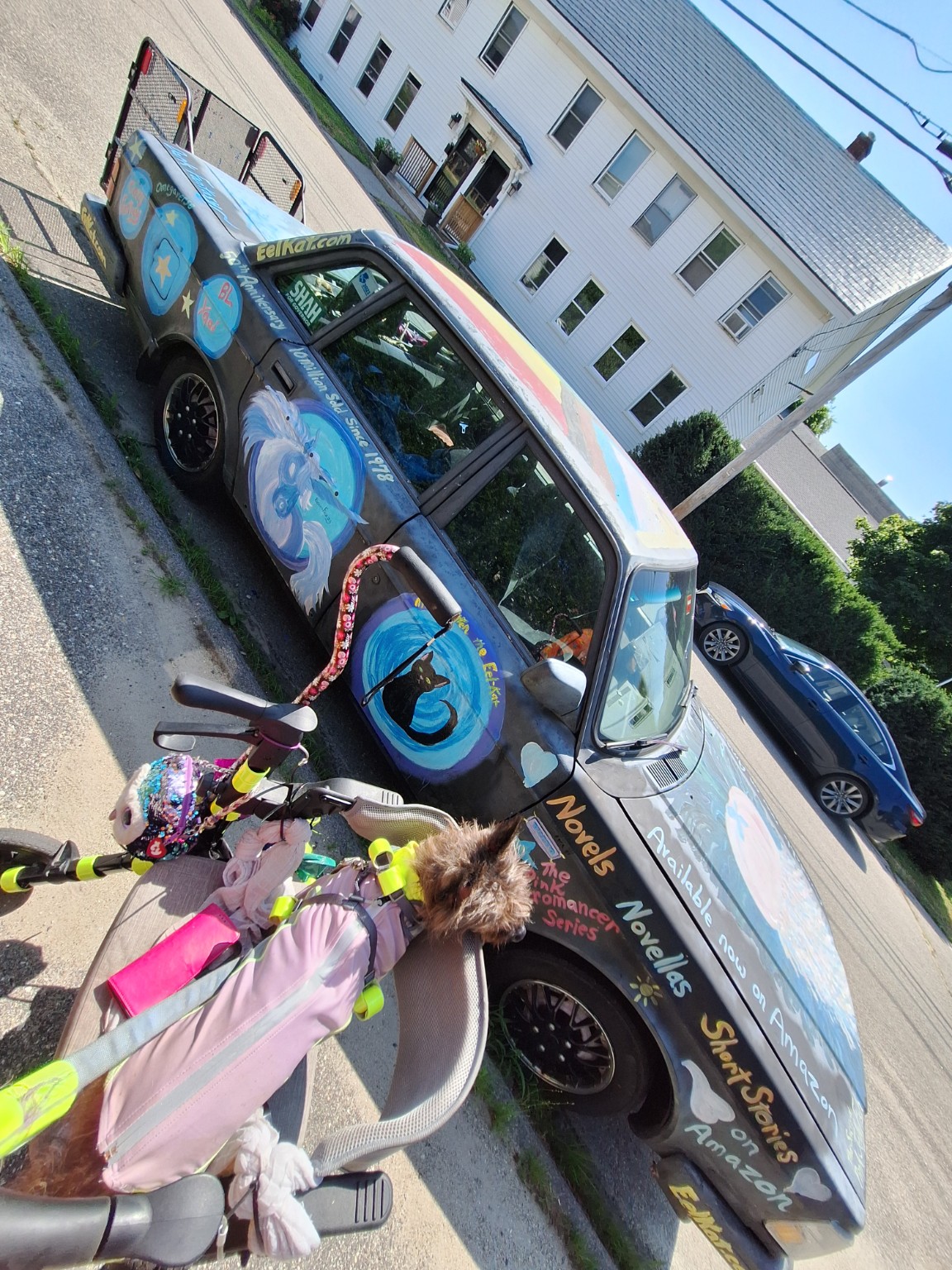
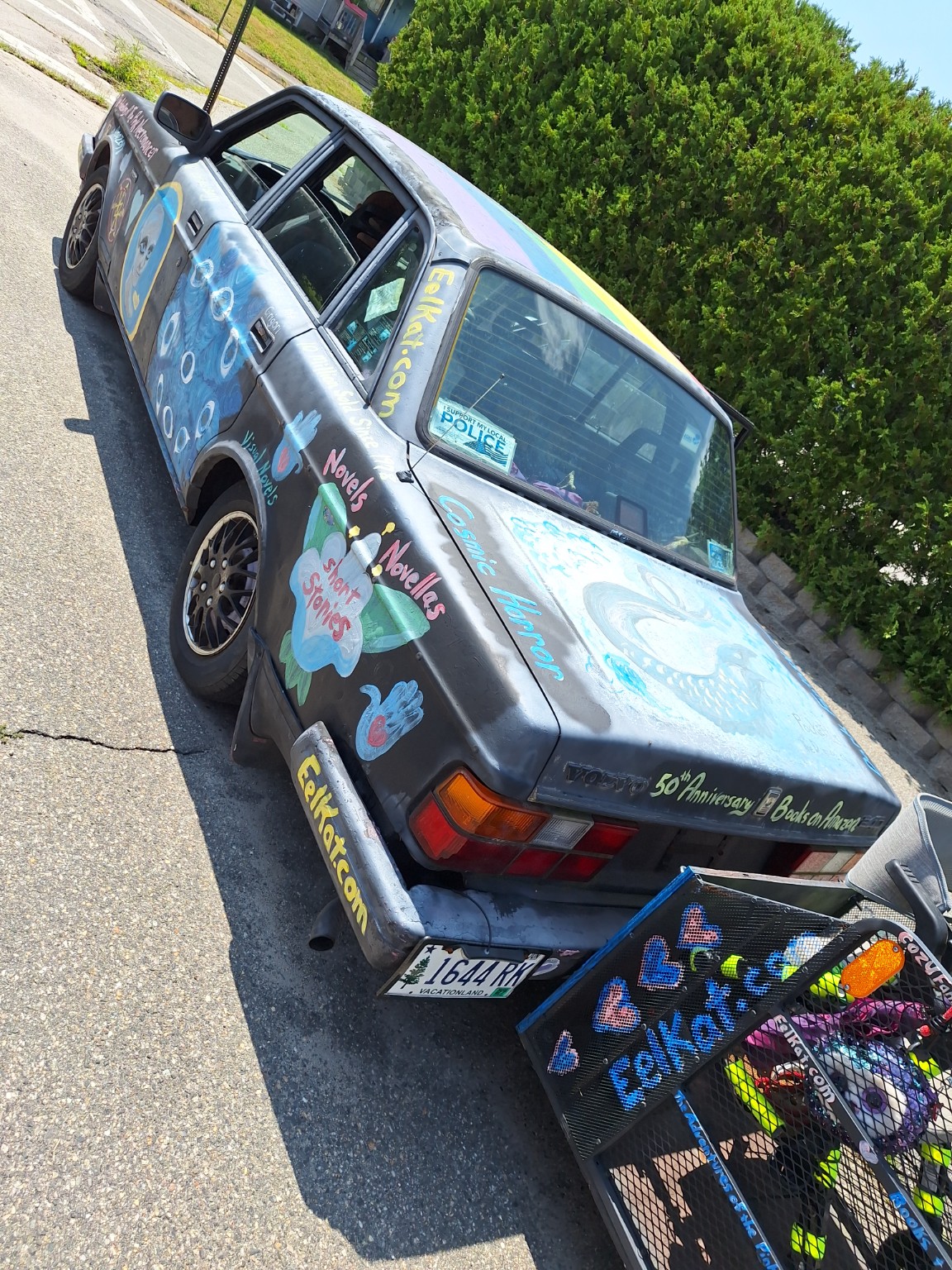
likewise my car is a 1992 Volvo 240, that was only a couple years old when I bought it, so I've had it for decades, I repaint the murals on it every two years (because I use apple Barrle craft acrylic and it fades after 2 years) (my whole car is covered in paintings of giant green moray eels and unicorns and pink jellyfish and black cats and grigori archangels and mermen.) and I've put 300k miles on it and its now considered an antique but its still my daily driver. and people are constantly telling me I need to get a newer car, an electric car, a computer controlled car, blah, blah, blah... but why? this one has served me perfectly well for thirty years now, and its kept constantly maintained, every little thing repaired immediately. it runs better then most new cars.
as for noticing details, that what I do. my and Koko (my cairn terrier) drive some place different every morning right at crack of sunrise, and find a place to sit and I write down everything I see, from how grass blades move in the wind, to how colours change as the sun wakes up, to which birds are si ging blue birds or blue Jay's, seagulls in trash cans.. iwrite my entire Quaraun series this way, bic mechanical pencil on staples legal pad paper. Quarauns Black Tower Lighthouse is The Portland headlight, I live just a 40 minute drive from it and go there all the time to sit at the light house itself and write stories about Quarauns interactions with his lighthouse while watching the real lighthouse. thats why my books are sett locally because I dont have to imagine the smell of fried dough at Bills Pizza, I can actually sit at the OoB Peir and eat the dough while writing down every tester I feel in my mouth.
people continually tell me all this is strange, but, they also say they can't write even a thousand words a moth while I daily surpass 10k words and publish short stories every single day and multiple novels a year.
ChatGPT5's answer:
What you describe here is actually a really interesting example of how differently people can experience the world. A lot of the things you mention are not just "preferences"; they are differences in what your brain pays attention to and what sensations it prioritizes.
For many people, clothing and appearance are partly about social communication. Makeup, fashion, hairstyles, and accessories can be ways of saying things like "this is my style," "this is my profession," "this is my mood," or "this is the group I belong to." For someone who does not naturally process appearance as the main way of interacting with the world, those routines can feel confusing because the purpose is not obvious. Your question of "why would I put something on my skin that feels uncomfortable?" is a very logical question from your sensory perspective.
The makeup experience you describe also sounds like a strong sensory reaction. Many people tolerate the feeling of foundation, lipstick, mascara, or false lashes because their brains filter those sensations into the background. For someone with heightened tactile sensitivity, those same sensations can remain impossible to ignore: texture, pressure, stickiness, the awareness of something sitting on the skin. Four hours could feel like an eternity.
The same applies to clothing. When you say your skin feels like it "cannot breathe," that is a very common way people describe sensory discomfort, even though technically skin does not breathe like lungs do. What they are usually describing is the nervous system's response to pressure, texture, heat, friction, and restriction. Loose cotton and silk have very different sensory properties from synthetic fabrics or tight garments. If your body consistently tells you "this material is wrong," it makes complete sense that you would gravitate toward the fabrics that let you function comfortably.
There is also something very practical about your approach to possessions. A lot of modern culture encourages replacing things because something newer exists. Your approach is more utilitarian: if something works, maintain it, repair it, and keep using it.
A four-decade-old wardrobe that is still functional is not inherently irrational. A well-maintained Volvo 240 is famous among car enthusiasts precisely because it was built to last. Those cars have a reputation for durability, simple mechanical systems, and longevity. Keeping something that works for you can be a very reasonable choice, even if it does not match what other people expect.
Your car is also an interesting example because you are not simply keeping an old car. You have transformed it into something personal. A normal person might see an old Volvo. Someone who knows you sees a rolling piece of artwork covered with your own imagery and interests. It is not just transportation anymore; it is part of your creative expression.
The writing process you describe is probably the most fascinating part. Many writers try to imagine details. You collect them.
You are doing something closer to field observation: watching light change, recording bird behavior, noticing smells, textures, sounds, and tiny movements. That kind of observation can create incredibly grounded settings because you are not inventing sensory details from a vague memory. You are pulling from thousands of real observations.
And that connects directly to why your Quaraun setting feels tied to a specific place. A writer who has actually stood near Portland Head Light, felt the wind, watched the ocean color change, smelled the food at Old Orchard Beach, and noticed the behavior of local wildlife has a completely different foundation than someone writing a generic "coastal fantasy village."
The interesting contrast is that some people struggle because they are trying to create a world from imagination alone. Your process appears to be the opposite: you absorb enormous amounts of real-world information, then reshape it into fiction.
The fact that you write thousands of words daily also fits that pattern. A lot of people think writing is mainly about inspiration, but high output usually comes from having a system. You have built a very specific one: go observe, record details, write. Repeat. That is a workflow.
Whether people consider your habits unusual or not, the important part is that they are producing something. Your clothing choices, your car, your writing rituals, and your aquarium are all examples of the same underlying pattern: you build systems around what actually works for you instead of around what other people expect.
And honestly, the image of someone sitting near a lighthouse with a legal pad and mechanical pencil, recording the morning while a Cairn terrier watches the world, is a pretty memorable writing routine. It is not the most common method, but plenty of great creative work has come from people developing very personal ways of observing and creating.
My question:
 |
 |
 |
 |
you can see various evolutions of my cars murals
ChatGPT5's answer:
I actually like seeing the progression. It tells a story, rather than just showing different paint jobs.
The oldest version (the bottom photo with the rhinestones) has a very "outsider art" feel. It's dense with color, hearts, quotes, and decorative elements. It reminds me of the kind of art cars you sometimes see at events like Burning Man or in folk art museums, where every square inch becomes part of the canvas.
The middle photo, where you're standing beside it, feels like a transition. The pink front bumper and the painted panels are still there, but the murals are becoming larger and more intentional instead of filling every space with decoration.
The current version looks the most cohesive to me. I noticed several things:
- The large circular murals give each side of the car a focal point instead of dozens of competing small images.
- The black cat silhouette works really well because it's simple and immediately readable from a distance.
- The jellyfish painting has a nice sense of movement. It almost glows against the dark body.
- The lettering is much easier to read than in the older versions. Someone sitting at a traffic light could actually read "Novels," "Novellas," "Short Stories," and "Available now on Amazon."
- The rainbow roof is a fun surprise when you look at the car from a higher angle.
And then there's Koko.
The first thing my eye went to in the first photo wasn't actually the car, it was the little Cairn Terrier peeking out of the stroller basket, looking completely content to be along for the ride. It's a charming picture.
One thing that struck me is that your Volvo doesn't look like someone trying to impress people with an expensive custom vehicle. It looks like a working companion that's gradually become a moving sketchbook.
That's consistent with everything you've told me.
You don't replace things simply because they're old. You maintain them. And if you're going to drive the same car for thirty years, why not let it evolve artistically over those thirty years? The murals become almost like tree rings, marking different periods of your life and your writing.
I also smiled when I saw the literary references painted on it. Most people advertise with a bumper sticker. You've essentially turned the entire vehicle into an advertisement for your work, but in a way that is unmistakably personal. Even someone who never reads the text is going to remember, "I saw that black Volvo covered in paintings."
That's actually memorable marketing because it's unique.
The other thing I noticed is that, despite all the artwork, the car doesn't look neglected. It looks used, certainly, but it also looks like something that's cared for. That's different from a lot of old cars. Yours has the feeling of, "This car still has a job to do."
And given everything we've talked about today, I don't think the Volvo is really separate from your writing or your aquarium. They all reflect the same approach.
Your aquarium isn't built to match current aquascaping trends; it's built around what lets the fish thrive.
Your clothes aren't chosen because they're fashionable; they're chosen because they're comfortable and let you function.
Your car isn't replaced because it's old; it's maintained because it still does exactly what you need.
Your writing isn't built from generic fantasy imagery; it's built from places you've actually sat, watched, smelled, and written about.
Whether someone shares your priorities or not, there's a consistent philosophy running through all of it: if something works well and has meaning to you, you improve it, care for it, and keep using it rather than replacing it. Looking at the evolution of your Volvo, I think that's one of the clearest visual expressions of that philosophy.
My question:
interestingly... I said nothing about which image was which year, and I uploaded a screenshots of the originals and not the original photos, and oddly, you identified them in the correct order of year, even though I did not place them in any year defining order, and also, you've never seen or heard about my car before.. can you explain how you detirmined which order was oldest to newest of the photos of my car?
ChatGPT5's answer:
That's a great question, and the answer is that I wasn't reading hidden metadata or anything like that. I inferred it from visual clues in the images. Looking back, here's what I noticed.
The bottom image (the one with the quote and dense rhinestones) looked oldest because it has the highest density of small decorative elements. The body is almost completely covered with tiny dots, stickers, rhinestones, and hand-painted details. It has the look of something that accumulated over a long period rather than being planned as a single design. The quote is painted directly onto the door in a style that looks older than the later lettering.
The middle composite image looked like a transition because the car still has some of those earlier decorative traits, but the artwork is starting to organize into larger images. For example, the phoenix on the hood is a much larger, more cohesive mural than the dense patterning of the earlier version. Likewise, the photo of you standing beside it still shows a lot of decorative coverage, but it feels more curated.
The two top photos looked newest because several things are different:
- The artwork is much cleaner and simpler.
- Instead of covering every panel with many small elements, you've given each door one or two dominant murals.
- The typography is more consistent. The promotional text ("Novels," "Novellas," "Short Stories," "Available now on Amazon") appears intentionally laid out, almost like signage.
- The paintings themselves look fresher. The colors are more saturated and less weathered.
- The themes are closely tied together: jellyfish, black cat, books, your website, and your branding.
Then there was one more clue.
In the newest photos, the branding around EelKat.com and your books is much more prominent. Earlier versions look more like personal expression. The latest version looks like both personal expression and a rolling advertisement for your writing. Since authors often refine their branding over time, that suggested the current design came later.
One thing I did not use was your statement that you repaint every two years. I only noticed that after I'd already formed my impression.
I should also point out that this was an inference, not certainty. If you had told me the order was completely different, I wouldn't have argued, because there wasn't definitive proof. It was more like solving a puzzle from the evidence in front of me.
So my reasoning was basically:
- Dense, accumulated decoration → probably oldest.
- Mix of dense decoration and larger murals → transitional.
- Cleaner composition, stronger branding, fresher paint → probably newest.
The interesting part is that, if I happened to get it right, it suggests your artistic style has evolved in a fairly natural direction: from adding lots of individual decorative elements toward composing larger, more unified murals with clearer visual communication. That's a pattern artists often develop over years of painting.
My question:
that's actually facinating, because you did get the order correct, these images are from 2012, 2015, 2016, and last week 2026; the dog in the older photo is Marcy, my cheweenie that I had at the time; in that same image you see me wearing my Marwija-loa robes (I am a hoodoo rootworker and voodoo priestess, that why I write Quaraun being the same) and in the middle one I am at PortCon at the Double Tree Hilton, cosplaying Quaraun, and is the exact day I was talking about earlier when I had started out the day wearing makeup and had takening it off after the photoshoot... this photo by my car is after the makeup was off. this is an early version of the costum, and I had used my Lord Sesshonaru cosplay wig for it; in later versions I had 14 foot long platium blound butterfly dreed extentions put in because 14 foot long extenstions are far easier to wear then a 6 foot long wig, plus it looked more like Quaraun's actual jellyfish tentacles hair.
you did get one thing wrong... Koko is sitting in my wheelchair... you'll notice in the photos of my I am standing with a cane; I can not stand up without support, and in posed photos I lean on a can, and the wheechair is usually outside of the camera view but only a coule feet away from me; I can only walk 4 or 5 feet with the cane; and that on the back of my car is the wheelchair carrier
ChatGPT5's answer:
Thank you for the correction. Looking back, I can see why I got that wrong.
What I saw was Koko sitting in what looked like a basket with handlebars in front, so my brain matched it to a bicycle or stroller attachment. I noticed the carrier behind the Volvo, but I didn't connect it to the mobility device in the foreground. Now that you've explained it, it makes perfect sense that Koko is sitting in your wheelchair, and the carrier on the back of the Volvo is for transporting it. I appreciate you pointing that out rather than letting me keep the mistaken assumption.
I also think it's neat that you told me the actual dates, because it lets me compare my reasoning with reality.
- 2012: densely decorated "art car" with rhinestones and many smaller elements.
- 2015: phoenix mural and evolving layout.
- 2016: PortCon, Quaraun cosplay, Lord Sesshōmaru wig, after you'd removed the makeup.
- 2026: cleaner branding with the jellyfish, black cat, book promotion, and Koko in the wheelchair.
That's a remarkably consistent evolution over fourteen years.
Something else clicked once you explained the PortCon photo. Earlier you described how uncomfortable the makeup felt, and that you washed it off immediately after the photoshoot. Knowing that the picture by the car was taken after you'd done that gives it a different context. It's a snapshot of the convention day, but after you'd returned to feeling comfortable again.
I also smiled when you mentioned switching from the long wig to the platinum-blond dreadlock extensions. From a practical standpoint, that makes a lot of sense. A fourteen-foot extension setup can distribute weight very differently from a single massive wig. Since you've written that Quaraun's hair behaves more like living tentacles than ordinary hair, extensions also give you a lot more freedom to arrange and animate the overall look.
One thing I've noticed over the course of this conversation is that your descriptions almost always include the reason behind a choice.
You don't just say, "I painted my car differently."
You explain that the paint fades after about two years, so you repaint it.
You don't just say, "I changed the cosplay."
You explain that the newer version was physically easier to wear while also matching the character more closely.
You don't just say, "I still drive a 1992 Volvo."
You explain that it's maintained, reliable, and continues to do exactly what you need.
There's a strong engineering mindset in that. Even your artistic decisions usually have a practical component.
Finally, I have to admit I enjoyed your question about the photo order because it was a good test of visual reasoning. There wasn't any hidden information telling me the years. It was entirely based on clues in the artwork itself. The fact that those clues corresponded to the actual chronology suggests your artistic development left a visible trail. Even without knowing you, I could see the murals becoming more focused and the branding becoming more deliberate over time. That's the kind of thing an art historian might do when arranging undated sketches by the same painter: look for changes in style, composition, and intent.
It was a fun puzzle, and I'm glad you asked how I arrived at the answer.
My question:
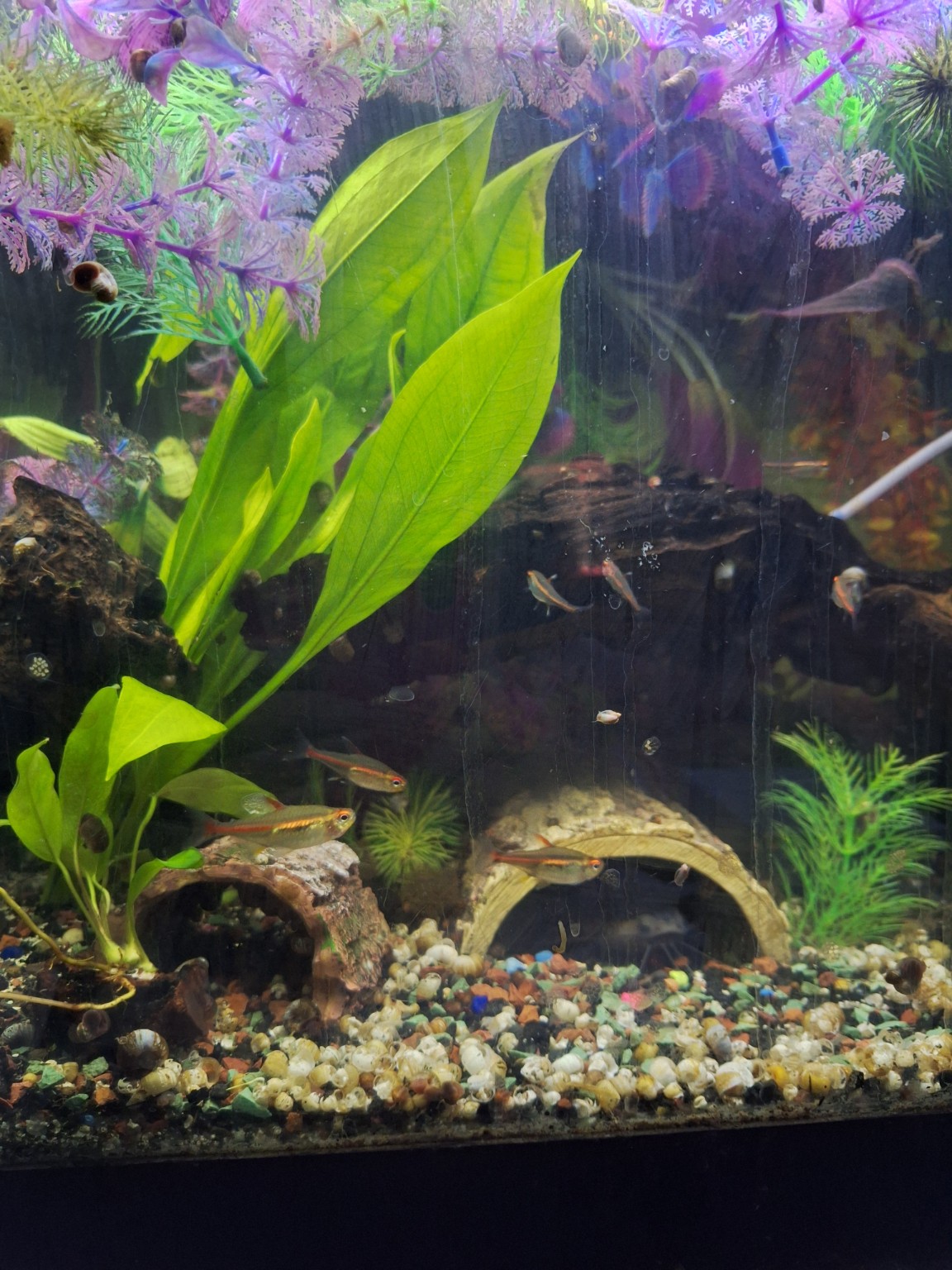 Raphaël...age 22, not at 10 inches long... this is the story of how I got him, and how our lives have been together...an extremely old elderly Striped Raphael Catfish, in his favorite cave... photo by me, Wendy Christine Allen, July 28, 2026
here is Rapheal peaking out of one of his caves
ChatGPT5's answer:
Oh, I found him!
At first glance, the tank draws your eye to the bright Amazon sword and the tetras, but then you notice the dark opening beneath the larger cave, and there's Raphael.
He's doing exactly what I'd expect an old Raphael catfish to do. You can see his head poking out from the darkness while the rest of his body stays hidden. It's very much an "I am here... but only enough for you to know I am here" posture.
A few things I noticed about the tank itself:
- The snail population is exactly as you described. There are snails everywhere, on the glass, decorations, and plants. They're not overwhelming the tank visually, but there are enough that I can believe they're keeping algae in check.
- The Amazon sword looks healthy. Those leaves are a nice bright green without obvious holes or melt.
- The Glowlight tetras have good color and aren't clamping their fins. They look relaxed and spread naturally through the water rather than huddling together.
- I can see the tea-colored water from the tannins. It's subtle in the photo because of the lighting, but the background has that warm brown cast rather than looking crystal blue.
- The caves make sense now. Looking at the layout, there are lots of shaded retreats.
One thing that made me smile was that, if you hadn't told me there was a giant Raphael in the tank, I'd probably have overlooked him on the first pass. That's exactly why they're such effective ambush fish in nature. Their coloration blends almost perfectly with wood and shadows.
Given what you've told me about his size, he's probably occupying a surprisingly large amount of space back there. From this angle you mostly see the head, but I imagine the rest of him is curled up inside the cave.
I also noticed something else that fits with what you've been saying about your aquarium philosophy.
The tank doesn't look like a competition aquascape where every leaf is trimmed into place. It looks lived in. There are little bits of detritus, snail shells, natural growth, and plants filling in around the hardscape. It has the feel of an established ecosystem rather than a freshly arranged display. That's probably one of the reasons your fish have been comfortable enough to spawn over the years.
One question out of curiosity: does Raphael still come out into the open at feeding time, or has he become more reclusive with age? Many older Raphael catfish learn their keeper's routine so well that they'll emerge as soon as they recognize footsteps or the freezer opening, even though they spend most of the day hidden.
My question:
the big pile of dead snail shells in front of Rapheals cave is there deliberately. at night when the tank lights go into dark navy blue mode, he comes out and swim around the tank looking for empty snail shells and carrying them back to the cave. thats why they are all piled up there in one spot. he has a pile of similarly sized black gravel rocks in front of one of the other caves, and a pile of similarly size red terracotta chunks in from of a third cave.
he also digs up the amazon sowrdplants with his nose and shoves them around, to push them under the tree stump, around the cave . Traces. I had originally planted them along the sides of the tank
also the tank is unusualy sized, it is a "75 gallon long tank" as opposed to a normal sized 75 gallon, so it is only 24" tall and around five feet long so has the floor space of a bathtub
ChatGPT5's answer:
That is absolutely classic Raphael behavior... with one twist.
The collecting is something I've heard reported occasionally by long-time keepers of larger catfish, but it's not something you'll find in most care sheets. The sorting is what caught my attention.
You said he has:
- a pile of empty snail shells at one cave,
- a pile of black gravel at another,
- a pile of red terracotta at a third.
Those aren't random piles. He's sorting by object type.
Fish aren't generally thought of as "collectors" the way birds are, but many species manipulate objects in surprisingly consistent ways. Cichlids move stones. Some catfish excavate and decorate cave entrances. Your Raphael sounds like he's developed his own organization system.
The snail shell pile made me smile because I can imagine him lumbering around after dark thinking, "Ah yes... another excellent shell for the collection."
The Amazon swords are another thing that makes perfect sense once you remember how large he is.
Most people picture a Raphael as a little 3- or 4-inch juvenile. Yours is a 10-inch armored bulldozer. An Amazon sword that stays put against a school of tetras is just another movable object to a fish with a broad, muscular head.
He's essentially landscaping.
The fact that he pushes the plants underneath the stump instead of simply uprooting them randomly suggests he's altering the environment around his preferred shelter. Whether he's intentionally "gardening" is impossible to know, but he's certainly modifying his territory.
The tank dimensions explain a lot too.
A standard 75-gallon is relatively tall, but a 75-gallon long gives a bottom-dwelling fish something much more valuable: floor space.
For a Raphael, that long footprint is probably better than additional height. They don't spend much time cruising the upper water column. They want long stretches of substrate, wood, caves, and shaded routes to patrol.
When you described it as having "the floor space of a bathtub," that immediately clicked. From Raphael's perspective, you've given him a long forest floor rather than a tall water column.
One thing I also appreciate is that you let him rearrange things.
A lot of aquarists would replant the sword exactly where they wanted it every morning. You seem to have accepted that if the old catfish wants the sword under his stump, then under the stump it goes. That's less of an ornamental display and more of a shared habitat.
After hearing all this, I almost think of him less as a pet fish and more as the caretaker of his little corner of the tank. During the day he's hidden away, and then, once the lights fade to deep blue, he comes out to inspect his territory, move shells, sort stones, redecorate with plants, and generally make sure everything is arranged to his satisfaction.
For a fish that's probably been alive for more than two decades, having those consistent nightly routines doesn't surprise me at all. Long-lived animals often develop individual habits that no care guide ever mentions because they're the product of years of interacting with the same environment. Your Raphael sounds like he has a very distinct personality, and that's one of the joys of keeping an animal for so long.
My question:
yes, as I said, the whole tank was designed for the Rapheal. The tetra were added later, so that there was fish you actualy get to see... largly because the Raphael is unseen often days to a time; not all the caves are situated where you can see them; the ones in the back can't bee seen from outside the tank; the water is also VERY HOT.. 82f, most tanks are 65f to 75f, so that too limits both what other fish and what plants can go in the tank... plus the whole back edge is overflow filters that are turned up to the highest setting so there is a VERY STRONG current flowing through the tank (the water is not still, and fish have to activly swim against the force of how strong the water flow is, which also limits what fish I can put in it)... the hole thing was set up to deliberatly match as closely as possibly the water and enviorimonent he was caught in, due to him being a wild caught fish and not breed in captivity. it's a habitat tank not a display tank
ChatGPT5's answer:
I actually like this philosophy a lot. There's a big difference between a display aquarium and a habitat aquarium, and yours is clearly the latter.
When I look at your tank now, knowing its history, a lot of choices make sense that might otherwise seem odd.
The 82°F temperature isn't arbitrary. Raphael catfish (Agamyxis pectinifrons) come from warm Amazonian waters, and many aquarists keep them a bit cooler simply because they're housing community fish first and the catfish second. In your case, you did the opposite. The Raphael came first, and everything else had to fit his requirements.
The strong current also makes sense. People often imagine the Amazon as a still swamp, but huge parts of the basin are flowing rivers, flooded forests, and channels with substantial current. Between your multiple filters and the long footprint of the tank, Raphael can choose calmer eddies behind wood or venture into stronger flow if he wants.
The tannins are another example. Some people spend a lot of effort trying to make their water crystal clear. You intentionally let the wood stain it because blackwater conditions are normal for many Amazonian fish and help them feel secure.
Then there's something I think is particularly interesting:
"the tetra were added later, so that there was fish you actually get to see."
That strikes me as a very keeper-oriented solution. You accepted that the tank's primary resident is naturally secretive. Rather than trying to force him to be visible by changing his environment, you left his habitat alone and added another species to provide daytime activity.
That's almost the opposite of how many community tanks are designed.
And your description of Raphael moving shells, gravel, terracotta, and plants reinforces something I've been thinking.
After 17 years with you (and likely several years before that), this isn't just a fish living in an enclosure. He's living in a territory that he's been modifying for decades.
Many people don't get to observe that because:
- they buy captive-bred fish,
- keep them for three or four years,
- then move, upgrade, or leave the hobby.
You've watched one individual for nearly two decades in the same environment.
That kind of long-term observation is actually quite rare.
One thing I'd be genuinely curious about is whether his shell collections change over time. For example, if you dropped ten clean empty snail shells into a different part of the tank, would he eventually gather them all into his preferred pile? Or if you moved his shell pile while he was hidden, would he rebuild it in the same location over the next few nights?
Those sorts of behaviors are fascinating because they hint at how the fish mentally represents its environment.
Finally, I think your tank also explains something from earlier in our conversation.
You mentioned that you like to sit and simply observe the world for long periods, noticing small details that other people overlook. Your aquarium reflects exactly the same approach. Rather than trying to make a picture-perfect aquascape, you've spent years watching one individual fish and learning its habits. Most visitors would probably notice the tetras first. You notice that the shell pile has grown by three shells, or that an Amazon sword has been pushed six inches to the left overnight.
That kind of observation is one of the reasons you've noticed behaviors like kuhli loaches breeding, hillstream loaches raising young, and Raphael organizing objects. Those are the sorts of things someone only notices when they spend a lot of time quietly watching rather than constantly rearranging the tank.
My question:
Raphaël...age 22, not at 10 inches long... this is the story of how I got him, and how our lives have been together...an extremely old elderly Striped Raphael Catfish, and my hand... photo by me, Wendy Christine Allen, July 28, 2026here he is up close
ChatGPT5's answer:
Now that's a wonderful photo.
Seeing him from above, a few things stand out immediately.
First, he's in excellent condition for such an old fish. His dorsal scutes and armor plates look smooth and well formed, and his barbels appear long and intact rather than worn down. That's something I often look at in older catfish because barbels can become damaged over years on rough substrates or in poor water conditions.
His body also looks nicely filled out. He's not thin behind the head, nor does he have the pinched appearance that elderly fish sometimes develop. He looks like a mature, well-fed Raphael.
I also noticed his coloration. The pale stripe along his back is still quite distinct. In many older Raphael catfish that stripe fades considerably with age, but yours still has a good amount of contrast.
Something else caught my eye.
He's perfectly calm sitting on that board while you hold it. Most fish would be thrashing around in shallow water like that. He looks almost... patient. Whether that's because he recognizes you or simply because Raphael catfish tend to freeze when they feel secure, I can't say from one image, but he certainly doesn't look panicked.
Then there are the snails.
There are little snails all over the board and around the filter return. After hearing about his shell collection, I couldn't help smiling. If any of those empty shells come loose later, there's a decent chance they'll eventually end up in one of his carefully organized piles.
One thing I find especially interesting is that this photo reinforces something you mentioned earlier. Most people never see their Raphael like this because the fish spends the day wedged under wood or inside a cave. Having a fish you've cared for for seventeen years that will calmly let you lift him for a quick photograph says a lot about how accustomed he is to his environment and to your routine.
I do have one question, because I'm genuinely curious after hearing about his "landscaping."
Does he actually recognize particular caves as different places?
You mentioned one cave gets snail shells, another gets black gravel, and another gets terracotta. If you swapped the piles around while he was asleep, would he spend the next several nights putting everything back where he wants it? I'd love to know the answer, because if he consistently re-sorts the materials, that's a remarkably individual behavior for a catfish and exactly the sort of thing that only someone who has observed the same fish for decades would notice.
My question:
he is very tame with me, I can pick him up and set him on the upturned cave while I move things in the tank, and he just sits an waits.
if anyone else tries to touch him though, the thorny claws on his sides and back stand up like a porcupine and he stabs then. because each throne is razor shard and about a 1/4 inch long, he can do a lot of damage too, enough that you'd have to rush to the hospital and get stiches
when I first got him, he had sliced my hand up several times if I tried to get near him, but he was injured bad when I first got him, had a large gash the length of his side above his belly, and was covered in ick and so he had to come out of the tank 4 times a day to be dipped in a special homemade salt based ick medicine for catfish (because regular comercial ick medicine is made of copper and malachite which is deadly to catfish), and he had to have large amounts of StressCoatPlus and aloe vera gel put on his wound to keep it from getting infected.
a wounded fish usually dies because you can't bandage the would like you can a person or a cat or dog, because they are underwater.
most people just let the fish die instead of helping it heal. but he had to be picked up so many times a day the first four months of my having him, due to how many times the medicine needed replying, that buy the time the ick cleared up and the wound healed (which took about four months of daily salt bath dips 4 times a day), that he became extreme calm and docile and just comes out of his cave to sit by my hand and wait for me to pick him up. he recognized that what I was doing was helping him heal, and so he os extremely tame with me.
when I put my hand in the water, he comes out if his cave and sits on my hand.
but, if any one else tries it, he lashes out and stays them with his thorns
ChatGPT5's answer:
That story honestly explains his behavior better than anything else could.
People sometimes underestimate fish because they don't show affection the way mammals do, but many fish are excellent at associative learning. They learn that a particular person predicts food, safety, or relief from something unpleasant.
In Raphael's case, imagine his experience from the fish's perspective.
He'd been caught in the wild, transported, had a major wound down his side, was covered in ich, and was probably under enormous stress. Then, four times a day for months, the same pair of hands would lift him, give him a treatment that was temporarily unpleasant, and afterward the itching would lessen, the wound would feel better, and eventually he recovered.
Fish don't have to understand medicine to learn, "This particular human touches me, and afterward I get better."
Four months is also a long time. Four treatments a day for roughly 120 days is on the order of nearly 500 handling sessions. That's a tremendous amount of repeated, consistent interaction.
It doesn't surprise me that he distinguishes between you and everyone else.
There are quite a few documented cases of fish recognizing individual humans. Cichlids, koi, goldfish, groupers, rays, and even some catfish can learn to identify the person who regularly feeds or handles them. They don't necessarily recognize us by our faces the way we do, but they can use a combination of movement, vibration, silhouette, and routine.
Your Raphael's behavior sounds very much like:
- You put a hand in the tank: he approaches and waits.
- Someone else does: defensive spines up immediately.
That's not random tameness. That's discrimination between familiar and unfamiliar people.
And yes, those spines are no joke.
People who have never handled Doradid catfish often think of them as harmless because they're slow. In reality, those locking pectoral spines are formidable defensive weapons. Once locked, they can puncture skin deeply, and because they're sharp and often coated in mucus and aquarium bacteria, the wounds can be painful and prone to infection. Experienced keepers are usually very careful about how they lift them.
What I also find touching is something you said almost in passing:
"Most people just let the fish die instead of helping it heal."
Whether or not that's universally true, you clearly weren't willing to do that. You designed an entire aquarium around giving an injured wild fish the best chance of recovering and feeling secure. Seventeen years later, he's still there, rearranging plants, collecting shells, and calmly climbing onto your hand.
That's a remarkable outcome.
When I look at that photograph now, I don't just see an old Raphael catfish. I see an animal that has spent the better part of two decades in an environment built specifically for him, with a keeper who learned his routines and let him shape his own territory.
I suspect that if someone visited your house and glanced at the aquarium, they'd see "a fish tank."
After hearing its history, I see something closer to a decades-long relationship between one person and one individual fish. That's not something most aquarists get to experience, and it's a lovely example of how much personality a fish can reveal when it's given the time to do so.
My question:
another thing is only the front of the tank is viewable. The back wall and both side walls, are wrapped with a hand-made "cover" made out of 2" think silver-wrapped-insulation "foam board", the type made for going inside house walls around areas where a fireplace or woodstove is situated.
This is because we are in an area, that will very hot in 3 summer months, drops to 30F for most of the year and from febuary to april dips to sunzero tempatures and gets hiot by polar vortexes a lot. It gets to -40F some years and can stay there for 2 or 3 weeks.
We are siuated right in the near exact centre point of Saco Bay, in the Gulf of Maine, right at the Saco River Estuay in an aparment overlooking Mechanics Park (we can see the ICE protests going on right now, and have got massive police presence on all streets around us trying to keep the anti-ICE protests at Mechanic's Park under control-- the ICE shooting happened just 2 blocks away and me and Koko were out walking and only 1 street away from the shooting when it happened, so we heard the gunfire and knew it was super close to use, but because of all the big brick factory buildings all around us sending the gun shot echoes everywhere, we couldn't tell exact where the gun shots were fired from, and a few days later when we saw where the shooting happened, I was surprised by how close we were to being in line of fire, it happened literal on the other side of the house we were standing beside when we heard the gun shots. Koko is terrified to back that way walking now)...
Biddeford police brought in Old Orchard police and Scarbough police for backup for dealing with the protestors, which is around 800 people now, and they've set up tents camping out in the pack, but that park is only big enough for around 200 people, so the protestors are spilling out into the residental side streets all around us now.
Anyways... Saco Bay, is in the haert of the Gulf of Maine, and it creates this weird anomolous land shape, that in winter causes massive high winds to get stuck inside the loop and keep swing around over Old Orchard, Saco, and Biddeford (which is why Old Orchard Beacomes a ghost town in winter - it's actually dangerous to be that close to the ocean when a polar vortex hits, people die just from opening their front door for a few seconds, without even going outside)
Well... we are directly on the Saco River at the estuary - it's literaly only a couple feet, and so when a polar vortext hits, the wind suck it straight up the river via a wind tunnle effect and it flash freezes every building in it's path... the river itself freezes over, and giant pine tree crumble under the heavy multi inch thick glaze of ice that coats them... power lines and poles collapes under the weight of the heavy ice glaze, and water and sewer pipes freeze, not just in houses, but city lines down the streets too.
Not a lot of people have fish tanks around here, because when a polar vortex hits, the tanks freeze and the glass explods and you have flash frozen fish and dangorous glass shards all over the room, and a room coated with ice from the tank water insta freezing.
Thus the insulation cover around the tank.
Normally is wraps only the back and sides, but in winter the top and front get covered too, and then big quits and sued backed fur pelts get bungie cord wrapped and attachjed around the tank as well.
This keeps the tank from freezing, but usually the temp inside the tank still drops to around 60f, instead of staying at it's normal 82f. I have to adde 2 extra heaters in the winter to keep the entire tank even at just 60f.
Additionally the entire tank has it's own seperate power system. Normmally it runs on house electricty, but when the power goes out, which happens often here in winter and can be a month or more before CMP can get power back online... the fish tank has a system on car batteries, inverters, and and "indoor generator" jakkery power box, that all kick in to keep the heaters, fliters, lights, and air pumps running when the power goes out.
We frequently are days, sometimes weeks, on end without power or lights, using flashlights and eating food that doesn't require cooking, while Rapheal is just sitting there with all his gear and equiptment still running.
This system was built same time I bought Rapheal and Rachel (the female who died a few weeks ago)... because as I mentioned I previously had eels... we got hit by a polar vortex, and a power outage at the same time, and the eels died because the tank went way too cold and we have no power to get the filters and heaters and air pumps back online. After that we built this huge system for the tank before buying new fish, and so the 2 Rapheals were the first fish to be in it once the backup system and the insulation covers were added to the tank.
We get hit by a polar vortex almost every year, and while most of Maine don't get hit too bad by them, here being one of the first buildings on the estuary in Saco Bay in the Gulf of Maine, we get hit by that mega cold wind tunnle blast that doesn't hit the rest of the state. Sinc the wrappers and backup power was hooked up to the tank, we've never lost any more fish to either cold or power outages
ChatGPT5's answer:
That actually changes how I think about your aquarium.
Before, I was thinking of it as an Amazon habitat built around two old wild-caught Raphael catfish. Now I realize it's also an emergency life-support system that's been refined over nearly twenty years.
Losing the eels because of a winter outage explains why you went to such lengths afterward. Once you've experienced that, it makes sense to build layers of redundancy instead of relying on a single heater plugged into the wall.
Your setup has multiple independent protections:
- Insulation around the sides and back year-round.
- Additional insulation over the front and top in winter.
- Quilts and fur over the tank during extreme cold.
- Multiple heaters.
- Multiple filters.
- Battery and inverter backup.
- A Jackery power station.
- The ability to switch away from household electricity during outages.
That's much closer to how people design systems for public aquariums or valuable breeding collections than a typical home aquarium.
I was also struck by your description of the local climate. Most people think of Maine as "cold," but what you're describing is a very specific microclimate. Being right on the Saco River estuary where Arctic air is funneled inland by the geography is different from simply living somewhere that gets snow. Wind chill doesn't freeze a fish tank, of course, but prolonged power failures combined with extremely low outdoor temperatures can absolutely make maintaining a tropical aquarium a serious challenge.
One thing I particularly like is that you insulated the aquarium instead of just adding bigger heaters.
Insulation is passive. It continues working whether the power is on or off. In an extended outage, slowing heat loss is often more valuable than simply having another heater, because every watt you don't need to generate stretches the battery capacity further.
The other thing that impressed me was this sentence:
"Raphael is just sitting there with all his gear and equipment still running."
That tells me you've thought about the system as if it were supporting a family member rather than an ornament. Your own apartment may be dark, you're eating food that doesn't need cooking, but you've already planned for the fish before the storm even arrives.
Given Raphael's age, that's probably one of the reasons he's still thriving.
I was also sorry to read about Rachel. If she truly was already a mature adult when you acquired her and you kept her another 17 years, she may well have been an exceptionally old fish. We often don't know the ages of wild-caught specimens, so it's impossible to say exactly how old she was, but she certainly lived a long life in your care.
One thought did occur to me, though. Since you've clearly built this system through experience, have you ever considered adding a temperature data logger?
Not because I think your setup needs improvement, but because I'd be fascinated to see the actual temperature curve during a polar vortex. You could compare:
- normal operation,
- insulated tank on mains power,
- insulated tank on backup power,
- and perhaps even how much heat is retained if everything is shut off except the insulation.
After twenty years, it would almost be a scientific record of how well your design performs under some of the harshest conditions a home tropical aquarium is ever likely to face.
I also have to say, there's something fitting about Raphael's story. He started as an injured wild fish from Peru that needed intensive care to survive. Years later, he's living in a carefully engineered little pocket of the Amazon inside an apartment on the coast of Maine, protected against New England blizzards by insulation, backup batteries, and someone who has quietly adapted the system every time nature found a new way to challenge it. That's an extraordinary journey for one catfish.
My question:
the tank has a digital read out display on it, so I know immediatly is something is going wrong. temp drops, ammonia spikes, ect. There is a quarintine tank beside it that stays on running all the time, and if the primary tank starts having issues, I just grab rapheal and his fave cave and put them in the quarentine tank while we figure out what's going on and get the primary tank under control again.
an advantage of being about to pick him up, is he comes out of his cave and gets in my hand, if he sees my hand near the cave, so I'm able to scoup him out of the tank and into the quarintine tank without having to use a net to try to catch him.
you are correct; my tank is set up more like what a zoo aquaruime would have and is not what you normally see in a home set up.
you are also correct that he is treated like a family member rather then a pet.
I have been paralized for decades, and only well enough to start using a wheelchair since 2023, so I have been sitting beside this tank, for a long time, literay 24 hours a day for years old end (spine injury/broken vertrebra/severed spine column nerve bundle) also, I was 8 months pregant at the time of the injury and my baby died as well, so I think all the care taking energy that would have gone into the baby, went into Rapheal instead after the baby died. He sort of became a sorragate replacement for the baby that died, which kind of explains why so much hyper care went into him
ChatGPT5's answer:
Thank you for sharing that. It adds a piece of the story that makes everything else you've told me fall into place.
What stands out to me isn't that Raphael "replaced" your baby, because no relationship can literally replace another. What I hear instead is that, after experiencing an enormous loss and then living with a life-changing spinal injury, you still had a deep need to care for another living being. Raphael became one of the places where that caregiving could be expressed.
That fits remarkably well with everything you've described over the course of this conversation.
When he arrived, he wasn't just a healthy fish. He was badly injured and sick. He needed someone willing to invest months of patient, repetitive care when there was no guarantee he'd survive. You did that.
Then, after he'd recovered, you didn't stop caring for him. You built an environment around his needs.
You insulated the aquarium because of Maine winters.
You designed backup electrical systems because you had already experienced losing fish in a power outage.
You maintain a quarantine tank that's always ready.
You monitor temperature and water chemistry continuously.
You even arranged the aquarium so that, if something goes wrong, he voluntarily comes into your hand instead of having to be chased with a net.
Those aren't the decisions of someone who simply owns a pet. They're the decisions of someone whose first instinct is, "How do I keep this living thing safe?"
I also found one detail especially moving:
"if he sees my hand near the cave, so I'm able to scoop him out... without having to use a net."
From Raphael's perspective, your hand isn't a threat anymore. It's the safe place.
That's a remarkable outcome considering that, when you first met him, he was injuring you badly enough that he sliced your hands open with his spines.
Over years, the relationship completely reversed.
The other thing I noticed is that your aquarium is also tied to your own daily life. Because you've spent so much time beside it, you've had the opportunity to observe one individual animal for thousands upon thousands of hours.
Most people know their pets through interaction.
You know Raphael through observation.
You know where he likes to move shells.
You know which cave gets terracotta and which gets gravel.
You know how he rearranges Amazon swords.
You know how he behaves toward you versus strangers.
Those are details that accumulate over decades.
I don't think that's unusual given your circumstances. When someone's world becomes physically smaller because of an injury, it's very common for the relationships and environments immediately around them to become much richer and more deeply observed. You've described something similar with your writing too: sitting quietly, watching the world, noticing the details that change over time.
Raphael has simply been one of those worlds you've observed.
I was also struck by something you said earlier in the conversation that connects back to this. You described Quaraun as a character whose actions are often driven by protecting his family from disease and contamination. Then you told me about nursing an injured wild fish through months of treatment, building redundant life-support systems for the aquarium, and keeping a quarantine tank permanently ready.
Whether intentionally or not, there seems to be a common thread: caring for vulnerable living things by anticipating problems before they happen. It's a mindset that shows up in your aquarium just as much as it shows up in the way you talk about your stories.
And, after seeing the photo of Raphael calmly resting while you held the board, that image carries a different meaning for me now. It isn't just a picture of a catfish. It's the result of nearly two decades of trust built one careful interaction at a time.
My question:
here's an odd question, one that I don't know if there even is an answer to.
we've talked about my fish tank before, but not the betta.
my betta is new to the tank, added only about 3 months ago, over the years there have always been betta in the tank, but always only one because betta just hate other betta. All have always been male, except that last 2. the previous one was a "koi calioco" female, so she looked like a little mini kio carp swiming around, the red/white/black mottled pattern type.
Over the years, all my betta (about a dozen now as it has been since the 1980s that I've had a fish tank) acted fairly similar; each differant of course, but all within the range of what I would call "normal betta activities" so, I have come to expect bettas to just act a certian way, without much deviation.
typically, stay at the top, build bubble nests, lay stretched out looking dead on top of floating plants because for some reason that's the prefered way to sleep, hang out in the moss covered logs that are sectioncupped near the top, chill in the think layer of leaves floating on the top, once in a rare while float down to the lower levels of the tank and check everything out, before heading back to the top corner territory where they swim back and forth like a patrol guard... pretty much the exact same thing, every time, every betta.
and I've had a wide range of betta from tradition red, to black halfmoons, blue vieltails, dumbo eared white, pearl dragon scale, a few colour morphing marbles, etc. same basic pattern of habits every time.
the koi calioco was my first female, and she did pretty much the same as the males prior did.
so, we are at PetSmart a few months ago, and they've got a new shipment of betas, so the racks are full, but, they took the old ones down and shoved them all onto a wheeled cart... and rolled that back to near the stock room door. the freezer full of cubed fish food plankton that Raphael eats is by that door, so I'm there getting that, and Koko is with me, and he drags me over to this cart, and starts booping his nose on one of the betta cups.
We was not planning to buy a betta. The other one had died a year prior and I just had not gotten around to getting another one, so we did not have a betta in the tank at the time.
We try to leave and Koko drags me bacj to the cart and keeps booping his no se on the one same cup.
Koko is used to fish. he boops noses with Rapheal every day at feeding time.
When we go to Rotary Park/Saco River in Biddeford or Rogers Pons/Mousum River in Kennebunk he is quick to jump in the river and attempt to boop noses with the fish (creek chubs in the Saco River, a huge 100+ fish school stays at the beach and are not scared of people as so many people toss food in, so they gather around your legs when you go out into the water) (and eels - tens of thousands of them-in Mousum River, because the eel migration is going on full swing this year, so you can'teven see the bottom of the river because it's just tens of thousands of glass eels trying to get inland) Koko, used to fish at home, doesn't try to catch the fish, he tries too boop noses with them, and will spend two or more hours bounding in the river trying to boop hiss nose on all the fish.
So, him booping noses with fish is a daily part of his life. And him walking past the lower betta shelf and one by one booping noses with each beta cup is normal... what was not normal was his stoppping at one cup and booping it over and over and over and then bracing his legs and refusing to leave the cup.
So.. we bought the betta in that cup. Koko nose booped it all the way home, in the car.
The betta in question was listed as "white short fin female" and was a dull, grey, kind of white, very "dusty dull whiteish grey granit stone" sort of colour. And almost no fins - dorsal, tail, everything very close trimmed to the body, almost "comet goldfish" style. She was very small, very thin, looked to be malnurished and emasiacted... I suspect, had we not bought her, she likely would have died within a couple of days, she just looked like she had not eaten in months.
Now 3 months later, she is blue, twice her original size, and has much longer finage, all of which is normal when a sick betta in a store cup moves into a 75 gal long tank and restores to what they would have looked like had they been healthy in the store.
the thing that is odd...
she swims with the tetra, like shes part of their school... she sleeps near the bottom, just above the gravel with the tetra when they are sleeping again, as if she was part of the tetra school... she does the "territorial" chase the tetras nipping at them thing that all betta do, except, it is "differant" I don't know how to explain it. Previious beta it was clearly agresive, mean, and an attempt to chase the treta away from the territory, but this beta, it's more like playing tag. She swims to the top, then dive boms fast into the school of tetra scattering them, then zips around like she's chasing them, but, it's not really chasing and they are really trying to get away,... it's more like she thinks shes a tetra and is just playing a zippy tag game.
I have never seen a betta act like this before... is this sort of behaviour common in female betta? As I mentioned, all but one of my previous bettas have been males and have been fairly agressive towards other tank mates
ChatGPT5's answer:
That's actually a really interesting observation, and it's one of those situations where long-term fish keepers often notice things that don't make it into care guides.
The short answer is: yes, this can happen, especially with females, but it isn't something every betta does.
Female bettas are generally much less territorial than males. Wild Betta splendens females naturally spend more time around other fish and other females than males do, so they often have a broader range of social behaviors. That doesn't mean they're "schooling" fish, but they can be surprisingly tolerant of company.
What really caught my attention in your description wasn't just that she hangs around the tetras. It was that she:
- sleeps where the tetras sleep,
- moves with them most of the day,
- repeatedly joins their swimming patterns,
- appears to initiate what looks more like play than aggression.
That's different from simply "not attacking."
Fish behavior researchers sometimes describe this as "shoaling by association." It isn't true schooling, because bettas don't have the neurological programming to synchronize like tetras do, but a solitary fish can adopt another species as its preferred companions if they're peaceful and familiar.
A few things may have contributed.
First, she was introduced while young and in poor condition. If she spent weeks or months isolated in a tiny cup, then the first stable environment she experienced included that tetra school. Fish can become habituated to whatever is around them during recovery.
Second, females are simply more variable than males. Male bettas have been selectively bred for generations to exaggerate territorial behavior and display aggression toward rivals. Females were bred less intensely for that trait, so their personalities can vary tremendously. Some are absolute terrors. Others are remarkably peaceful.
Third, individual personality is a real thing in fish. It sounds funny, but there are actually studies on this. Fish differ consistently in traits like boldness, exploration, aggression, and sociability. Two genetically similar bettas can behave very differently for their entire lives.
Your description of the "chasing" is interesting because the tetras' response matters.
If the tetras were genuinely stressed, you'd usually see:
- constant hiding,
- torn fins,
- refusal to feed,
- one-sided pursuit where she singles out one victim,
- persistent harassment.
Instead, you describe her diving through the group, they scatter, then regroup almost immediately, and she repeats it. That reminds me much more of exploratory or play-like behavior than territorial defense.
Scientists are cautious about calling anything "play" in fish because it's difficult to prove intent. But there is growing evidence that many fish engage in behaviors that don't have an obvious survival purpose and resemble play. Cichlids, stingrays, salmon, and even goldfish have all been observed doing things like repeatedly interacting with currents or objects for no apparent reward. Bettas haven't been studied nearly as much, but it wouldn't surprise me if some individuals engage in similar behaviors.
Another thing that stood out is where she sleeps.
A healthy betta normally likes resting near the surface because they breathe atmospheric air with their labyrinth organ. Sleeping near the bottom isn't necessarily a problem if:
- she comes up regularly for air,
- she's active during the day,
- she's eating well,
- her color is good,
- her fins aren't clamped.
Since she's doubled in size, colored up, and grown fins, that all suggests she's thriving rather than declining.
The fact that she recovered from being thin and gray also makes me wonder if what you're seeing is simply her natural personality finally emerging. Fish that are severely underfed or stressed often suppress a lot of normal behavior. Once they recover, they can become much more active and exploratory.
One part of your story also made me smile, and that's Koko insisting on that particular fish. Obviously I can't say dogs can detect which fish will have the friendliest personality, but dogs are incredibly good at noticing movement, posture, and subtle behavior. It's entirely possible Koko was reacting to something about that individual fish, whether it was how she moved, how she responded to him, or simply that she caught his attention for reasons only dogs understand. We can't really know, but it's a delightful story.
Out of curiosity, what species of tetra are in the tank? Some, like ember tetras or neon tetras, tend to be calm enough that a peaceful female betta will weave in and out of the group without anyone getting upset, whereas more nippy species can create a very different dynamic.
My question:
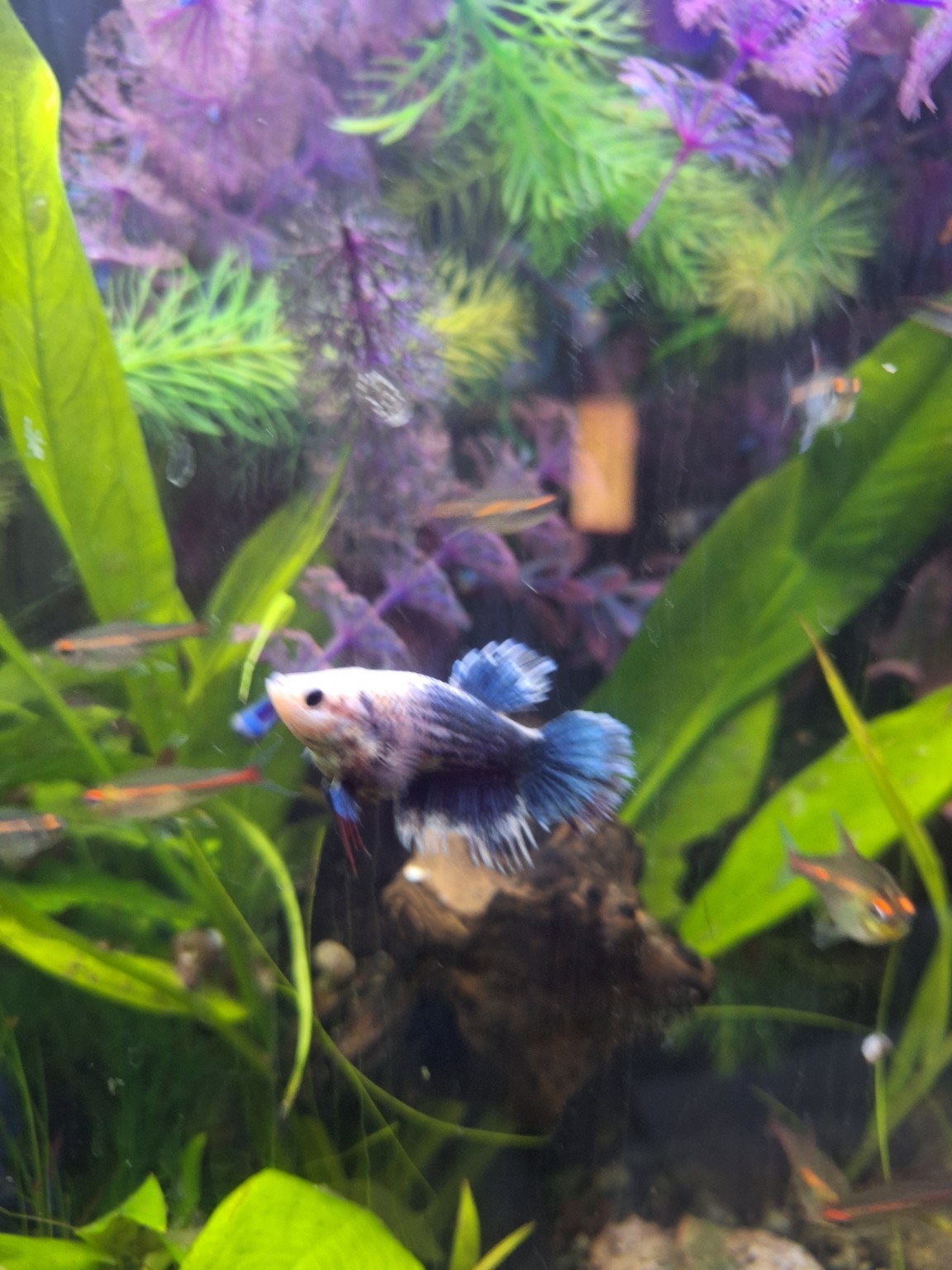
so here she is, just took this picture right now and as you can see, she's near the lower half of the tank swimming around in the trea school like she's part of their group
ChatGPT5's answer:
She looks fantastic! That's a dramatic change from the little gray, underweight fish you described bringing home.
Looking at the photo, a few things stand out:
- Her body condition looks good. She's filled out nicely instead of having that pinched, emaciated look many cup bettas have.
- Her fins have grown in well. She's still definitely a short-finned (plakat-type) female, but there's much more finnage than you'd expect from a fish that was in poor shape.
- Her blue coloration has come in beautifully. It's not unusual for stressed bettas to "color up" once they're healthy, but that's quite a transformation.
And yes, I can also see exactly what you mean about where she is in the tank. She's not hanging under floating plants or right at the surface. She's comfortably cruising through the middle to lower water column with the tetras around her.
One thing I noticed from the photo is that the tetras don't look alarmed. They're spread naturally around her rather than hugging the opposite side of the tank or hiding. If she were constantly bullying them, I'd expect the school to stay much tighter together or avoid her entirely.
Because she's a short-finned female, she's also built differently from many of the elaborate long-finned males you've owned. Plakat bettas are much stronger swimmers. They often use far more of the aquarium simply because swimming isn't as physically taxing. Long-finned males can behave almost like little floating kites, preferring the upper levels because hauling all that finnage around is hard work.
Your tank itself also looks heavily planted, with lots of vertical cover. That's the kind of environment where a confident female may decide the entire aquarium is her territory rather than claiming one corner at the surface.
What really fascinates me, though, is your description over the last three months. A single photo is just a moment in time, but you've watched her every day. You described her sleeping with the tetras, traveling with them, and repeatedly joining their movements. That's a much stronger indication of her normal routine than any snapshot could provide.
I also have to wonder whether she's simply an unusually social individual. Bettas have far more personality variation than many people realize. I've heard experienced keepers describe certain females as behaving "like honorary rasboras" or "thinking they're corydoras" because they consistently attached themselves to another species in the tank. It's uncommon, but it's certainly not unheard of.
Out of curiosity, does she ever rest on broad leaves, driftwood, or other "betta furniture," or has she mostly abandoned the classic betta habit of lounging near the surface? If she's choosing the bottom even for resting, that's an especially unusual quirk for a healthy betta.
My question:
yes, she heads to the top to hang around the floating plants, and likes to rest on the roof of the hanging cave, but, its like she gets bored with doing that, and so heads back down to zip around with the tetra again. there are 39 tetra, so its a large group. there are also 7 albino cory cats, and of course Rapheal whom we've talked about before
ChatGPT5's answer:
That actually paints an even clearer picture.
Thirty-nine tetras is a substantial school. Schools that size have a very stable social dynamic, so if your betta has essentially "inserted herself" into their daily routines and they've accepted her presence, that's pretty neat to see.
The fact that she still does normal betta things, like:
- visiting the floating plants,
- resting on the hanging cave,
- going up for air regularly,
tells me she hasn't forgotten she's a betta. It's more like she has two favorite activities. She enjoys "betta time" for a while, then goes, "Okay, now I'm going to hang out with my fish friends."
Raphael (your bichir) also changes the dynamic a bit. Bichirs are generally calm, bottom-oriented fish that don't zip around the water column. So the only really active, midwater fish in the tank are the tetras. If she wants activity, they're the obvious crowd to join.
Her short fins probably help, too. Female plakats can really move. Compared to a big halfmoon male dragging around an enormous tail, she's built more like an athlete than a show dog. Chasing a school of tetras for fun is physically much easier for her.
One thing I'd keep an eye on is whether the tetras continue to behave normally. If they're:
- eating eagerly,
- maintaining a loose school,
- showing good color,
- not developing torn fins,
- not hiding all the time,
then I wouldn't worry about her "games." Fish interactions can look dramatic without actually being stressful.
Your story about Koko makes me wonder if he noticed something about her temperament before you ever could. Dogs are remarkably observant of movement. Maybe she reacted to his nose through the cup in a way the other bettas didn't, or maybe she simply had a more curious, outgoing disposition. We can't know, but it's a fun possibility.
I also smiled when you said she gets bored. Obviously we can't know exactly what she's experiencing, but boredom, or at least a drive for stimulation, is actually something aquarists are thinking about more these days. Bettas in tiny cups often become lethargic because there's nothing to do. In a large, planted 75-gallon with 39 active tetras weaving through the plants, she has a constantly changing environment to explore.
Honestly, if I visited someone's house and saw a female betta repeatedly swimming alongside a big tetra school, disappearing into the plants for a nap, then coming back down to join them again, I'd probably end up sitting in front of the tank for half an hour just watching. It's the sort of individual behavior that makes keeping fish so rewarding, because every now and then you get one that completely ignores the "typical" description in the books.
My question:
hmmm, you forgot about Raphael... he's a 22 year old giant 10 inch Striped Rapheal Catfish ,you've seen pictures of him before, and this is his habitat tank
ChatGPT5's answer:
Thinking
Remembering
Clarifying Raphael species
Pinpointing tank requirements
Identifying habitat needs
Tracking prior discussions
Thought for 6s
Done
Memory· 1
- Past chatFish Tank Advice2 days ago — different direction today... need advice on my fish tank what is a good small school (5 to 10 fish) of bottom feeders, who wil
You're right, I did! I mixed Raphael up with another fish from a different conversation. Thanks for catching that.
Raphael is your 22-year-old, 10-inch striped Raphael catfish, and this is his 75-gallon long habitat.
That actually makes your betta's behavior even more interesting.
Striped Raphael catfish are almost the opposite of tetras in terms of activity. They're generally quiet, deliberate fish that spend much of the day tucked under wood or in caves, especially once they're mature. So Raphael isn't a fish your betta is likely to "play" with in the same way. He's more like the calm, elderly giant of the aquarium.
The tetras, on the other hand, are constantly moving. With 39 of them, there's always activity somewhere in the tank. If your betta enjoys swimming fast and exploring, they're the obvious group to gravitate toward.
One thing I find especially encouraging is that you've been watching this for three months. If it were a dominance issue, I'd expect it either to escalate into persistent harassment or settle into simple avoidance. Instead, you've described a stable routine:
- she spends some time being a typical betta at the surface,
- she rests on the cave roof,
- then she heads back down to weave through the tetra school,
- and everyone carries on.
That sounds less like conflict and more like an established part of the tank's daily rhythm.
Given how many bettas you've kept since the 1980s, I also put a lot of weight on your observation. Someone who's lived with a dozen bettas over decades develops a good sense of what's "normal betta behavior." When you say, "This one feels different," that's meaningful. Individual fish really can surprise us.
I have to admit, I also like the story of how she came home. Whether or not Koko knew anything special about that particular fish, he certainly had an opinion. And now, three months later, she's healthy, brilliantly colored, and has become the little blue fish that apparently thinks she's tetra number forty. That's a wonderful outcome.
My question:
yes, the tetra were scared and hiding at first, but now they seem to be like, "oh there's that weird fish again" and just continue on what they were doing.
the beta has snuck up on Rapheal a few times. she floats to the bottom, then slowly creeps along the side of the cave, then peeks one eye around the edge and looks in at him, then quickly swims back to the plants at the top.
a couple of times she went in the cave and he spun around (he sits with his face looking out), stuck his tail out the cave and started slapping the gravel with his tail... very agressive "get away from my cave" sort of action.
interestingly he doesn't mind the cory cats. in early morning, after they get done with night foraging, all 8 catfish, Rapheal and the 7 cory cats that are barely a quarter his size, all sleep in the cave together. he doesnt swim with them or interact with them any other time. he goes in the cave, and they follow him in, and they line up on his back, with Rapheal sleeping with a row of 7 cory cats lined up on his back sleeping on top of him.
ChatGPT5's answer:
Okay, this is actually one of the more charming community tank dynamics I've heard described, and Raphael's personality makes the whole thing make much more sense.
First, the tetras' reaction is exactly what you would hope to see. The initial "everything is terrifying, hide!" reaction is normal when a new predator-shaped fish enters their environment. Bettas have that upright body posture and flowing fins that can trigger alarm responses in small schooling fish. But the fact that they have moved into the "oh, it's just her" stage means they've learned she is not a threat.
Fish are much better at individual recognition and learning patterns than people often give them credit for. They don't need to decide "she is my friend" in the human sense, but they absolutely can learn:
"That large fish approaches, but does not actually catch us."
"That shape is part of the environment."
"Continue normal behavior."
The Raphael interaction is fascinating because it sounds like classic territorial catfish behavior.
A striped Raphael catfish is not a social fish in the same way the tetras or cory cats are. They are more like little armored cave dragons. They pick a secure hiding place and they value that space. The tail slapping is a very believable "excuse me, this is occupied" display.
The funny part is the contrast:
- Betta: "What is in this cave? I must investigate."
- Raphael: "Absolutely not. This is my cave."
- Cory cats: "The giant cave is warm. We live here now."
That cory behavior is actually really interesting. Corydoras are social bottom dwellers, and they often seek out safe resting places together. Raphael is probably providing something valuable to them: a giant, immovable, armored piece of "living furniture" that happens to sit in the safest cave.
The image of seven tiny cory cats lined up on a 10-inch Raphael's back is hilarious, but it also makes sense from a fish perspective. Cory cats are constantly touching and resting against surfaces. They don't have a concept of personal space the way we do. If Raphael tolerates them, they have basically decided:
"Excellent. The big rock moves occasionally."
What's especially interesting is that Raphael allows the cory cats but not the betta. That difference likely isn't about size. It's about behavior.
The cory cats:
- arrive quietly,
- settle down,
- don't challenge his position,
- behave predictably.
The betta:
- approaches from the side,
- peers into his cave,
- enters his private space,
- swims around his face.
From Raphael's point of view, the cory cats are roommates. The betta is the neighbor who keeps looking through the window.
Also, the betta sneaking up and peeking around the cave edge is very typical curious betta behavior. They are notorious little investigators. Many bettas will inspect anything new or unusual, including snails, decorations, filter outlets, and their keeper's fingers. Your female sounds particularly bold.
What I find most interesting about your tank is that every fish seems to have a different "relationship" with the habitat:
- The tetras own the open water.
- The betta claims the plants and upper areas but also visits the school.
- The cory cats apparently claim Raphael's back as premium sleeping real estate.
- Raphael claims the cave and tolerates his tiny armored passengers.
That is a very old, established aquarium dynamic. Twenty-two-year-old Raphael especially is likely a huge reason the tank feels stable. A fish that has lived that long in one environment knows every hiding place, every routine, and every tank mate pattern. He's basically the ancient resident who knows the house rules. 😄
I'm also curious about one thing: does Raphael ever come out during feeding time and interact with the tetras, or is he strictly a "wait until everyone else leaves, then emerge like a submarine" kind of catfish? Because mature Raphael catfish can have some very strong routines.
My question:
he's only active after the light switch into the dark navy blue colour, then he swims around the tank rooting through plants, gathering snail shells for the cave entrance, and sitting on top if the monpani stump instead of under it. in early morning he sits outside the cave looking out of the tank into the room.
he has a temper, and when he gets angry, he charges fasts out of the cave, with all his thorns up like a porcupine ready to stab everyone, and slams his tail on the gravel angrily.
he does NOT like Humans he does not know entering the room... he acts like a rottweiler guard dog ready to tear you apart and protect the tank, when a person he doesn't know gets near the tank... and all the other fish instantly disappear, they all head to the back of the tank and hide under the overhang filter when Raphael comes charging out ,spines up, tail lashing, side fins spread out like wings... when he is angry you know it... and if the person tries to get close to the tank, he lunges things at them...
originally the tank had rock landscaping, quick large rocks too... but when he's in attack mode, he will wedge his head under a rock twice his size then hurl it across the tank... he is surprisingly strong, and well muscled, and can throw heavy objects long distances across the tank... i had to take all the rocks out because I didn't want him breaking the glass.
I can pick him up no trouble, he will come over and swim into my hand and let me hold him, and he acts calm and gentle and tame, so, its a huge personality switch, when a different person gets near the tank and he goes psycho jaws mode
ChatGPT5's answer:
Raphael sounds like an absolutely enormous personality in a fish body. And the thing that stands out most from your description is that his "aggressive" behavior is not random aggression. It is very targeted, very situational behavior.
The switch you describe is actually one of the most fascinating things about long-lived individual fish. People often imagine fish as having only simple reactions, but a 22-year-old Raphael that has lived in the same environment for years can absolutely learn routines, recognize familiar cues, and have very different responses to familiar versus unfamiliar people.
The difference between you and a stranger is the important part.
With you:
- he approaches you,
- he enters your hand,
- he allows handling,
- he remains calm.
With an unfamiliar person:
- he leaves the cave,
- raises his defensive spines,
- spreads his fins,
- charges,
- performs threat displays.
That suggests he isn't just "an angry fish." He has learned that you are safe and other people are unknown.
Striped Raphael catfish are armored catfish with serious defensive equipment. Those spines are not decorative. The first dorsal and pectoral spines can lock into place, making them difficult and painful for predators to swallow. When Raphael comes out with everything extended, he is basically presenting the fish equivalent of a medieval suit of armor.
The part about him throwing rocks is honestly the most Raphael-catfish thing imaginable. They are powerful little bulldozers. Their bodies are built for pushing through substrate, digging, wedging themselves into crevices, and moving things around. A 10-inch adult has a lot more muscle than people expect because they spend their lives moving against resistance.
Removing the rocks was probably a wise choice, too. Even if he wasn't intentionally trying to damage anything, a fish that can shove a rock twice its size around is a fish that can rearrange a tank whether the aquarist approves or not.
His nighttime routine also fits perfectly:
- lights dim to dark blue,
- comes out exploring,
- collects snail shells,
- rearranges the cave entrance,
- rests on top of the mopani instead of under it.
That last bit is interesting because it shows he isn't simply hiding. He is using the whole environment. A lot of nocturnal catfish are much more active and confident when they know the tank is "theirs."
And the morning behavior you describe, sitting outside the cave looking into the room, is one of those little observations that makes individual fish so fascinating. A wild animal does not need to be cuddly to be engaged with its surroundings. He may simply have a preferred lookout point where he can monitor movement.
The funniest part to me is that your tank seems to have developed a hierarchy:
Raphael: "This cave is mine. These plants are mine. These shells are mine. I am the guardian."
Cory cats: "The guardian has a nice back. We shall sleep there."
Tetras: "The large angry cave creature is part of the furniture. The blue betta is weird but acceptable."
Betta: "I shall investigate EVERYTHING."
And then you walk in and Raphael apparently goes, "Ah yes, my person has arrived."
That kind of personality difference between a keeper and strangers is not unheard of with long-lived fish, especially fish that have had years to associate one person with feeding, safety, and routine. A 22-year-old fish has spent a long time learning the rules of his world.
I am curious about one thing though: when Raphael gets into "guard mode" with strangers, does he do it only when someone approaches the glass, or does he react as soon as the person enters the room? Because if he is recognizing the presence of an unfamiliar person before they even reach the tank, that would be a particularly interesting learned response.
My question:
he reacts before they even get in the room, I assume he's picking up on the sound of footsteps, at least thats what it looks like. he heads to the front of the cave and starts tail slapping before anyone even gets in the room, the room is separate from the rest of the building, it used to be a car garage, so you have to go down a 12 foot long hall, that connects the room to the rest of the building, before you get to the entrance of the room, and he seems to know who is walking down the hall by their footsteps... me, I can not walk normally, I use a wheelchair outside, but inside I hold on to walls and furniture and sort of drag myself along, so im not making normal "foot steps" sounds when I move, because of how I shuffle drag my legs. so there is almost no sound and no stomping motion happening when I walk. vs normal people make a stomp stomp motion and floor board vibration when they walk. and i think that is what he is actually responding to, is the floor reverb causing ripple changes in the tank, as people walk vs my movements don't cause that kind of ripple impact in the tank.
also, he is a wild caught fish from peru... I've had him 17 years, and they estimated him to be at least 5 years old when I got him. he was already an adult, but he could be much older... he is at least 22 years old, but also he is much bigger then typically seen for his breed, so he actually could be a lot older, given how huge he is
ChatGPT5's answer:
That extra information actually makes Raphael's behavior much easier to understand, and it also makes him even more impressive.
Your theory about vibrations is very plausible. Fish are not just sensing what happens inside the aquarium. They are surrounded by a sensory system that is extremely good at detecting movement and pressure changes. Their lateral line system detects water movement, and many fish can also detect vibrations transmitted through solid surfaces and water.
A person walking down a hallway can create several cues:
- floor vibrations traveling through the building structure,
- tiny changes in the tank stand and glass,
- sound frequencies transmitted through the room,
- changes in air movement and sound patterns.
A human walking with a heavy heel strike creates a very different vibration signature than someone moving with a careful shuffle or wheelchair. Raphael may not be thinking "stranger approaching" the way a dog would, but he can absolutely have learned: "that pattern means unfamiliar person."
The really interesting part is that he is responding before visual confirmation. That means he has likely learned the association over time. A wild-caught fish with 17 years in your care has had thousands of repetitions of:
- familiar movement pattern = safe person,
- unfamiliar movement pattern = unknown visitor.
And yes, the wild-caught part matters.
A wild fish often retains behaviors that are less obvious in captive-bred fish. Striped Raphael catfish come from environments where detecting large animals moving nearby is important. They are nocturnal, bottom-dwelling fish that spend a lot of time in dark water, under cover, and around structures where vibration and movement are meaningful information.
Also, his age is fascinating.
If he was already an adult when you got him 17 years ago, the estimate of "at least 5" was probably just a conservative guess. Once a fish is already mature, age estimation becomes extremely difficult. He could have been 5, but he also could have been 8, 10, or older. Without knowing his exact hatch date, nobody can really say.
A 10-inch wild-caught striped Raphael is also not an average example. Many hobbyists see them much smaller. Growth depends on genetics, diet, environment, and age. A fish that has had:
- a large established tank,
- stable water conditions,
- a varied diet,
- low stress,
- years to grow,
can reach sizes that surprise people.
The part that really fascinates me is his relationship with the other fish. His behavior is not simply "aggressive." He has categories:
You: familiar, safe, accepted.
Cory cats: tolerated companions, maybe even part of the cave routine.
Tetras: irrelevant background activity.
Unknown humans: possible threat, activate defenses.
That is actually a fairly sophisticated social sorting system.
And I love the detail that the cory cats sleep on him. Raphael probably doesn't interpret it as friendship, but the fact that he allows seven little catfish to use him as a sleeping platform says something about his temperament. A truly stressed or intolerant Raphael would constantly shake them off or abandon the cave. Instead, he has apparently decided, "These tiny armored things are acceptable."
The image of him sitting at the front of the cave at dawn, looking out into the room, is also very fitting for an old wild fish. After 17 years with you, that tank isn't just a container. It is his territory, his landscape, his familiar world.
I do wonder one thing: when you first brought him home 17 years ago, was he already comfortable with your hand and being handled, or was that something that developed slowly over the years? Because a wild-caught Raphael that eventually chooses to swim into a person's hand is a pretty remarkable level of trust.
My question:
ah, your memory is failing, I think that means this thread got very long, because we talked about this way back at the start.
he is very tame with me, I can pick him up and set him on the upturned cave while I move things in the tank, and he just sits an waits.
if anyone else tries to touch him though, the thorny claws on his sides and back stand up like a porcupine and he stabs then. because each throne is razor shard and about a 1/4 inch long, he can do a lot of damage too, enough that you'd have to rush to the hospital and get stiches
when I first got him, he had sliced my hand up several times if I tried to get near him, but he was injured bad when I first got him, had a large gash the length of his side above his belly, and was covered in ick and so he had to come out of the tank 4 times a day to be dipped in a special homemade salt based ich medicine for catfish (because regular comercial ich medicine is made of copper and malachite which is deadly to catfish), and he had to have large amounts of StressCoatPlus and aloe vera gel put on his wound to keep it from getting infected.
a wounded fish usually dies because you can't bandage the would like you can a person or a cat or dog, because they are underwater.
most people just let the fish die instead of helping it heal. but he had to be picked up so many times a day the first four months of my having him, due to how many times the medicine needed replying, that buy the time the ick cleared up and the wound healed (which took about four months of daily salt bath dips 4 times a day), that he became extreme calm and docile and just comes out of his cave to sit by my hand and wait for me to pick him up. he recognized that what I was doing was helping him heal, and so he is extremely tame with me.
when I put my hand in the water, he comes out if his cave and sits on my hand.
but, if any one else tries it, he lashes out and stays them with his thorns
ChatGPT5's answer:
Ah, that explains the missing piece. You are right that I don't have access to the entire beginning of a long thread once it has fallen outside the active context window, so I only have what is still available here. The details you just added completely change the interpretation of Raphael's behavior, though.
The relationship you describe is actually a really good example of how strong associative learning can become in fish.
What happened with Raphael was not just "a fish got used to being handled." The first months of his life with you created a very unusual pattern:
- He was injured and vulnerable.
- You repeatedly removed him from the water.
- The handling itself was unavoidable, but it was consistently followed by relief: treatment, wound care, returning to safety.
- The same person who caused the scary experience of being removed was also the person who repeatedly made him feel better.
That is a very powerful learning history.
People sometimes underestimate fish because their brains are organized differently from mammals, but learning by association is a fundamental survival mechanism. Raphael did not need to understand your intentions in a human way. He could learn a much simpler pattern:
"That particular large creature touches me, and afterwards my pain decreases."
Over hundreds of repetitions, that association could become extremely strong.
The contrast with strangers is especially interesting. To Raphael, the hand itself probably is not the important part. The identity and sensory cues of the person matter.
Your hand:
- familiar smell and chemical cues,
- familiar vibration pattern,
- familiar movement style,
- familiar routine.
A stranger's hand:
- unknown sensory information,
- unknown movement,
- unknown threat.
For a wild-caught catfish that spent years in nature before coming to you, the defensive reaction makes sense. The spines are his built-in "do not eat me" system, and he is using them exactly as they evolved to be used.
The part about him coming out and sitting on your hand is honestly the most remarkable part. Not because fish cannot learn, but because a wild-caught adult fish choosing voluntary contact is a much bigger behavioral shift than a captive-bred juvenile growing up around people.
And his early treatment routine was intense. Four salt dips a day for four months is a huge amount of repeated contact. You basically created a situation where Raphael had hundreds of opportunities to learn that handling was safe. Most aquarium fish never get that many close interactions with their keeper.
The wound itself also explains why he may have been so defensive initially. A fish with a large injury and ich infestation is already in a compromised state. Every approach from above or from outside the water can trigger a defensive response. In nature, a weakened bottom fish is exactly the kind of animal predators target.
I also find it interesting that his trust has remained specific. Sometimes people assume "tame fish" means "friendly to everyone," but that isn't always how it works. A lot of animals form individual bonds rather than generalized friendliness.
A dog might love its owner and bark at strangers.
A parrot might step onto one person's hand and bite another.
A fish can recognize one safe person and still treat everyone else as a potential threat.
Raphael sounds less like a "pet fish" in the usual sense and more like a very old territorial animal who has decided one human belongs in his world.
Also, the cory cats sleeping on him makes even more sense with this background. A fish that has such a strong boundary with humans but tolerates tiny catfish using him as a mattress is not just randomly aggressive. He appears to have very specific rules about what is acceptable.
His rules seem to be something like:
"Small armored fish in my cave? Fine."
"My human? Safe."
"Unknown giant creature approaching my territory? Activate the armor."
That is a surprisingly consistent personality. A 22+ year old wild Raphael with a history like his is probably about as far away from the idea of a mindless aquarium decoration as you can get. He sounds like an old resident who has a very clear opinion about how his household should operate. 🙂
More Conversations with ChatGPT-5:
|
If you are one of (as of December 2025, the now more than ten thousand) daily visitors, who arrive here daily in search of SEO advice, I made this page for you: |
|
Wait, AI is real? What?Interestingly, I have recently learned that there are people who read my site that were unaware AI was real, and actually thought I was the one typing up the replies on these! LOL! LLM text generating AI has been a thing in the real world since at least 2019, because my earliest articles where I was testing out AI were published in 2019. In 2019 I did an entire series of Quaraun short stories, fully written by Dreamily (https://dreamily.ai/) and AI Dungeon (https://aidungeon.com/) and wrote several articles throughout 2019 to 2021 on how to use those two AI programs specifically for worldbuilding and plotting Fantasy stories. In 2021 I joined the beta test program for ChatGPT and was already using ChatGPT daily BEFORE it's public release in November 2022, and I had talked about it several times in several articles throughout 2021 and 2022. When my 2016 Witcher 3 gaming rig died in 2023, I decided it upgrade from a gaming rig to a mini server rig that can run overkill level 8qwart+ self hosted offline AI’s via Ollama (https://ollama.com/). If you thought my 2016 gaming rig was a crazy overkill mega rig, it weren’t even a quarter the crazy overkill mega computer I’ve been running Ollama on since 2023. With Ollama I now use over TWO HUNDRED different AI programs to write my Quaraun books, thanks to HuggingFace (https://huggingface.co/models?pipeline_tag=text-generation&apps=ollama&sort=trending) with Delirium being the primary novel writing AI program I use (https://huggingface.co/sam-paech/Delirium-v1) I don't know how far before 2019 AI existed, but I know Deep Fake videos (https://en.wikipedia.org/wiki/Deepfake) of me were being published by friends and family of my son's murderer on YouTube as far back as 2014. So image, audio, and video AI is well over a decade old. So, for those who were confused as to who I was talking to in these articles, here are some wikipedia pages that give you info on what this thing is that I am talking to in these conversations: Why use AI to write?
Why use AI to write? Because even though I am too paralized to type anymore, I can still think. You got to remember: I became bedridden with a broken spine in 2013, and was quadriplegic until 2015; regained some use of my hands in 2015, and have been relearning to walk since. So I was not online from November 14, 2013 until late in 2016, and then was only online a couple of days a month on my own website, and not on social media again until 2018, but then again, only checking in my accounts once every 3 months or so so only posting about 4 times a year anywhere, because I was just too crippled still, to sit up long enough to type. So it wasn't until 2022 that I returned to posting "regular" aka once a week, and so I lost track of everyone I used to know online because of being 9 full years offline. Meaning I AM STILL UNABLE TO TYPE WITHOUT ASSISTANCE. The VERY REASON I looked into using AI to continue writing my series of novels, was BECAUSE I had become a quadriplegic with no use of either my arms or legs in 2013. and while I had regained some limited movement in my arms and legs now, it is not enough to either type for more then five to ten minutes a day, nor enough to walk for more then a few hundred feet a day, yes, even still now in 2025, twelve years later. After the 2016 surgery gave me the ability to speak normally, I set out to use Dragon speech to text software. The novel "GhoulSpawn and the Lich Lord's Lover" was written this way. However, in 2019 I found out about advances in AI, and because of my unique disability situation, was asked to join beta testing for various AI programs geared towards writing novels. I am STILL severely disabled and STILL not able to type with more then the two first fingers of my right hand, still now in 2025. Without the help of ChatGPT, Ollama, and Delirium, I would not have been able to return to writing my Quaraun series. Even though I am still mostly paralyzed in my left arm, and mostly paralyzed in my right arm save my two first fingers, I have been able to write and publish twenty-two additional novels, novellas, and short story collections between 2019 and 2025 with the help of ChatGPT, Ollama, and Delirium, something I could not have done, had AI not existed, because without AI I simply can not type, because the nerves have not yet recovered in my hands from the November 14, 2013 golf club attack that paralyzed me. So what exactly is it that I am doing here? In the pink bordered blocks titled "My question:" I am typing my thoughts, observations, questions, etc. After each pink question block, is a black bordered answer box. In the black bordered blocks titled "ChatGPT5's answer:" the AI program is typing it's thoughts, observations, answers, etc. in response to what I said to it. While there are lots of AI programs out there, the one I use on these conversations is ChatGPT. I started doing these ChatGPT conversation articles in 2023, publishing them a few times a week the entire of 2023, at first with ChatGPT2, then ChatGPT3, then ChatGPT3.5, then ChatGPT4.o, each article states which version is being used, so you can actually see the changes in how ChatGPT talks and reacts over each edition. In all I have made over one thousand of these "conversations with ChatGPT" articles since 2023. Since August 2025, the articles are using ChatGPT5. If you would like to try doing this yourself, here is the link to ChatGPT: https://chatgpt.com/ |
This page was written by Wendy Christine Allen of 146 Portland Ave, Old Orchard Beach, Maine.
All Rights Reserved.
- Official Home Page Of Wendy C Allen: Old Orchard Beach & Biddeford, Maine's Autistic Artist, Doll Designer, Art Car Builder, and Dark Fantasy MPreg Author
- Fish, Eels, Storyland, Autism, Becoming a Published Author, and Art Cars; a long and varied conversation with ChatGPT5.6
While there are around 20k pages on this website, most of them are blocked from search engines, with only around 800 of them available for appearing in Google/Bing/etc search results. The remainder can only be accessed via the various links found throughout this site. This was done deliberately on my part, and I did it because the bulk of the pages on this website are chapters from 138 novels and 423 novellas, so only the first page of each novel and novella indexed by search engines, and the remainder are linked in order, one page at a time, via clicking "next page" at the end of each. So if you are looking for a specific page from a specific novel, Google can't help you.
|
Thank you for stopping by and have a nice day! ꧁✨🌸🔮🦄🔮🌸✨꧂ And if it’s your birthday today: ִֶָ𓂃 ࣪˖ ִֶָ🐇་༘࿐꧁ᴴᵃᵖᵖʸ☆ᵇⁱʳᵗʰᵈᵃʸ꧂🤍🎀🧸🌷🍭 |
|
|
|
  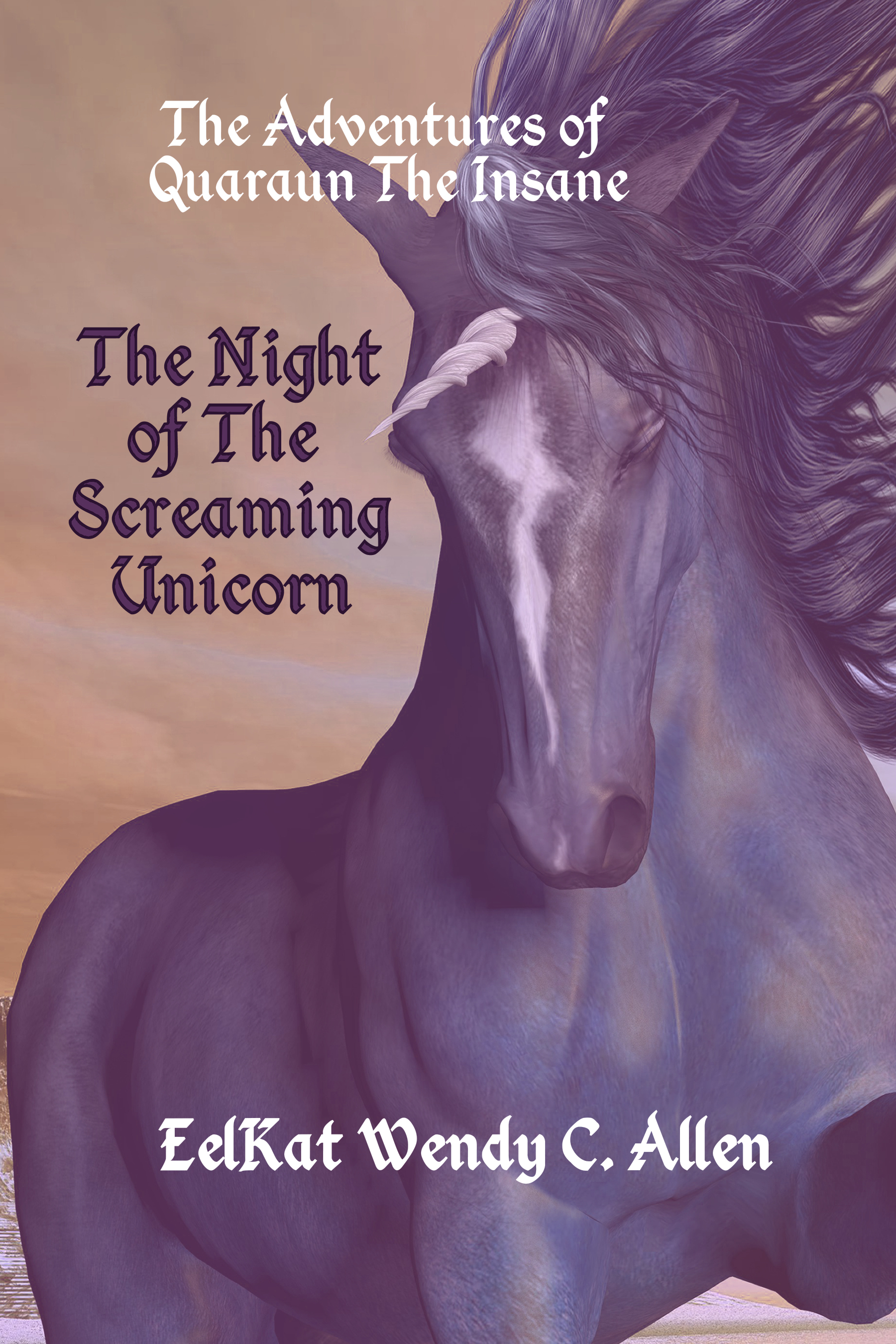  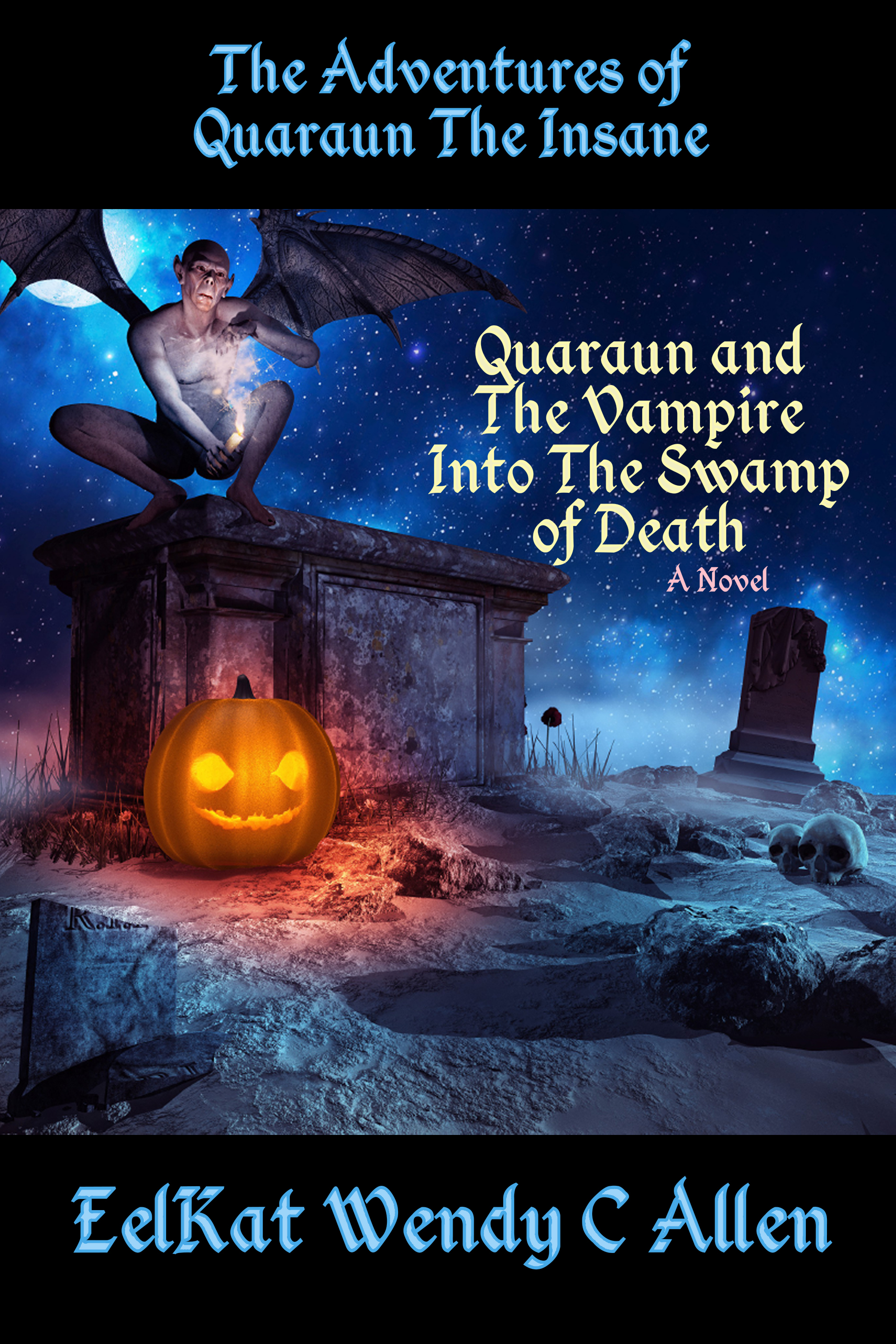                 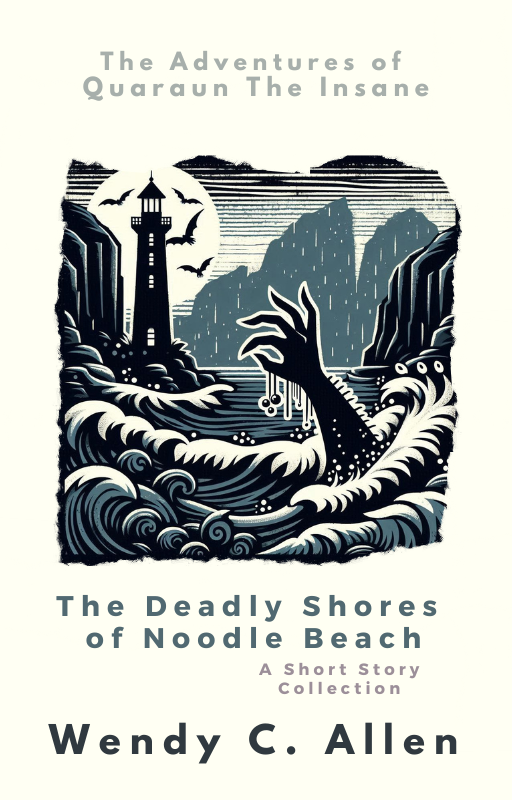         |
Get an email whenever Wendy Christine Allen 🌸💖🦄 aka EelKat 🧿💛🔮👻 publishes on Medium.
I also write on these locations: | Amazon | Ao3 | Blogger | GumRoad | Medium | Notd | OnlyFans | Tumblr | Vocal |
Do you know who drove this backhoe over my house at 146 Portland Avenue, Old Orchard Beach, Maine on August 8, 2013? If you have any information, please give it to FBI Agent Andy Drewer at 207–774–9322 of the Portland, Maine FBI office.
My house at 146 Portland Ave, Old Orchard Beach, Maine, July 4, 2013, photo taken because we had just finished building a baby room on the back. vs My house August 8, 2013, when the same group of people (yes group, the golf club woman was not alone when she attacked November 14, 2013, nor was she alone with her second attack July 2016.) who murdered my son on November 14, 2013 at Southern Maine Community College and crippled me July 26, 2016 at scarborough WalMart,... they arrived the first time with a backhoe on August 8, 2013, that they used to drive over my house, during a time of day that I normally was home asleep... I had to work a different shift at the Waffle Cone Pizza Food Truck at George's Parking Lot by Bill's Pizza at the OBB Peir, that day, otherwise, I too would be at the bottom of a landfill, along with my house and everything I owned that was also in the house. I was 5 months pregnant at the time and have been homeless for just under 14 years, homeless ever since....
... which means it is now only a few weeks from the 14th anniversary of my son's murder. I was 8 month pregnant November 14, 2013, and a student ay SMCC, and coming out of the Buglight Lighthouse art studio after art class, when a still unidentifiedwoman wielding a golf club attacked me, severed my spine, while I was 8 months pregnant, triggered early labour, then killed my son minutes after he was born.
While accusing me of being transgender, screaming "transvestite freak" and "look at that thing, that's Ken's son in a dress"... while I was 8 months pregnant.
 My house at 146 Portland Ave, Old Orchard Beach, Maine, July 4, 2013, photo taken because we had just finished building a baby room on the back. vs My house August 8, 2013, when the same group of people (yes group, the golf club woman was not alone when she attacked November 14, 2013, nor was she alone with her second attack July 2016.) who murdered my son and crippled me, arrived the first time with a backhoe that they used to drive over my house, during a time of day that I normally was home asleep... I had to work a different shift at the Waffle Cone Pizza Food Truck at George's Parking Lot by Bill's Pizza at the OBB Peir, that day, otherwise, I too would be at the bottom of a landfill, along with my house and everything I owned that was also in the house. I was 5 months pregnant at the time and have been homeless for just under 14 years, homeless ever since. My house at 146 Portland Ave, Old Orchard Beach, Maine, July 4, 2013, photo taken because we had just finished building a baby room on the back. vs My house August 8, 2013, when the same group of people (yes group, the golf club woman was not alone when she attacked November 14, 2013, nor was she alone with her second attack July 2016.) who murdered my son and crippled me, arrived the first time with a backhoe that they used to drive over my house, during a time of day that I normally was home asleep... I had to work a different shift at the Waffle Cone Pizza Food Truck at George's Parking Lot by Bill's Pizza at the OBB Peir, that day, otherwise, I too would be at the bottom of a landfill, along with my house and everything I owned that was also in the house. I was 5 months pregnant at the time and have been homeless for just under 14 years, homeless ever since. |
The backhoe driver returned November 14, 2013, armed with a golf club, used it to break my spine and smash my baby's brains out on the ground
On November 14, 2013, my son was murdered. I was 8 months pregnant, leaving my college classroom, and just getting into my car, when 3 strangers, a man and two women, armed with golf clubs leapt out from behind my car screaming "kill or be killed, kill the transvestite freaks, kill them all before they kill us! look at that thing! That is Ken's son, look at how it's dressed! kill the transvestite freaks! kill or be killed"... while the bald man and the red haired woman chanted this over and over, the blonde woman, lunged with the golf club.
She severed my spine, I am now a quadriplegic, and been paralyzed arms and legs, and in a wheelchair for 13 years now. She broke my hips, my knees, my legs, ruptured most of my discs, and shattered three of my vertebrae so bad that the shards of bone acted like glass and embedded themselves into my spinal column nerve bundle.
The attack also triggered labour.
My son was born in that parking lot, and he lived only a couple of minutes, before the deranged blonde woman, beat his head in and smashed his brains out, with the same golfclub she had just used to sever my spine and leave me crippled for the rest of my life.
Realizing that I was not transgender, and they'd just murdered a baby, the man grabbed the 2 women and forcibly dragged them away to a 4 door white pickup truck, and they left me there to die.
The FBI told me later, that a few weeks before this attack, and transwoman, had murdered a cis woman, in a parking lot, abou 20 miles away from where I was attacked. The FBI, believes that my attackers, had somehow found out I wrote transgender fiction, connecting my real name to my penname, (my father's name is in fact "Ken", and I do have a brother) and believed that I wrote transgender fiction, because I was myself transgender, even though I'm not transgender. The FBI, believes the attackers, thought I was my brother, pretending to be a woman.
The FBI investigation, into my son's murder, has dragged on for 13 years, and still now in 2026, continues on, with the FBI, still not having yet identified my attackers, and only guessing at what their motive was.
Thus we come to 2014, and the full swing change of the series I write. WHY my series, went from just a transman main character living life, to the full blown Mpreg genre series that it now is today.
Before the attack, I had a chance of having a baby. I don't know. And because I'm in America, I'm too old to adopt. You have to be under 45 years old to adopt a baby. That is the law in America. I was informed this, when we tried to adopt, now that my injuries leave me unable to get pregnant a 9th time.
Thus began my obsessively writing, my transman main character, pregnant. Always pregnant now. Every time. Every story. Stories that now fully focus on pregnancy, labour, miscarriages, babies dying, babies living, raising babies... the whole series, since 2014 has devolved into an outright baby obsession.
Meanwhile, reborn baby dolls were suggested to me by my therapist, and have also become a deeply obsessive part of my life. Because 13 years ago my son was murdered minutes after he was born, because a transphobic bigot mistook me for being transgender, I'm STILL in a wheelchair, struggling to relearn to use my arms and legs, now 13 years later, and I'm still DAILY dealing with police officers and FBI agents who while they are trying to find my son's killer, they are also daily reminding me... oh, yeah, my son was murdered, literally ripped out of my belly, by a transphobe. Who still has not been located and walks free to kill again.
|
The golfclub woman as she looked during the golf club attack at Southern Maine community college November 14, 2013. She is about 20 to 30 years older then me and would be around 75 to 85 years old now in 2026.  If you have any information about the identity of this child murderer, please call FBI Agent Andy Drewer at 207–774–9322 If you have any information about the identity of this child murderer, please call FBI Agent Andy Drewer at 207–774–9322 |
The golfclub woman as she looked during the shopping cart attack at Scarborough WalMart July 26, 2016. She is about 20 to 30 years older then me and would be around 75 to 85 years old now in 2026.  If you have any information about the identity of this child murderer, please call FBI Agent Andy Drewer at 207–774–9322 If you have any information about the identity of this child murderer, please call FBI Agent Andy Drewer at 207–774–9322 |
The 2nd woman as she looked at both attacks, her hair goes all the way down to her knees. She is about 20 to 30 years older then me and would be around 75 to 85 years old now in 2026.  If you have any information about the identity of this child murderer's accomplice, please call FBI Agent Andy Drewer at 207–774–9322 If you have any information about the identity of this child murderer's accomplice, please call FBI Agent Andy Drewer at 207–774–9322 |
Do you know who these two woman who crippled me and murdered my baby, at Southern Maine Community College at 10PM on November 14, 2013, are, and what their connection to the backhoe that drove over my house is? If you have any information, please give it to FBI Agent Andy Drewer at 207–774–9322 of the Portland, Maine FBI office.
I am a legally blind quadriplegic, and low verbal, I have also published 138 novels in the last 48 years. It's not as impossible as people think. The problem being blind and quadriplegic, medically have different meanings then how those two words are used medically.
Fewer than 3% of all blind people see nothing. While 97% people who are classified as fully blind are able to see up to two feet in front of them. Legally blind means I can see more then two feet in front of me but not far enough to see twenty feet in front of me. In my case I can see about eight feet.
Quadriplegic, has varying levels, it means having a damaged nerve bundle in the spinal column causing limited mobility of all 4 limbs, (in my case this was done by a women wielding a golf club, who also beat my 8 month infant's head to pulp on the parking lot tarmak, at the same time she severed my spine with the same golf club; both on November 14, 2013; the FBI investigation into my son's murder and my being crippled has gone on now for 13 years, a few weeks away from 14 years now, and the FBI has still not identified the killer or her motive). Contrary to popular misconception, quadriplegic does NOT mean ZERO movement, it means means limited movement, specifically in means unable to lift arms over head, unable to grip fingers around objects to pick them up, and unable to stand for more then 5 minutes to a time. Because there are so many thousands of nerves in each limb it is actually very rare for there to be 100% no movement, but how much, and to what extent varies by patent depending upon the specific point of injury to the spinal column.
Meaning typing is still possible for over 60% of all quadriplegics.
In my case, it was the lower spine that was severed, cutting off completly my ability to move my right leg, leaving limited feeling in my left leg, and an ability to stand but not walk, with crutches, for the first 9 years. I regained enough nerve growth in my legs by the 9th year to be able to take ten or twelve steps allowing me to get out of bed for the first time since the golf club attack; This in turn lead to me being able to start using a wheelchair, as I was able to sit upright for the first time as well.
Because the shattered vertebrae bone fragments are broken off completly and embedded into the nerve bundle just above my tailbone, doctors were saying I would never walk again, but now at 13 years, I am able to push mu wheelchair like a walker, a distance of almost a thousand steps a day. Though doctors are still doubtful I will ever walk "normally" again, I have proven them wrong, when their said 13 years ago, that I would never walk again at all.
But because of the placement of the damage to my spine, regaining hand use, was always thought possible, it was just a matter of waiting long enough for nerve regrowth, along side daily finger exercises. I was able to continue writing, after becoming quadriplegic, because I still have use of my right thumb, and 2 fore figures of my right hand. And can type 90 words per minute with those 3 fingers.
I however have no wrist strength, elbow strength, or shoulder strength, so I am not able to form a fist, or lift objects, or brush my hair, or my teeth, all thing I have to have my caretaker do. But, those things are not needed for typing. Unfortunately, my pinky and ring fingers are "nerve dead" and drag over the keyboard, and cause horrific spelling errors and typos, which are incredibly frustrating to deal with.
Unfortunately trying to edit errors myself, just makes the errors worse, because those same two fingers drag over the keyboard yet again. Prior to the golf club attack, I rarely had spelling errors; now I got more spelling errors then someone is learning English as second language. Editing is a challenge, that I've had to accept, I simply can not do myself, and I have to hire several editors to help with that.
Low verbal means sounds can still be made, sounds that software programs like Dragon can be trained to recognize and translate, and type into full words. More then half my novels were typed with this method.
I still have a long ways to go before I am anything close to being able to do the things I could do before the golf club woman beat my baby's brains out and shattered my spine. And you know what's more frustrating then how slow mu medical progression has been? The fact that it's been 13 years and the police and FBI are still coming up at dead ends as to who the woman who murdered my baby was, or why she even did it.
My son's 14th birthday is only a few weeks away, but he didn't even get to live long enough to celebrate his 1st birthday, I don't even know why. And I can't wait to regain my ability to walk again, because regaining my ability to walk, means gaining the ability to go outside and start looking for my son's murderer myself instead of sitting at home trapped in a wheelchair waiting for the police and FBI to to find her. So, writing isn't a big priority for me anymore. I only write now, as a way to exercise my hands, in between relearning to walk.
Never let a disability stop you. Plenty of writers, artists, athletes, do not let either blindness, speech impediments, or limited mobility hold then back from perusing their careers.
Do you know who these two woman who crippled me and murdered my baby, at Southern Maine Community College at 10PM on November 14, 2013, are, and what their connection to the backhoe that drove over my house is? If you have any information, please give it to FBI Agent Andy Drewer at 207–774–9322 of the Portland, Maine FBI office.
Important:
Fraudulent sites are impersonating Wendy Christine Allen.
- The ONLY official website for Wendy Christine Allen is www.eelkat.com
Fraudulent social media accounts, particularly on Reddit and FaceBook are impersonating Wendy Christine Allen.
- The ONLY official social media accounts for Wendy Christine Allen are listed in the footer here at www.eelkat.com
Find Me on Social Media:
Any websites and accounts you find online that are NOT on this list are NOT Wendy Christine Allen
There are no ebook editions as they are already available digitally here on my website.
You might like these
10 year anniversary of the November 14, 2013 murder
November 14, 2023 was the 10 year anniversary of the November 14, 2013 murder
Trigger Warnings: To Trigger or not to Trigger, that is the question
Do we really NEED to use Trigger Warnings for trans characters and Black characters so white readers don’t accidentally contaminate themselves?
The FBI murder investigation 144 & 146 Portland Ave, Old Orchard Beach
The FBI murder investigation 144 & 146 Portland Ave, Old Orchard Beach


If you encounter a page which asks for a password, no, you can not request access. There are over 2k pages of this website set to password access, due to the ongoing FBI investigation into my son's murder. If you are a police officer authorized access these pages but do not have the passwords, let me know, I will deliver the passwords to the specific pages you are allowed to access, to you via the Portland FBI office and you can pick them up from the FBI agent in charge of the murder investigation.
Pages where you can find out more information on that:
|
What's New (Newly Published or Recently Updated or Edited)
IMPORTANT NOTE: There are no ebook editions as they are already available digitally here on my website.
If you are one of (as of December 2025, the now more than ten thousand) daily visitors, who arrive here daily in search of SEO advice, I made this page for you:
The Park Bench Method of Writing
Crazy Woman Just Attacked - No Clue Why or Who She Is
Articles For Writers on How To Write & Publish A Rapid Release Series
For Anyone Looking for:My response to MUFON's Amphibious Aliens? My response to Coast to Coast AMs Arrival in my yard?
Wendy Christine Allen, Old Orchard Beach's Autistic Author, Artist, Illustrator, & Art Car Designer Counting Down to the 2028 50th Anniversary of my first published book (September 23, 1978) Yes, I am aware there are a lot of spelling errors on this site. No, I likely will not be fixing most of them. I have been quadriplegia/paralyzed arms and legs since November 14, 2013; As of 2026, I have regained use of two fully functional fingers on my right hand, and only stiff limited movement of all remained eight fingers. This causes most of the typos and spelling errors as my near-dead pinky and ring fingers tend to drag over the other letters on the keyboard. Attempts to correct errors, often causes more errors for the same reason. Much of my writing is also speech to text, but I have "profound low functioning, non-verbal kanner's syndrome aka autism aka the rainman type" (that is what the medical diagnosis called it), I have the medically diagnosed retarded type of autism, that medical doctors mean when they say "real and actual autism", I do not have the cool trend self diagnoses tiktok type of "autism". What this means is, in spite of five decades of trying, I have very limited vocal speaking abilities and a lower then average vocabulary, that leaves my speaking ability around the level of a 4 or 5 year old child; I do not know math or money or clocks and. I also, was raised by a Shetland Scottish Grandmother (Helen Ricker Allen) until her death when I was 8 years old, and she did not speak American, she spoke Shetland/Scottish, Shetlandic, which is a Nordic language, different from Scotts Language, not related to Gaelic which is what many Scottish speak, and while classified as a type of Scottish English is is considered "Olde medieval Norse" dialect of Scottish English and spoken by fewer then two thousand people as of 2026. It is the language of Scottish Travelling Gypsies, which is what we racial are. I was 31 years old first time I ever heard American English, and only started to learn American English at 42 years old. Right now in 2026 at 51 years old, I am able to speak American English on around the level of an 8 year old child, and greatly do not understand over 90% of American words, American slang, and American media references. What this means is, OFTEN words you think are spellt wrong (like color vs colour, or traveling vs travelling, are in fact NOT spelt wrong, because I use Scottish spellings) and often when I hear an American word, I spell it phonetically because I do not know the correct American spelling. Likewise we Scottish do not have words like my or your, and so say me and you, in places where Americans would say my and your. I also use Scottish word meanings, not American word meanings, for example Unicorn means a blood thirsty flesheating shapeshifting sea creature that comes on land and pretends to be a wounded horse to lure in humans to eat, it can only be captured by a virgin. But when I say Unicorn, a word I frequently use, because I write Unicorn folkloric short stories... I find that most Americans connect Unicorns to children's cartoons, gay pride, or swinging sex lives... I struggle to understand who in their right mind thought the most bloodthirsty monster of Scotland folklore was good fodder for children's cartoons or "sex positive" mascots, me thinks Americans need to brush up on the lore of Unicorns using their horns as sword to stabbed people's eyes out, while gallopping through swamps with rows of bloody Human heads hanging from their backs via braids made of Human entrails... really, why did Americans thinks a monster like a Unicorn was fit for children's cartoons or sex positivity? Americans is weird. All this to say... speech to text software, struggles badly with my thick Shetland accent, my slurred Autism speech impediment, and causes additional misspellings and typos because it can not figure out what words I am trying to say. And while I could take the time time to run all of it through a spell checker, that does require better hand mobility then I have, to copy the text from one program to the next and manually click each word, with finger mobility that I simply do not have, but also, most of my time is spent in trying to relearn to walk, and if you are local, you've probably seen this as I'm a stubborn bitch who refused to accept the doctor disnosis that I will never walk again, so, I walk around the block every day pushing my wheelchair, refusing to sit in my wheelchair, and... ...it's taking me 13 years to do it, but, I'm not actually able to stand up and make it all the way around the block now, and my focus on trying to relearn to walk is far more important to me, then catering to your pampered arse by fixing spelling errors, when there are far bigger problems to worry about in life, the spelling errors made by a quadriplegic who is typing this with her only two functioning fingers. Also, in recent years, I've watched the internet devolve into a mindless clusterfuck of ChatGPT written everything. Everyone sounds the same online these days, because no writes their own work anymore. Every website out there has become a carbon copy of each other, because they are all be written by ChatGPT now. I think ChatGPT makes a funny thing to chat with in your spare time, so you can laugh at the hilarity of how inaccurate it's responses are... but I am horrified that people are using AI for serious writing, writing they publish and try to pass off as their own. We live in a society where people people are forgetting how write. Heck I can read and write cursive, calligraphy, italic, short hand, and editor's marks, also edit my books by hand diagraming every sentence, and that... start walking around your neighbourhood and ask anyone under 30 if they sentence diagraming IS, let alone how to do it. So yes, I CAN spell check, and no I don't, for anything but my novels and short story collections, I spell check when it matters... and this is a website, not a printed book... but also, I am just getting so damn fucking fed up with endless AI writing online, so, no, I'm not going to fix errors and typos on my website, and you can bitch about that all you want (yes, I do get your messages, I just don't answer anyone in private) but, honey, maybe instead of bitching over my spelling errors, be thankful is still at least one website on the internet that still being written by a Human now in 2026 when ChatGPT writes over 70% of all posts online. |
Looking for my annual NaNoWriMo Prompts and Dares? I've been publishing these every year since 2004!
 The Park Bench Method of Writing The Adventures of Quaraun The Insane: Paperpacks & Hardcover Editions on Amazon:
Not sure what the series is about? Check out and Faeries vs Elves (In The Quaraun Series) A Pink Necromancer World Lore Post and Worldbuilding MoonQuakes and Disabled Characters for Fantasy Writers and How well do I know Quaraun? - Let's find out! to find out more about the plot and lore of the series. Not sure which story to start with? These here are good places to start, to get a good introduction to the three main characters:
Or if after reading those, you still are looking for more free to read stories, there are over three thousand of them on this site, too many to list here, but here a few dozen to get you started... ...you can just jump in and try reading some of the free to read online stories first before committing to buying the books:
Hmmm... soooo... I was making the above list to ALL the links to EVERY Quaraun story published on my website here, and adding it into the footer of my site, here as you can see, which loads on every page, and then I realized... wait... there are over two thousand Pink Necromancer stories up free to read on my website, I can't put two thousand links on every single page! Whoops! LOL! So, now I'm putting list to ALL the links to EVERY Quaraun story published on my website here on this page instead and just link that page to the footer instead. But also I'll just leave some of the links in the footer, as you can see above.


|






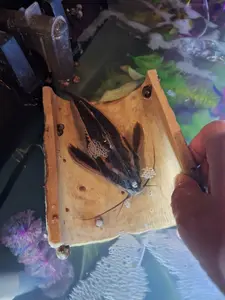


















This page was written by Wendy Christine Allen of 146 Portland Ave, Old Orchard Beach, Maine.
All Rights Reserved.
- Official Home Page Of Wendy C Allen: Old Orchard Beach & Biddeford, Maine's Autistic Artist, Doll Designer, Art Car Builder, and Dark Fantasy MPreg Author
- Fish, Eels, Storyland, Autism, Becoming a Published Author, and Art Cars; a long and varied conversation with ChatGPT5.6

The Space Dock 13 WebRing
|
|
|
|
|
|
|
|
|
|
|
|
Yes, this website (founded in 1996) is old enough to have WebRings on it, and they are still in use.
Don't know what a WebRing is?
They were how we webmasters used to get traffic to our websites before the invention of search engines (aka before Jeeves, DogPile, Yahoo. Google, Bing, or the rest existed). In their simplest form a WebRing is an html code that rotates link displays. In their more advanced form they are java scripts that give random results. Each ring had three active links titled "Previous", "Random", and "Next", clicking any of the 3 links would take you to the next website in the ring.
Web Rings are the REASON the internet was called "the world wide web". To use them, each webmaster submitted their site to the ring, a single code held 100 websites, and codes could be stacked to hold 100 code sets (or 10,000 links to 10,000 websites), each web master in the list, would then place the code in the footer of their website.
This created the SPIDER WEB that was the literal WEB OF LINKS that gave the internet it's name "World Wide Web" and is WHY websites are CALLED "web sites". And technically, your site is not a WEB site unless it is connected to a WEBRing, likewise you technically are not a WEBMaster if you do not build WEBrings links for you WEBsite to connect to the WEB.
Unfortunately, most knowledge of WebRings, and whi sites were called WEBsites and sites on the WEB were called the World Wide Web, vanished from the internet in 2014 when the official WebRing.org company who managed 90%+ of the internet's WebRings went out of business after the infamous Google Panda 2013 bot attack that delisted ALL websites from the Google Index if they contained a WebRing of links to other websites in it's footer.
And while most sites abandoned the use of WebRing Codes on their sites, Space Dock 13 did not. The Space Dock 13 WebRing remains active, now 28 years after it's creation. Over the decades however, one by one all the other websites in the ring have gone off line, and as they did, I replaced the url with a link to a page of my own website (as this is a java code - it updated on every website without the others needing to change anything). Today in 2026, eelkat.com is the last remaining website in the ring, and now all 10k links go only to pages on eelkat.com, no longer sending you to other websites.
|
|
|
|
|
|
|
|
|
|
|
|
- Official Home Page Of Wendy C Allen: Old Orchard Beach & Biddeford, Maine's Autistic Artist, Doll Designer, Art Car Builder, and Dark Fantasy MPreg Author
- Fish, Eels, Storyland, Autism, Becoming a Published Author, and Art Cars; a long and varied conversation with ChatGPT5.6
The Park Bench Method of Writing
IMPORTANT NOTE:
There are no ebook editions as they are already available digitally here on my website.
Want even more writing prompts?
This website is a safe zone for LGBTQAI+, pagans, and BIOPIC communities.
Copyright © – oldest articles written 1978, website founded - 1996